
For most people, completing a solid business analyst online training program usually takes somewhere between 6 weeks and 6 months. It really depends on a few things: your background, how much time you can realistically dedicate each week, and whether you’re learning alongside a full-time job or studying more aggressively.
People coming from IT, finance, operations, or even project coordination often pick things up quicker because a lot of the terminology and business processes already feel familiar. I’ve seen professionals from support or QA roles move through the training surprisingly fast once they connect the dots. Beginners, though, usually need a bit more breathing room, and that’s completely normal. Understanding requirement gathering, Agile workflows, documentation, stakeholder communication… it takes some practice before it starts feeling natural instead of “textbook.”
And honestly, the timeline isn’t always the biggest factor anyway. Some learners finish a course in a month but still struggle during interviews because they haven’t worked through real business scenarios. Others take a little longer, maybe a few extra weekends here and there, but end up far more confident because they actually practiced the hands-on side of business analysis. That part tends to matter more in the real world.
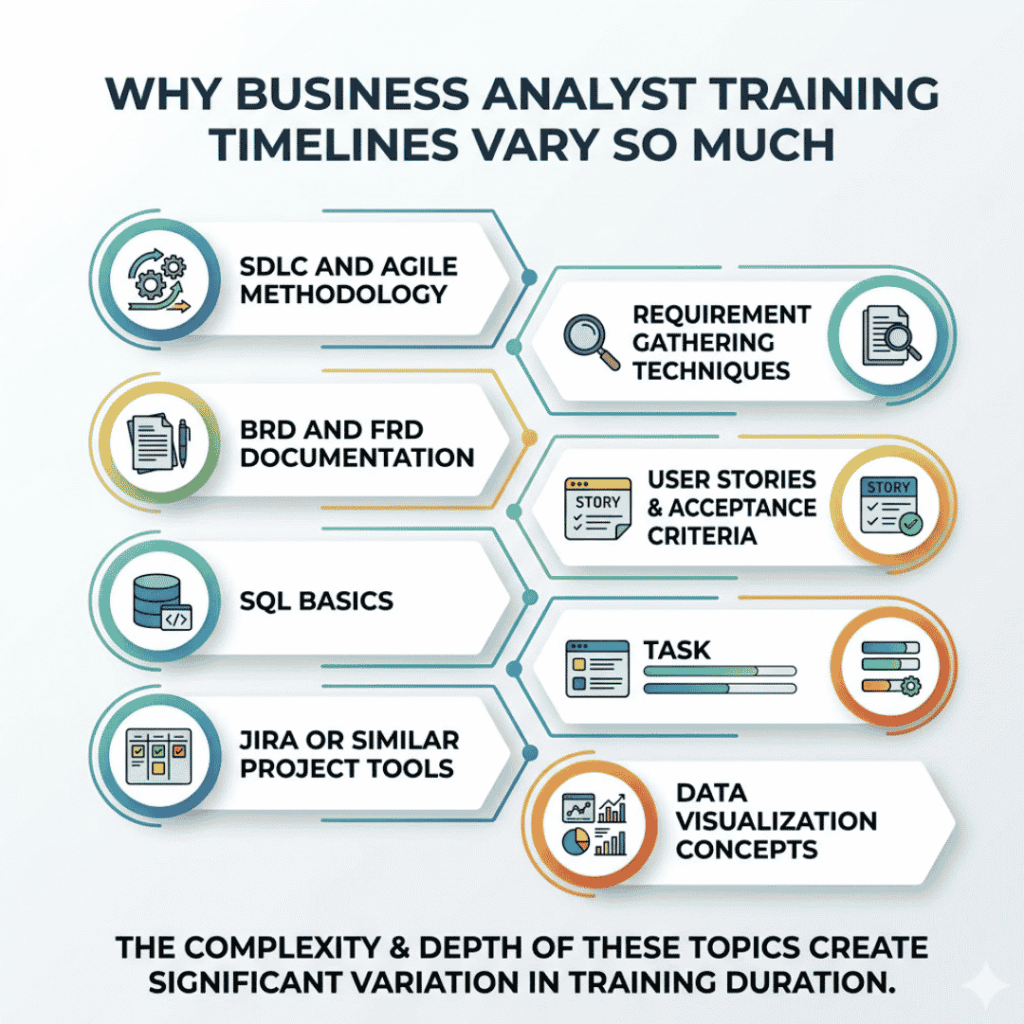
Why Business Analyst Training Timelines Vary So Much
This is one of those career paths where your previous experience quietly changes everything.
Someone coming from customer support or operations already understands workflows and stakeholder communication. A software tester may already know Agile ceremonies. A finance analyst might naturally grasp data interpretation. So when they join a business analyst training program, they’re not starting from zero.
A fresher, though, usually needs time to understand things like:
- SDLC and Agile methodology
- Requirement gathering techniques
- BRD and FRD documentation
- User stories and acceptance criteria
- SQL basics
- Jira or similar project tools
- Data visualization concepts
That’s why some online programs advertise “job-ready in 30 days,” while others stretch across several months. The deeper programs typically include hands-on projects, mentorship, and interview prep, which, realistically, is where the real value sits.
Typical Duration of Business Analyst Online Training
Here’s a practical breakdown based on what most learners experience today:
| Training Type | Estimated Duration |
| Crash course/fundamentals | 4–6 weeks |
| Part-time professional training | 2–4 months |
| Advanced job-oriented BA program | 4–6 months |
| BA + Data Analytics specialization | 6+ months |
A lot of learners today prefer flexible self-paced programs because they’re balancing work, family, and certification prep at the same time. Weekend learning has become especially common after the remote-work shift changed how professionals upskill.
What Actually Takes Time in Business Analyst Learning?
It’s usually not the theory.
Most students understand concepts pretty quickly. The part that slows people down is applying those concepts in realistic business situations.
For example, writing a requirement document sounds easy until you’re given a messy real-world scenario with conflicting stakeholder expectations. That’s where strong business analyst online programs stand out; they simulate actual project environments instead of just giving recorded lectures.
One thing I’ve noticed recently: employers increasingly expect practical exposure, even for entry-level BA roles. Especially in 2025 and heading into 2026, hiring managers are asking candidates about Agile participation, backlog grooming, workflow diagrams, and stakeholder communication examples during interviews.
That shift is exactly why project-based training matters more now than it did a few years ago.
The Role of Certifications in Training Duration
Some learners only want foundational knowledge. Others are preparing for certifications like:
- ECBA (Entry Certificate in Business Analysis)
- CBAP
- Agile Analysis Certification
- Scrum-related credentials
Naturally, certification-focused learners spend longer studying because they’re combining theoretical preparation with practical understanding.
A good training institute usually blends both together instead of treating certification and job preparation as separate things.
Why Many Learners Choose H2K Infosys for Business Analyst Training
Among the many platforms offering business analyst online training, H2K Infosys has gained attention because their approach leans heavily toward real-time project exposure rather than purely academic learning.
That distinction matters more than people think.
A lot of online courses still rely on slide-heavy modules that feel disconnected from actual BA work. H2K Infosys, on the other hand, focuses on practical workflow scenarios, Agile methodologies, requirement documentation, and live instructor-led sessions that resemble enterprise project environments.
Their training programs typically include:
- Real-time case studies
- Hands-on BA projects
- Agile and Scrum exposure
- Jira and documentation practice
- Resume assistance
- Mock interview preparation
For career switchers, that structure can shorten the overall learning curve because students aren’t left trying to “figure out the real-world part” afterward.
I’ve also noticed many learners specifically look for programs that include mentoring and interview coaching now. The market became more competitive after the surge in online certifications over the last few years. Recruiters increasingly care about how candidates explain business scenarios, not just whether they completed a course.
Can You Learn Business Analysis While Working Full-Time?
Yes, and actually, many people do.
This field attracts working professionals because the transition path is relatively flexible compared to deeply technical careers. Someone in banking, healthcare administration, operations, QA testing, or customer service can often pivot into business analysis without going back for another degree.
Most working professionals spend around:
- 8–10 hours weekly learning
- 3–5 months completing projects and interview prep
- Additional time practicing SQL or reporting tools if needed.
The flexibility of business analyst online programs has made this transition much easier than it was before remote learning became mainstream.
What Makes Someone Job-Ready Faster?
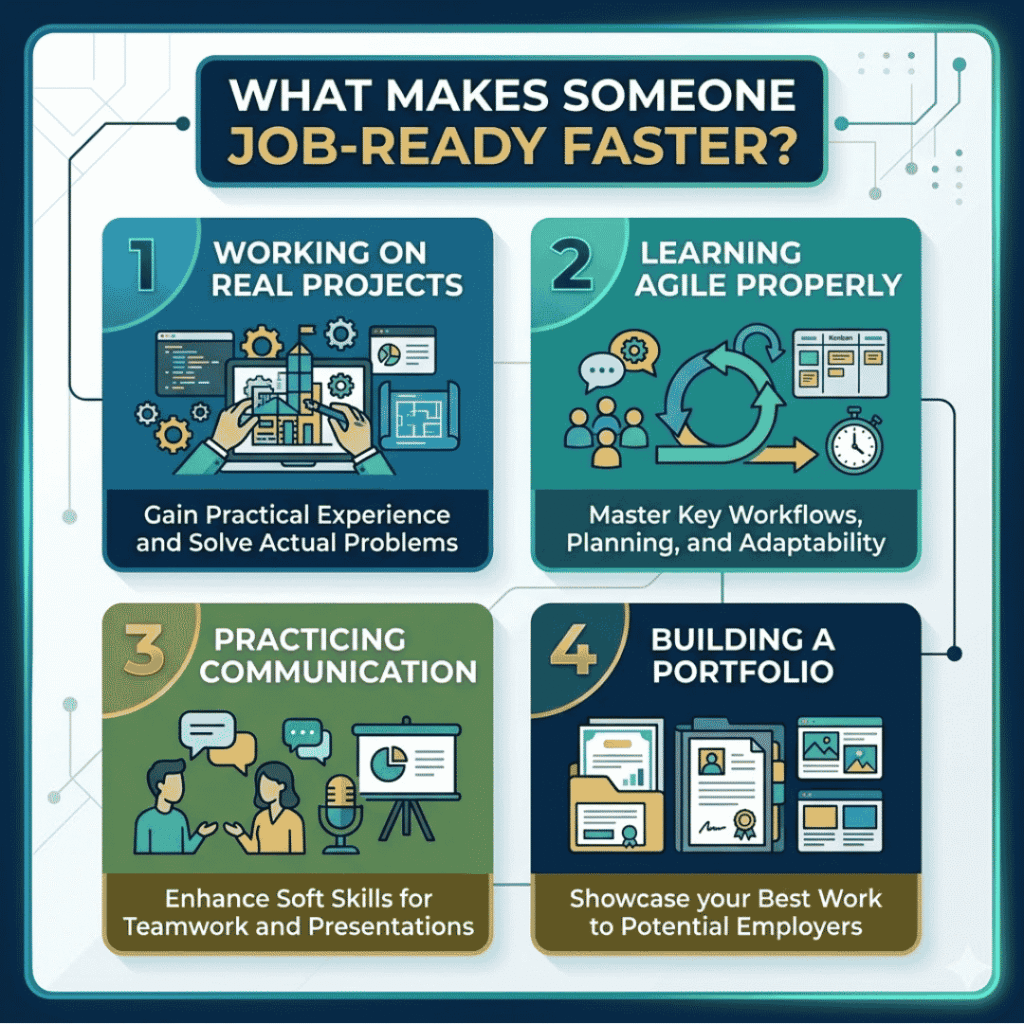
A few things consistently help learners move faster:
1. Working on Real Projects
Mock stakeholder meetings and requirement workshops help concepts stick much faster than passive learning.
2. Learning Agile Properly
Agile is no longer “nice to know.” Most BA openings now expect familiarity with Scrum ceremonies and sprint workflows.
3. Practicing Communication
Business analysts spend a surprising amount of time translating business needs into technical language. Communication skills directly affect hiring outcomes.
4. Building a Portfolio
Even simple requirement documents or workflow diagrams can strengthen interview performance.
Is Business Analyst Training Worth It in 2026?
Demand for business analysts continues to remain strong because companies still need professionals who can bridge operational goals with technology solutions.
AI tools are changing workflows, yes, but they’re also creating more demand for analysts who can define business requirements around automation, process optimization, and data-driven decision-making.
That’s something many newer learners misunderstand.
AI isn’t eliminating business analysis. If anything, organizations need analysts even more to help translate business problems into workable AI-assisted processes.
And that’s another reason modern business analyst training now includes Agile, analytics exposure, and process automation discussions instead of focusing only on documentation.
Final Thoughts
So, realistically, how long does it take to complete business analyst online training?
For most learners, somewhere around 2 to 6 months is a pretty practical timeline, assuming the goal is actual job readiness and not just rushing through recorded videos at 2x speed. There’s a big difference between “finishing a course” and feeling comfortable enough to handle real project discussions, stakeholder questions, or interview scenarios. People usually realize that halfway through the learning process.
What seems to help the most is a mix of hands-on practice, mentorship, and exposure to real business cases. The theory part matters, sure, but business analysis is one of those fields where applying concepts changes everything. A mock project or live case study can teach more than hours of passive lessons sometimes.
That’s partly why programs like H2K Infosys Business Analyst Training Program get attention from career switchers and working professionals. Their training approach leans heavily toward practical workflows, live projects, and the kind of real-world BA scenarios companies actually discuss during interviews now. Especially with Agile environments becoming standard almost everywhere, that practical exposure makes a noticeable difference.
At the end of it all, the “right” training duration is really the one that gets you confident enough to explain how business problems are identified, analyzed, and solved without sounding like you just memorized definitions the night before.