Yes, and honestly, there’s probably never been a better time to step into Artificial Intelligence Career than right now.
Companies across the USA are hiring faster than universities can produce skilled talent, especially in areas like generative AI, machine learning operations, AI automation, prompt engineering, and enterprise analytics. The catch? Employers are no longer impressed by theory alone. They want people who can actually build, deploy, and work with real AI systems.
That’s exactly why choosing the right Artificial Intelligence course online matters more in 2026 than it did even two years ago.
A lot of people still assume Artificial Intelligence Career are only for PhDs or hardcore programmers sitting in dark rooms training models all day. That picture feels outdated now. I’ve seen business analysts transition into AI specialists, QA engineers move into machine learning testing, and even people from support backgrounds land AI-related roles after the right hands-on training.
The market changed fast.
And if you’re aiming for a stable, high-growth tech career in the USA, an industry-focused Artificial Intelligence and Machine Learning course can genuinely shift the trajectory of your career.
Why Artificial Intelligence Career in the USA Are Exploding in 2026
A few years ago, AI was mostly a “future technology” conversation.
Now it’s everywhere.
Banks use AI for fraud detection. Hospitals use machine learning models to predict patient risks. Retail brands use recommendation engines to offer a personalized shopping experience. Predictive AI assists logistics companies to optimize delivery routes. Even small startups are integrating generative AI tools into customer support and internal workflows.
And after the massive wave of AI adoption triggered by tools like ChatGPT, Claude, Gemini, and enterprise copilots, companies are under pressure to hire professionals who understand both business and AI implementation.
According to recent industry hiring reports, AI-related job openings in the USA continue growing across:
- Machine Learning Engineering
- AI Data Analysis
- NLP Development
- AI Cloud Operations
- Prompt Engineering
- AI Product Management
- Generative AI Integration
- AI Testing & Automation
What’s interesting is that employers increasingly value practical experience over academic credentials.
That’s why structured, project-based AI training has become such a big deal.
The Biggest Mistake People Make When Learning AI
I’ve noticed something pretty common.
A lot of learners spend months watching random YouTube tutorials or collecting certificates from platforms that barely touch real-world implementation. They understand definitions but freeze when asked to solve an actual business problem.
That gap becomes painfully obvious during interviews.
Hiring managers will want to see that candidates can explain:
- How an ML pipeline works; How data preprocessing affects results;
- How AI models are deployed in cloud environments
- How to assess model performance;
- How generative AI tools interface with enterprise systems;
- How automation and AI work together in real business workflows.
By 2026, This is where a structured AI training program makes a huge difference.
Not all programs are equal though.
Some focus too heavily on theory. Others rush through tools without helping students understand practical use cases. And a few actually prepare people for jobs.
That distinction matters.
Why Many Students Are Choosing H2K Infosys for AI Training
One reason learners are leaning toward H2K Infosys lately is because the training feels aligned with how companies actually hire.
Instead of treating AI like an academic subject, the program focuses on practical implementation, real-time projects, interview preparation, and industry workflows.
That’s important because recruiters in the USA increasingly ask scenario-based questions rather than textbook definitions.
For example:
Instead of asking, “What is supervised learning?”
They’ll ask something like:
“How would you improve prediction accuracy for a customer churn model with inconsistent data?”
That changes everything.
H2K Infosys approaches AI training from a job-readiness angle. Their Artificial Intelligence course online is designed for learners who want flexibility while still gaining hands-on experience.
A lot of working professionals prefer this setup because they’re balancing jobs, visa situations, family responsibilities, or career transitions.
And honestly, learning AI while managing life is already hard enough. Having structured mentorship helps.
What You Actually Learn in a Modern Artificial Intelligence and Machine Learning Course
The AI industry moved beyond basic Python tutorials.
A strong Artificial Intelligence and Machine Learning course in 2026 should include:
1. Python for AI Development
You still need Python. No escaping that.
But the focus today is less on memorizing syntax, and more, on using Python to solve data and automation problems.
2. Introduction to Machine Learning.
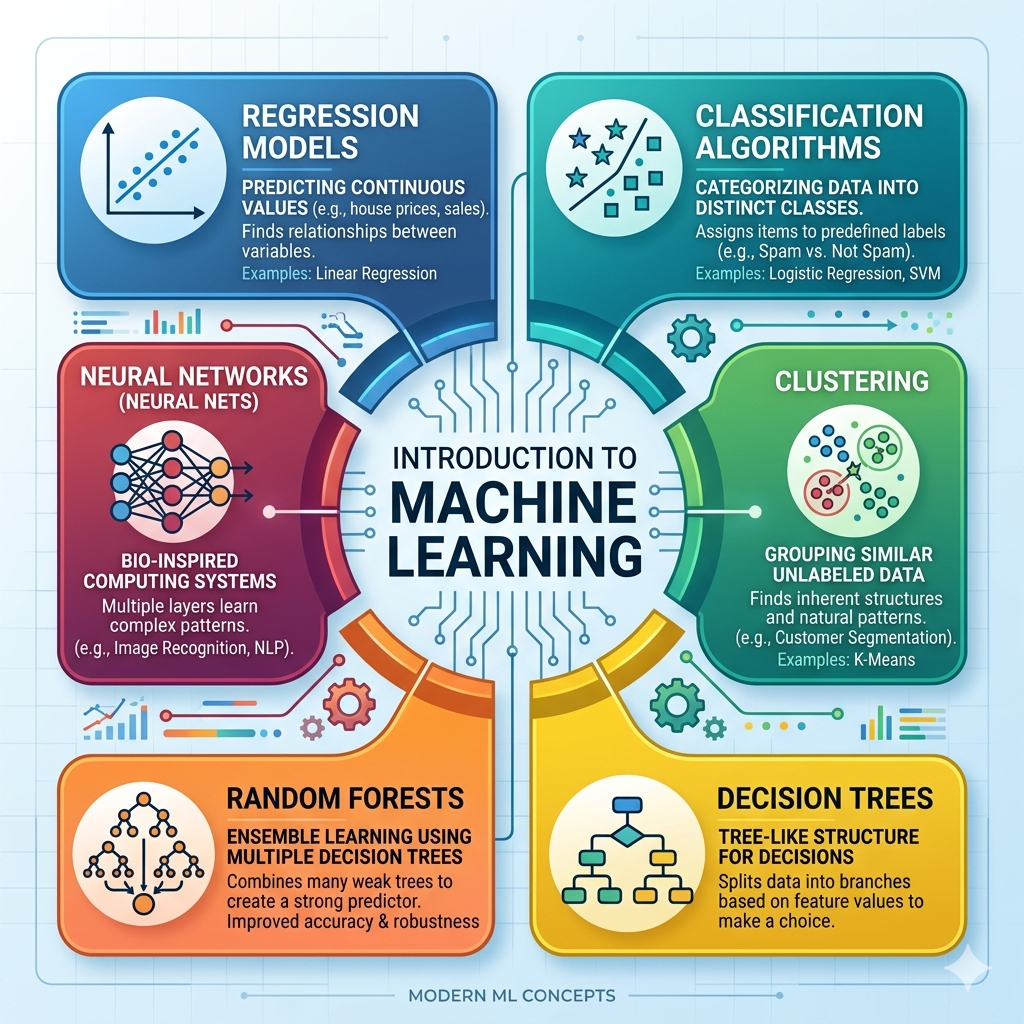
This will cover:
- Regression models
- Classification algorithms
- Clustering
- Decision trees
- Random forests
- Neural nets
The important thing is to know when to use which one.
3. Generative AI & Prompt Engineering
With companies embedding LLMs in their business workflows, this became one of the hottest skills in the market.
Now companies need professionals who know:
- Prompt Optimization
- AI Workflow Automation
- Retrieval-Augmented Generation (RAG)
- AI Assistants
- Enterprise AI Integration
4. Data Engineering Fundamentals
Your data is the foundation for AI models.
Real-world projects involve messy datasets, incomplete information, duplicate records, and inconsistent formatting.
This is where beginners usually realize AI isn’t just “magic algorithms.”
5. Cloud & Deployment Skills
Businesses don’t just build models anymore. They deploy them.
That means learners benefit from exposure to:
- AWS
- Azure AI services
- Google Cloud AI
- MLOps basics
- API integrations
6. Real-Time Projects
This part matters more than most people think.
Projects give candidates something tangible to discuss during interviews.
And recruiters absolutely notice the difference between:
“I completed an online module.”
versus
“I built a customer sentiment analysis system using NLP models and deployed it through cloud APIs.”
AI Jobs in the USA Are Becoming More Skill-Focused Than Degree-Focused
This shift surprised a lot of people.
In 2026, many employers care less about where you studied and more about whether you can contribute quickly.
I’ve personally seen candidates with traditional computer science degrees struggle in interviews because they lacked practical AI exposure.
Meanwhile, professionals coming from structured hands-on training programs often perform better because they understand modern workflows.
That’s one reason career-oriented platforms like H2K Infosys are getting attention.
Their programs are built around industry demand instead of purely academic theory.
And honestly, for working professionals trying to enter the USA tech market, that practical focus can save months of confusion.
Real-World Example: How AI Skills Are Creating Career Transitions
A recent example that stands out involved a QA engineer transitioning into AI-driven automation testing.
Instead of starting from scratch, the person leveraged existing testing knowledge and added:
- AI model validation
- Automation scripting
- Machine learning basics
- Generative AI workflow understanding
Within months, they were interviewing for AI-related QA and automation roles paying significantly higher salaries.
That kind of transition is becoming increasingly common.
Another trend involves business analysts learning AI analytics tools to stay competitive as companies automate reporting and forecasting.
The point is:
You don’t necessarily need to become a deep-learning researcher to build a successful Artificial Intelligence Career.
You need relevant, applicable skills.
What Makes an AI Training Program Worth It?
This question matters because there are thousands of courses online right now.
Some are excellent. Some are honestly just recycled content with trendy marketing.
A good AI training program should provide:
- Instructor-led learning
- Real-world projects
- Resume guidance
- Mock interviews
- Hands-on assignments
- Industry-relevant tools
- Flexible schedules
- Career support
- Practical use cases
One thing learners often underestimate is mentorship.
When you get stuck and you will having someone explain concepts using real business examples speeds up learning dramatically.
That’s another reason many professionals prefer structured programs over random self-paced content.
AI Salaries in the USA Continue Rising
The salary side of Artificial Intelligence Career still grabs attention for good reason.
AI-related roles in the USA remain among the highest-paying positions in tech.
Depending on specialization and experience, professionals are landing opportunities in areas like:
- Machine Learning Engineering
- AI Product Development
- Data Science
- AI Automation
- NLP Engineering
- Cloud AI Operations
And while salary shouldn’t be the only reason to enter AI, strong demand definitely creates long-term career stability.
Especially now that AI adoption has moved beyond experimentation and into mainstream enterprise operations.
Why Online AI Learning Is Becoming the Preferred Option
A few years ago, people were skeptical about learning complex technical skills online.
That perception changed.
In fact, many professionals now prefer an Artificial Intelligence course online because it allows them to:
- Learn while working full-time
- Practice on real environments remotely
- Attend live sessions from anywhere
- Build portfolios at their own pace
- Access recordings and mentorship repeatedly
For international students and working professionals targeting USA careers, flexibility matters a lot.
Especially when career transitions already come with enough pressure.
AI Trends That Will Shape Careers Beyond 2026
The AI market is evolving so quickly that staying current matters almost as much as getting started.
Some of the biggest trends shaping hiring right now include:
Generative AI Integration
Companies want employees who can integrate AI copilots into workflows instead of replacing teams entirely.
AI Governance & Ethics
As regulations grow, businesses need professionals who understand responsible AI implementation.
AI + Cloud Infrastructure
AI deployment skills tied to cloud platforms are becoming incredibly valuable.
Domain-Specific AI
Healthcare AI, fintech AI, cybersecurity AI, and retail AI are all expanding.
Human-AI Collaboration
Ironically, the future isn’t about humans disappearing. It’s about professionals who know how to work effectively alongside AI systems.
That’s where practical training becomes crucial.
Conclusion
If you’re serious about building a long-term tech career in the USA in 2026, AI is one of the strongest opportunities.
But success in this field is more about functional skills, real world exposure and continuous learning than just collecting certificates.
A career-focused Artificial Intelligence and Machine Learning course combined with hands-on project experience can help bridge the gap between curiosity and actual employability.
And for professionals looking for flexible, industry-oriented learning, H2K Infosys has become a popular option because the training is designed around real hiring expectations instead of purely academic content.
That practical difference matters more than people realize.
Especially in AI.
Because in the real world, companies don’t just hire people who understand AI.
They hire people who know how to use it.