
Introduction
Businesses today move fast. Markets change quickly. Customer needs evolve every day. Companies must adapt to survive and grow. This shift has made Agile methods and digital transformation a top priority. In this environment, the role of business analysts in agile becomes critical.
A business analyst connects business goals with technical execution. They ensure that teams build the right solutions. They help organizations move from traditional systems to digital-first operations. Without clear analysis, projects fail or deliver low value.
This blog explains the role of business analysts in agile and how they support digital transformation. It also shows how skills from BA training and placement programs and a BA analyst course prepare professionals for real work.
Understanding Agile and Digital Transformation
What Is Agile?
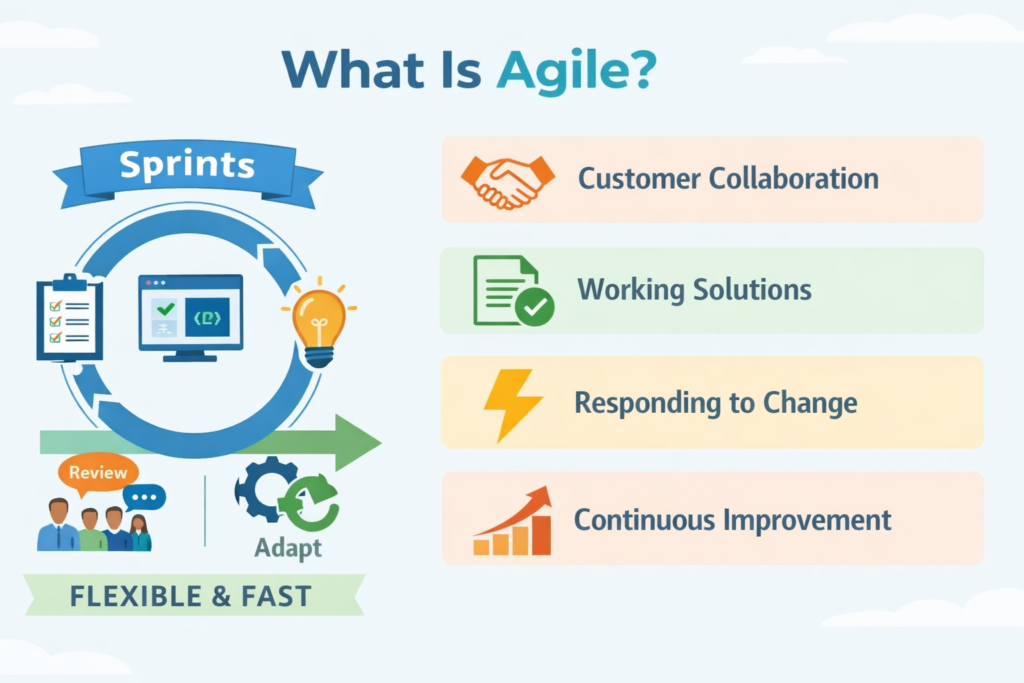
Agile is a method that focuses on flexibility and speed. Teams deliver small pieces of work in short cycles. Each cycle is called a sprint. Teams review results often and adjust quickly.
Key Agile principles include:
- Customer collaboration over contracts
- Working solutions over long documentation
- Quick response to change
- Continuous improvement
Agile helps teams reduce risk and deliver value faster.
What Is Digital Transformation?
Digital transformation means using technology to improve business processes. It includes:
- Moving systems to the cloud
- Automating manual tasks
- Using data for decision making
- Improving customer experience
Companies that adopt digital transformation grow faster. According to industry reports, over 70 percent of organizations invest in digital initiatives.
Where Business Analysts Fit In
The role of business analysts in agile is to guide teams with clear requirements. They ensure that every feature adds value. They also help organizations align digital strategies with business goals.
Core Responsibilities of Business Analysts in Agile
1. Requirement Gathering
A business analyst collects requirements from stakeholders. They ask clear questions. They document needs in simple language.
In Agile, requirements are written as user stories. For example:
- As a user, I want to log in so that I can access my account.
This approach keeps requirements focused and easy to understand.
The role of business analysts in agile includes breaking large requirements into smaller tasks. This helps teams deliver faster.
2. Stakeholder Communication
Business analysts act as a bridge between stakeholders and developers. They ensure that both sides understand each other.
They conduct:
- Meetings
- Workshops
- Feedback sessions
Clear communication reduces confusion and errors.
3. Backlog Management
The product backlog is a list of tasks. A business analyst helps prioritize these tasks based on value.
They work closely with the product owner. They ensure that the team focuses on high impact work.
The role of business analysts in agile includes refining backlog items before each sprint.
4. Process Mapping
Business analysts map current processes. They identify gaps and inefficiencies.
Simple diagram example:
Customer Request → Validation → Processing → Delivery
They improve these steps using digital tools.
5. Testing and Validation
Business analysts validate the final product. They check if it meets business needs.
They support:
- User acceptance testing
- Feedback analysis
- Quality checks
The role of business analysts in agile ensures that solutions meet user expectations.
Business Analysts in Digital Transformation
1. Identifying Opportunities
Business analysts analyze existing systems. They find areas that need improvement.
Examples include:
- Manual data entry
- Slow reporting systems
- Poor customer interfaces
They suggest digital solutions like automation or cloud systems.
2. Data Driven Decisions
Modern businesses rely on data. Business analysts help interpret this data.
They create dashboards and reports. They provide insights for decision making.
The role of business analysts in agile supports data driven planning during sprints.
3. Change Management
Digital transformation requires change. Employees must adapt to new tools.
Business analysts help manage this change by:
- Training users
- Creating documentation
- Supporting adoption
4. Collaboration with Tech Teams
Business analysts work closely with developers, testers, and designers.
They ensure that technical solutions match business goals.
The role of business analysts in agile ensures smooth collaboration across teams.
Skills Required for Modern Business Analysts
1. Communication Skills
Clear communication is essential. Business analysts must explain ideas simply.
2. Analytical Thinking
They must analyze data and processes. They must identify problems and solutions.
3. Agile Knowledge
Understanding Agile frameworks like Scrum is important.
4. Technical Awareness
They do not need deep coding skills. However, they must understand tools and systems.
5. Documentation Skills
They must create clear and structured documents.
Programs like BA training and placement and a BA analyst course focus on these skills.
Tools Used by Business Analysts
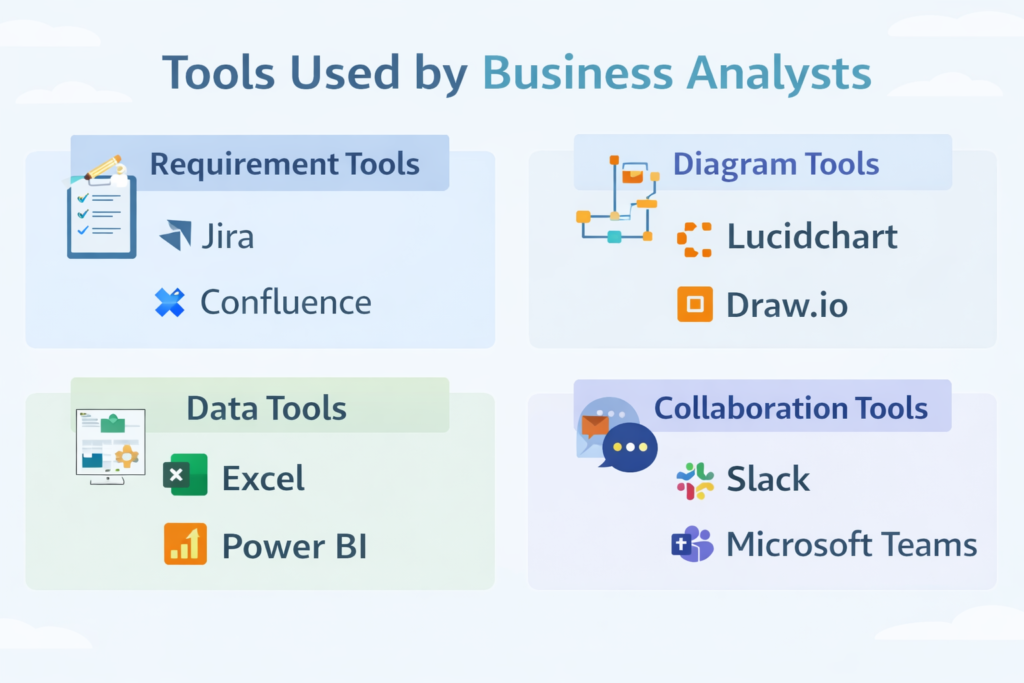
Business analysts use various tools to perform their tasks.
Requirement Tools
- Jira
- Confluence
Diagram Tools
- Lucidchart
- Draw.io
Data Tools
- Excel
- Power BI
Collaboration Tools
- Slack
- Microsoft Teams
The role of business analysts in agile involves using these tools effectively.
Real World Example
Case Study: E Commerce Platform
A retail company wanted to improve its online platform. Customers faced slow checkout and poor navigation.
Step 1: Analysis
The business analyst studied user behavior. They identified key issues.
Step 2: Requirement Definition
They created user stories:
- As a customer, I want fast checkout so that I can complete purchases quickly.
Step 3: Agile Execution
The team worked in sprints. They improved features step by step.
Step 4: Testing
The business analyst validated each feature.
Result
- 40 percent faster checkout
- 25 percent increase in sales
This example shows the role of business analysts in agile in delivering measurable results.
Step by Step Guide to Becoming a Business Analyst
Step 1: Learn Basics
Understand business processes and analysis concepts.
Step 2: Join a BA Analyst Course
A structured BA analyst course helps you learn industry skills.
Step 3: Practice Real Scenarios
Work on case studies and projects.
Step 4: Learn Agile Methods
Understand Scrum and sprint planning.
Step 5: Build Communication Skills
Practice explaining ideas clearly.
Step 6: Explore BA Training and Placement Programs
Business analyst training with placement programs helps you gain practical experience and job readiness.
The role of business analysts in agile requires continuous learning.
Agile Ceremonies and BA Involvement
Sprint Planning
Business analysts help define tasks for the sprint.
Daily Standup
They track progress and clarify requirements.
Sprint Review
They gather feedback from stakeholders.
Retrospective
They help improve processes.
The role of business analysts in agile ensures each ceremony adds value.
Challenges Faced by Business Analysts
1. Changing Requirements
Agile welcomes change. However, frequent changes can create confusion.
2. Communication Gaps
Miscommunication leads to errors.
3. Time Constraints
Short sprints require quick decisions.
4. Stakeholder Expectations
Different stakeholders have different priorities.
The role of business analysts in agile includes managing these challenges effectively.
Benefits of Business Analysts in Agile
- Improved project clarity
- Better stakeholder alignment
- Faster delivery
- Higher quality output
The role of business analysts in agile ensures consistent value delivery.
Business Analyst Career Opportunities
Business analysts can work in:
- IT companies
- Finance
- Healthcare
- Retail
Job roles include:
- Agile Business Analyst
- Product Analyst
- Data Analyst
BA training and placement programs help candidates enter these roles.
Future of Business Analysts
The demand for business analysts continues to grow. Digital transformation increases this demand.
Future trends include:
- AI driven analysis
- Advanced data analytics
- Automation tools
The role of business analysts in agile will expand as technology evolves.
Key Takeaways
- Business analysts connect business and technology
- Agile methods require clear and flexible analysis
- Digital transformation depends on accurate requirements
- Skills and tools are essential for success
- Practical learning through BA training and placement improves job readiness
- A BA analyst course builds strong foundations
Conclusion
The role of business analysts in agile is essential for modern businesses. They ensure that teams deliver real value through clear communication and structured analysis.
Start building your skills today and take the next step toward a successful business analyst career.