
Introduction
Many candidates feel confident about their skills until they face a Business Analyst interview. The gap between knowing concepts and explaining them in a real interview is real. Employers look for clear thinking, structured answers, and real project understanding. They want someone who can connect business needs with technical solutions.
This is where the right strategies to prepare for business analyst interviews make a strong difference. Preparation is not only about reading theory. It is about applying knowledge, practicing answers, and understanding business problems.
If you are planning to take a business analyst course, or already enrolled in business analyst training and placement, this guide will help you turn your learning into interview success. It also supports candidates aiming for a Business analyst certification.
This blog explains practical steps, real examples, and clear methods to help you succeed.
Why Interview Preparation Matters for Business Analysts
A Business Analyst plays a key role in project success. Companies expect candidates to:
- Understand business problems
- Communicate with stakeholders
- Write clear requirements
- Work with teams like developers and testers
Interviewers test these skills through scenario based questions, case studies, and behavioral questions. Without proper preparation, even skilled candidates may struggle.
Using effective strategies to prepare for business analyst interviews helps you:
- Build confidence
- Improve clarity in answers
- Handle real world scenarios
- Stand out among other candidates
Understand the Role of a Business Analyst
What Does a Business Analyst Do?
A Business Analyst connects business goals with technical solutions. The role includes:
- Requirement gathering
- Stakeholder communication
- Data analysis
- Process improvement
- Documentation
Key Skills Required
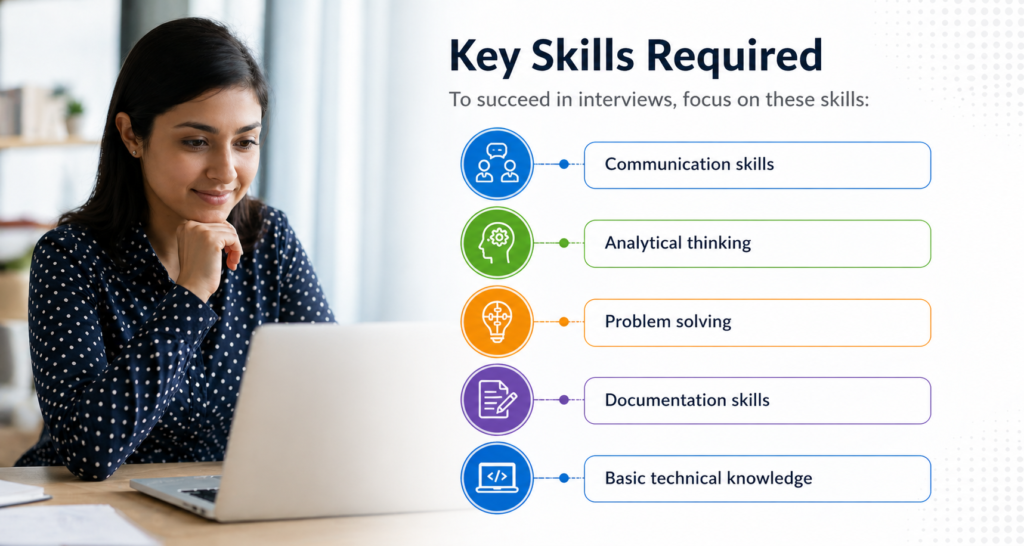
To succeed in interviews, focus on these skills:
- Communication skills
- Analytical thinking
- Problem solving
- Documentation skills
- Basic technical knowledge
Most business analyst training and placement programs focus on these areas because they reflect real job needs.
Step by Step Strategies to Prepare for Business Analyst Interviews
1. Learn Core Concepts Clearly
You must understand basic concepts before attending interviews.
Important Topics
- SDLC and Agile methodology
- Requirement types
- Use cases and user stories
- Business process modeling
- Gap analysis
If you take a business analyst course, ensure you practice each concept with examples.
Strong concept clarity is one of the most effective strategies to prepare for business analyst interviews.
2. Practice Real World Scenarios
Interviewers often ask situational questions.
Example Question
“How do you handle unclear requirements?”
Sample Answer Structure
- Ask questions to stakeholders
- Identify missing information
- Document assumptions
- Validate with stakeholders
Using real scenarios improves your confidence. Many business analyst training and placement programs include case studies for this reason.
3. Master Requirement Documentation
You must know how to write:
- Business Requirement Document (BRD)
- Functional Requirement Document (FRD)
- User stories
Example User Story
“As a user, I want to reset my password so that I can access my account.”
Clear documentation skills are a core part of strategies to prepare for business analyst interviews.
4. Build Strong Communication Skills
Communication is a key skill for Business Analysts.
Focus Areas
- Clear speaking
- Structured answers
- Listening skills
Simple Tip
Use the STAR method:
- Situation
- Task
- Action
- Result
This method helps you answer behavioral questions clearly.
5. Prepare for Tools and Techniques
Companies expect basic knowledge of tools.
Common Tools
- Excel
- SQL
- Power BI
- JIRA
You do not need expert level knowledge, but you must understand how these tools support analysis.
Learning tools is one of the most practical strategies to prepare for business analyst interviews.
6. Work on Mock Interviews
Mock interviews help you identify gaps.
Benefits
- Improve confidence
- Get feedback
- Practice time management
Many candidates in business analyst training and placement programs use mock interviews to improve performance.
7. Understand Agile and Scrum
Most companies use Agile methodology.
Key Concepts
- Sprint
- Daily stand up
- Product backlog
- Scrum roles
Example Question
“What is your role in Agile?”
Prepare simple and clear answers.
Understanding Agile is a key part of strategies to prepare for business analyst interviews.
8. Learn Basic SQL and Data Analysis
Business Analysts often work with data.
Basic SQL Queries
SELECT * FROM customers;
SELECT name, age FROM users WHERE age > 25;
Why It Matters
- Helps in data validation
- Supports decision making
Many business analyst course programs include SQL basics for this reason.
9. Prepare Your Resume Carefully
Your resume should reflect your skills clearly.
Include
- Projects
- Tools used
- Certifications
- Skills
Tip
Use simple language and clear bullet points.
Resume preparation is one of the most ignored strategies to prepare for business analyst interviews, yet it is very important.
10. Focus on Business Thinking
Employers look for candidates who understand business value.
Example
Instead of saying:
“I collected requirements”
Say:
“I collected requirements to improve user experience and reduce errors”
This shows impact.
Developing business thinking is one of the most powerful strategies to prepare for business analyst interviews.
Common Interview Questions and How to Answer Them
1. What is a Business Analyst?
Give a clear and simple definition.
2. What is the difference between BRD and FRD?
Explain purpose and usage.
3. What is a use case?
Provide a short explanation with an example.
4. How do you handle stakeholders?
Explain communication and collaboration.
Practicing these questions is part of effective strategies to prepare for business analyst interviews.
Role of Certification in Interview Preparation
A Business analyst certification adds value to your profile.
Benefits
- Shows your knowledge level
- Builds credibility
- Improves job opportunities
Many candidates combine certification with business analyst training and placement to improve results.
Certification also supports your strategies to prepare for business analyst interviews by strengthening fundamentals.
Real World Example of Interview Preparation
Case Study
A candidate completed a business analyst course and applied for jobs.
Challenges
- Lack of confidence
- Poor communication
- Weak practical knowledge
Actions Taken
- Practiced mock interviews
- Improved documentation skills
- Learned SQL basics
- Worked on case studies
Result
The candidate cleared interviews in three companies.
This shows how structured strategies to prepare for business analyst interviews lead to success.
Mistakes to Avoid in Interviews
Common Mistakes
- Giving long answers without structure
- Lack of examples
- Not understanding the question
- Poor communication
Avoiding mistakes is as important as learning strategies to prepare for business analyst interviews.
Daily Preparation Plan
Simple Plan
Day 1 to 5
- Learn core concepts
Day 6 to 10
- Practice scenarios
Day 11 to 15
- Work on tools
Day 16 to 20
- Mock interviews
Day 21 onwards
- Revise and improve
Following a plan improves your strategies to prepare for business analyst interviews.
How Training Helps in Interview Preparation
A structured business analyst training and placement program helps you:
- Learn concepts step by step
- Practice real scenarios
- Get expert guidance
- Improve confidence
Training supports your overall strategies to prepare for business analyst interviews.
Key Takeaways
- Learn core concepts clearly
- Practice real world scenarios
- Improve communication skills
- Understand tools and Agile
- Work on mock interviews
- Focus on business value
These points form strong strategies to prepare for business analyst interviews.
Conclusion
Success in Business Analyst interviews depends on preparation, clarity, and practice. Focus on real skills, not just theory. Build confidence through consistent effort.
Start applying these strategies to prepare for business analyst interviews today and move closer to your career goal.