The first thing I’d check (and I learned this the hard way)
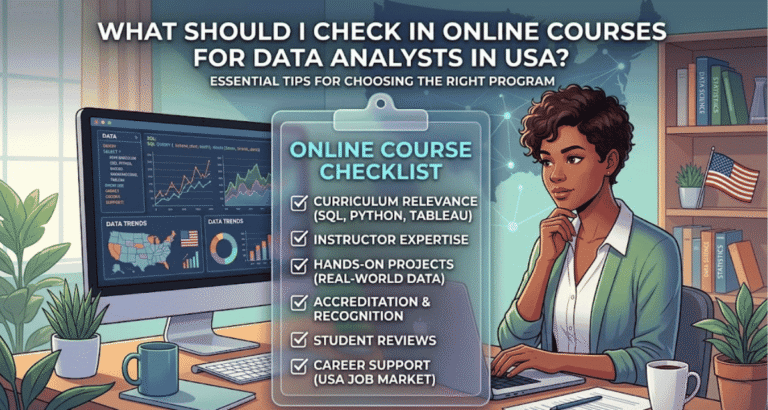
Does the course include real projects?
Not “follow along and copy this code” kind of projects. I mean actual tasks where you’re given data and told to figure it out.
Because here’s what happens otherwise… you finish the course, you feel like you understood everything, and then you open a blank dataset and suddenly you’re stuck.
I’ve been there. It’s not a great feeling.
The Online Courses for Data Analysts usually push you a bit. They don’t feel easy all the time and that’s actually a good sign.
Tools: are they teaching what companies use right now?
This sounds obvious, but you’d be surprised.
Some Online Courses for Data Analysts still skip SQL or barely touch it. That’s a red flag. Same with visualization tools.
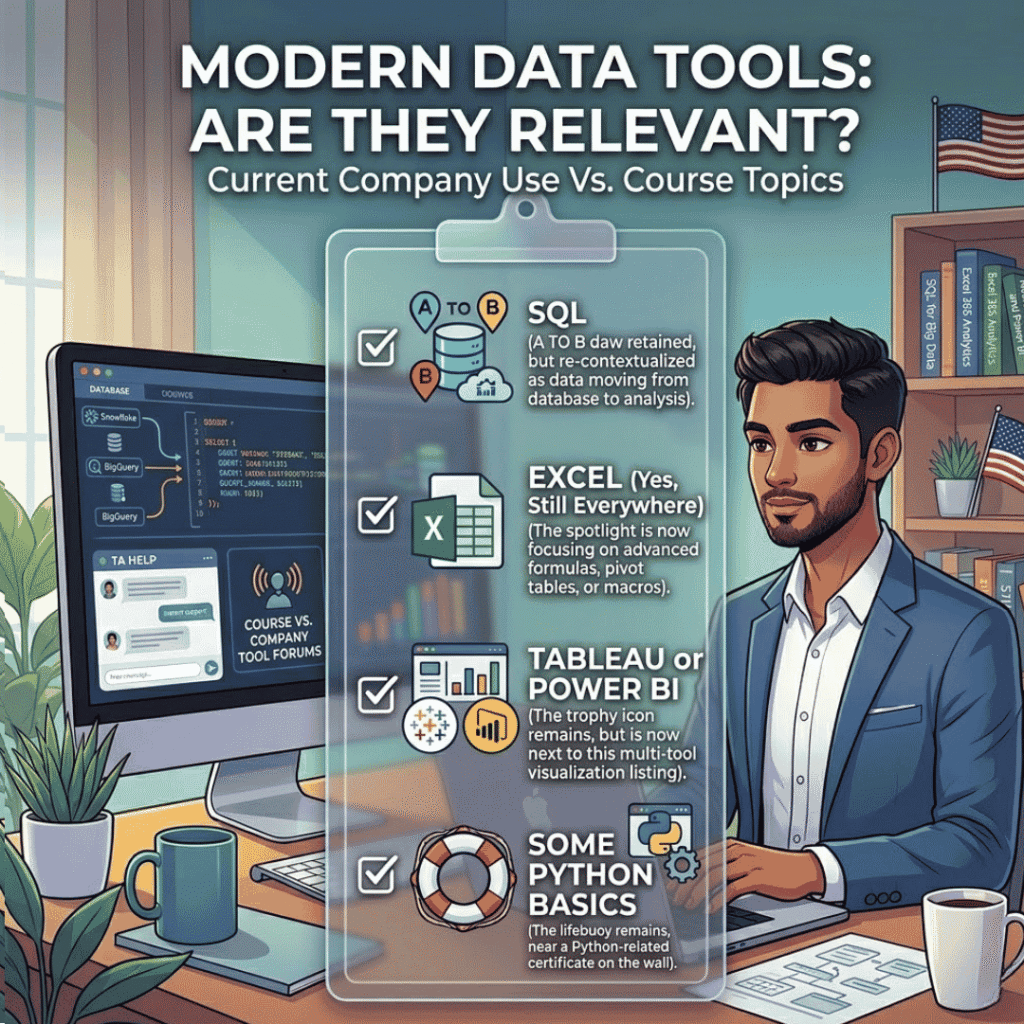
At a minimum, you should see:
- SQL
- Excel (yes, still everywhere)
- Tableau or Power BI
- Some Python basics
Lately I’ve also noticed more job listings mentioning cloud or real-time Online Courses for Data Analysts tools, so if a course includes even a bit of that, it’s a bonus.
If it feels outdated, it probably is.
One thing people underestimate support
A lot of courses are “self-paced,” which sounds flexible… until you hit something you don’t understand.
Then what?
Some platforms just leave you there with recorded videos. Others actually have instructors or mentors you can reach out to.
From what I’ve seen, people who have some kind of guidance tend to finish faster and with fewer gaps.
Not saying you can’t learn alone, but it’s definitely harder.
Portfolio… this part matters more than the certificate
I didn’t realize this at first, but employers don’t really care about the online courses for data analysts themselves.
They ask, “What have you worked on?”
So when you’re checking Online Courses for Data Analysts analysts, look for:
- Projects you can keep
- Dashboards you can show
- Case studies you can talk through
Even 2–3 solid projects can make a big difference in interviews.
Quick reality check what learning actually feels like
It’s not all smooth.
You’ll spend time:
- Cleaning data that doesn’t make sense
- Fixing errors you don’t understand right away
- Rewriting queries again and again
Sometimes it feels slow. That’s normal.
A good course won’t hide that it’ll actually prepare you for it.
Career side of things (since that’s why most people start)
Yeah, the demand is there. No doubt.
Entry-level roles in the U.S. still land somewhere around $65K–$80K, sometimes more depending on location. And there’s room to grow pretty quickly if you stick with it.
But one thing I’ve noticed people who just “complete a course” don’t always get results.
The ones who:
- Build projects
- Practice consistently
- Take feedback seriously
…they’re the ones who move forward.
Why some people go for structured programs
You can piece everything together from free content. Plenty of people try.
But it’s easy to lose direction. One video leads to another, then another… and suddenly you’ve learned bits of everything but can’t apply much.
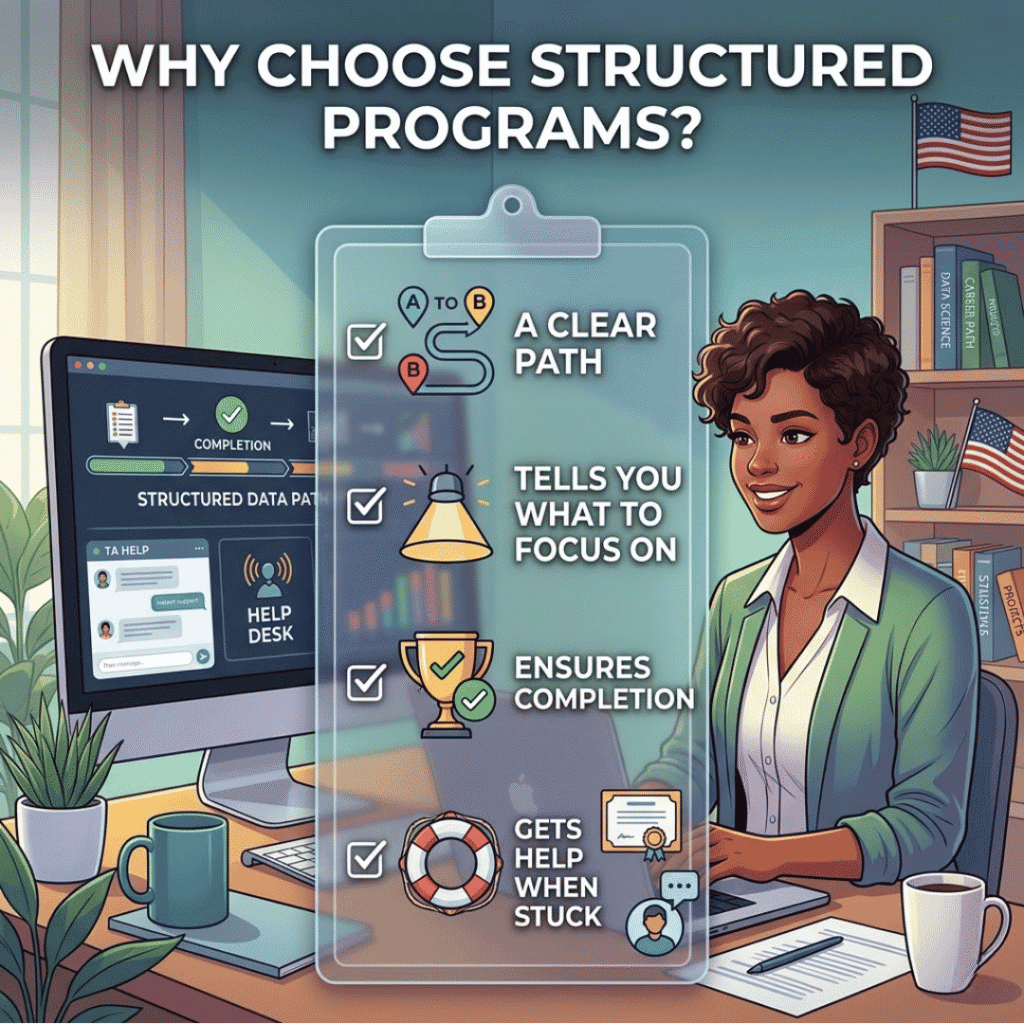
That’s where structured programs like H2K Infosys come in.
Not because the content is magically different, but because:
- There’s a path
- You’re told what to focus on
- You actually complete things
- You get help when stuck
If you’re serious about building a career in this, structured training can really help keep things from drifting.
Mistakes I keep seeing (and yeah, I’ve made some of these too)
- Starting multiple courses and finishing none
- Avoiding projects because they feel difficult
- Choosing based on price instead of quality
- Ignoring whether the course includes real support
It’s easy to fall into these, especially early on.
Related topics you might want to explore
You can also explore:
- How to build a data analytics portfolio (this is a big one)
- What tools should beginners learn first
- How data analyst interviews actually work
FAQs
1. How do I know if an Online Courses for Data Analysts is good?
Check if it includes real projects, updated tools, and some form of guidance or feedback.
2. Are online courses for data analysts enough to get a job?
They can be but only if you build projects and can show your work.
3. What should beginners focus on first?
Start with SQL and Excel, then move into visualization tools and basic Python.
4. Do I need a mentor while learning data analytics?
Not required, but it definitely helps when you get stuck or lose direction.
5. What makes the Online Courses for Data Analysts stand out?
They’re practical, slightly challenging, and focused on real-world scenarios, not just theory.
Final thoughts
If I had to keep it simple, don’t overthink the choice, but don’t rush it either.
Pick an online courses for data analysts where you’ll actually do things, not just watch. That’s the difference.
And if you feel like you’ll lose track learning on your own, going with something structured like H2K Infosys can make the process a lot more manageable.
Just start, stay consistent, and don’t avoid the difficult parts. That’s usually where the real learning happens.