When you enroll for a cyber security training with job placement program expect much more than technical lessons. A good program will give you hands-on security labs, real-world projects, industry certifications, interview prep, resume support and dedicated job placement assistance that will help you transition into an actual cyber security role.
The cybersecurity industry is booming, but many beginners find that learning security concepts alone isn’t enough to land a job. Employers also want to see hands-on experience, knowledge of security tools, and proof that candidates can take what they’ve learned and apply it to real-world business situations. That’s where structured cyber security training and job placement programs can make a huge difference. Companies like H2K Infosys provide practical training, projects and placement assistance to make the learners ready with the skills that employers need.This leads to more students pursuing cyber security jobs with industry relevant training.
Why Job Placement Support Matters More Than Ever
A few years ago, earning a certification often gave candidates a competitive edge. Today, the market is more competitive. Organisations are heavily investing in cloud security, threat detection, identity management and compliance, but they are also looking for professionals who can add value from day one.
I’ve spoken to many who have spent months going through self-paced courses, only to hit a wall during interviews because they hadn’t had practical exposure. They understood the theory but couldn’t confidently articulate how they would investigate a phishing attack or analyse suspicious network traffic.
This is exactly why cyber security training with job placement have become increasingly popular. The right training program bridges the gap between learning and employment.
What a Good Cyber Security Training Program Should Include
Not all programs are created equal. Before you enrol it’s important to understand what employers really want from entry-level candidates.
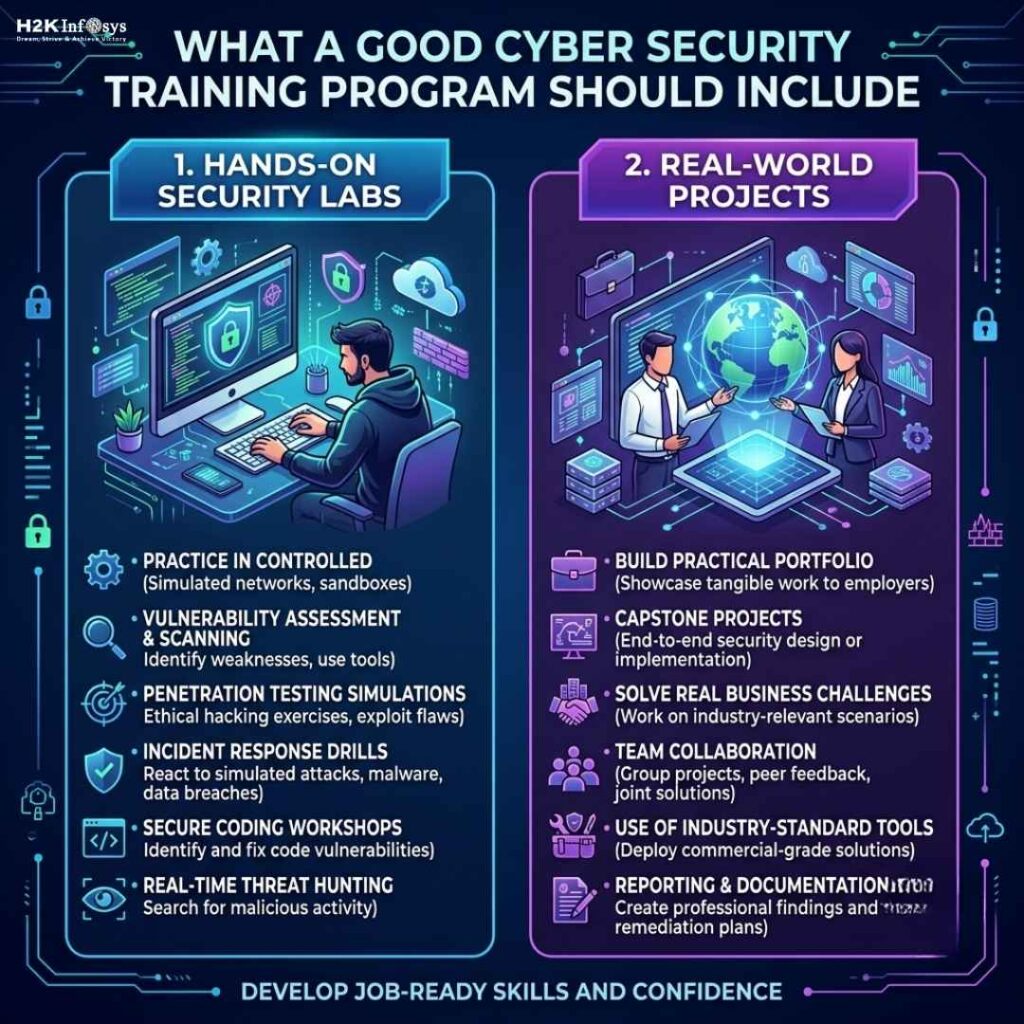
1. Hands-On Security Labs
Cyber security is not something you learn from slides and videos.
- What you can expect:
- Vulnerability assessment exercises
- Security monitoring simulations
- Scenario: Incident Response
- SIEM tool training
- Labs on network security
- Cloud Security Drills
Many hiring managers care a lot less about textbook definitions and a lot more about practical problem-solving.
For example, if you’re interviewing for a Security Operations Center (SOC) Analyst role, you’re likely to be asked how you would investigate suspicious login attempts or find malicious activity in system logs.
When you’ve finished the hands-on labs, you’ll be able to answer those questions with confidence.
2 Real-World Projects
One thing I’ve noticed when reviewing cybersecurity resumes is that project experience usually stands out right away.
A good cyber security training with job placement program must include projects such as:
- Security Monitor Implementations
- Workflows for Threat Detection
- Reports on vulnerability management
- Assessing the risk projects
- Cloud Security Settings
- Security compliance documentation
Projects show that you have actually applied the concepts, not just memorised them.
Certification Preparation
Industry-recognized certifications remain valuable.
Depending on your career goals, training may prepare you for:
- CompTIA Security+
- CompTIA Network+
- Certified Ethical Hacker (CEH)
- ISC2 Certified in Cybersecurity (CC)
- Splunk certifications
- Microsoft Security certifications
- AWS Security certifications
Employers often use certifications as an initial screening tool, especially for entry-level positions.
That said, certifications work best when paired with hands-on experience.
Career Guidance and Mentorship
This is one area many people overlook.
The best cyber security training and job placement programs provide access to instructors who have actually worked in the field.
The stark contrast between learning security concepts from a textbook and learning them from someone who has investigated real incidents, managed compliance audits or responded to active cyber threats.
Mentors can help you to learn:
- Hiring trends today
- Optimising a resume
- Technical interview tips
- Cyber security career paths
- Industry networking techniques
Sometimes a 20 minute chat with a seasoned pro can save you months of head-scratching.
Resume and LinkedIn Support
A surprising number of qualified candidates get rejected before reaching the interview stage.
Why?
Because their resumes don’t effectively communicate their skills.
A good program focused on placement should help you to:
- Create a cybersecurity resume
- Highlight projects correctly
- Polish Up Your LinkedIn Profile:
- Showcase certifications properly
- Demonstrate hands-on experience
Often, recruiters spend less than a minute scanning resumes the first time through. First impressions count.
Mock Interviews & Job Readiness Training
“Technical knowledge alone is not sufficient for success.
Good placement programs typically include:
- HR interview preparation
- Technical mock interviews
- Behavioral interview coaching
- Salary negotiation guidance
- Communication skills development
I’ve seen candidates who knew security concepts extremely well but struggled to explain their thought process during interviews.
Practice changes that.
Access to Employer Networks
This is where many cyber security jobs with training programs create real value.
Training providers with strong industry relationships can often connect students with:
- Hiring managers
- Staffing partners
- Consulting firms
- Technology companies
- Managed security service providers (MSSPs)
These connections can dramatically shorten the job search process.
Instead of applying to hundreds of openings online, candidates gain access to targeted opportunities.
Current Industry Trends You Should Expect to Learn
Cyber security is evolving constantly.
2026: Employers increasingly resort to
Cloud Security
The continued migration of workloads to cloud platforms creates a high demand for cloud security skills.
AI safety
As companies chase AI, they are looking for security pros who understand the risks, governance and threat detection surrounding AI.
Security Operations Center (SOC)
The roles of SOC analyst continue to be one of the most common entry points into careers in cybersecurity.
Identity & Access Services (IAS)
Digital identity management has become a security imperative in the enterprise.
Intel Threat
“Companies want security teams that are proactive and can detect and respond to new threats.
These are the emerging industry needs not antiquated course content which a cutting-edge cyber security training with job placement program should reflect.
What Makes H2K Infosys Different?
Among various training providers, H2K Infosys has gained attention because of its focus on practical learning combined with career support.
The program includes: theory and also
- Instructor-led learning
- Hands on projects
- Hands-on lab experience
- career coaching
- Resume writing
- Interviewing
- Help with placement
Many students opt for H2K Infosys because they are seeking mentorship that goes beyond technical and cyber security training with job placement. Technical training combined with curated career support can be a game changer for career changers and those new to the cybersecurity field.
Who Is The Best Fit For Cyber Security Training With Job Placement?
These programs are particularly useful for:
Change of career
IT support, networking, system administration, or even industry professionals moving out of unrelated fields.
Recent Grads
Students want both hands-on experience and academic credentials.
Working People
People seeking to transition into higher-paying security positions.
Newbies
People with little or no cyber security training with job placement experience, who need structured guidance.
Questions to Ask Before You Sign Up
Before you pick any program ask:
- Are there real-life projects?
- Are instructors industry professionals?
- Is resume support provided?
- Are mock interviews included?
- What certifications are covered?
- Is job placement assistance available?
- Do you have any employer partners?
- How often is the curriculum reviewed?
The answers will tell you a lot about the program’s value.
Final Thoughts
When evaluating a cyber security training with job placement program, expect more than coursework. Premier programs provide a complete education with technical skills, hands-on projects, credentials, mentorship, interview coaching, and career services.
Hiring in cybersecurity is still growing, in areas like cloud security, AI security, threat detection and compliance, but employers are looking more and more for candidates that can prove they have the skills to do the job, not just the theory.” The H2K Infosys program is a great example of this. It provides hands-on cyber security training with job placement assistance to help aspiring cyber security training with job placement professionals bridge that gap and make the entry into the field easier and more accessible.