If you’re looking for cyber security training in the USA that includes real-time projects and live mentoring, the honest answer is this: you’ll find it in a handful of career-focused programs like H2K Infosys that go beyond recorded videos and actually simulate real job environments; those are the ones worth your time.
Where to Find Cyber Security Training That Actually Feels Real
A lot of courses claim to offer hands-on experience, but once you get in, it’s just pre-recorded demos and outdated labs. That’s been a common frustration lately, especially as demand for cybersecurity training and placement programs keeps rising in 2026.
The better programs? They’re structured more like a hybrid between a classroom and a real SOC (Security Operations Center). You’re not just watching what you’re doing.
From what I’ve seen (and honestly, after digging through quite a few options), platforms that stand out usually include:
- Live instructor-led sessions (not just recorded content)
- Real-time attack simulations and defense scenarios
- Access to tools like SIEM dashboards, vulnerability scanners, and packet analyzers
- Ongoing mentoring not just “ask a question in a forum and wait”
Some programs like H2K Infosys sit right in that middle ground where training meets actual job preparation. Their structure leans heavily toward practical exposure, which is something many learners don’t realize they need until they start applying for jobs.
What “Real-Time Projects” Actually Look Like
This part matters more than most people think.
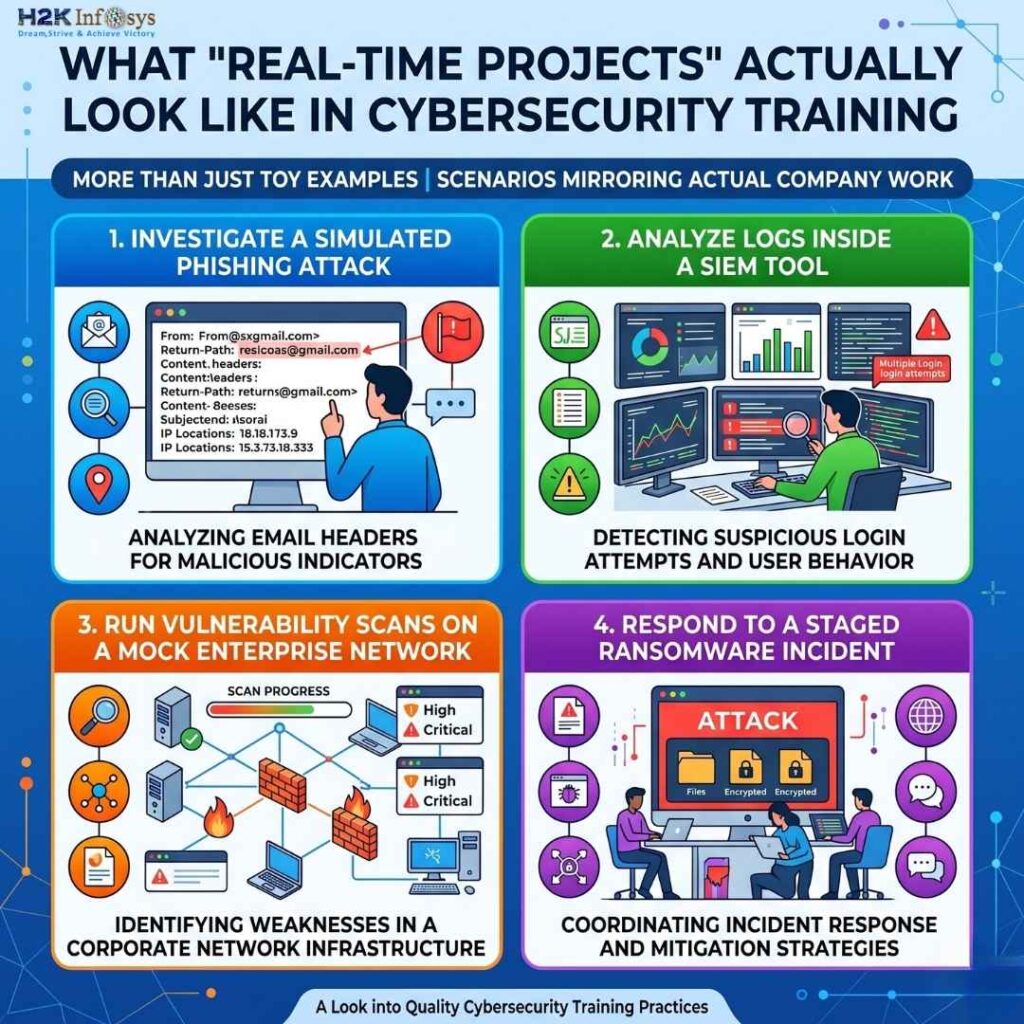
When institutes say “real-time projects,” the good ones are referring to scenarios that mirror what happens inside actual companies. Not toy examples.
For example, in one training setup I came across, learners were asked to:
- Investigate a simulated phishing attack using email headers
- Analyze logs inside a SIEM tool to detect suspicious login attempts
- Run vulnerability scans on a mock enterprise network
- Respond to a staged ransomware incident
That’s the kind of experience employers are quietly expecting now.
With the rise in cyberattacks especially ransomware targeting healthcare and finance sectors in the U.S. companies want people who’ve already seen these patterns before, even if it’s in a lab.
That’s why strong cyber security training and job placement programs are shifting toward project-based learning instead of theory-heavy modules.
Why Live Mentoring Makes a Bigger Difference Than You Think
This is one of those things people underestimate at the beginning.
You can learn tools on your own, sure. There are tons of free resources. But when you hit a wall and you will have someone experienced walk you through it changes everything.
In live mentoring sessions, you typically get:
- Real-time debugging help when labs don’t go as expected
- Insights into how professionals actually think during incidents
- Resume and interview guidance based on current hiring trends
- Honest feedback (sometimes blunt, but useful)
I remember hearing someone describe it perfectly: “You don’t just learn what buttons to click, you learn why you’re clicking them.”
Programs offering structured mentoring tend to produce more job-ready candidates, which is why they’re often tied closely with cyber security training and placement support.
What to Look for Before You Enroll
Not every program that sounds good on paper delivers in reality. A few things I’d personally double-check:
1. Tool Exposure (Not Just Theory)
Make sure the course includes tools like:
- Splunk
- Wireshark
- Nmap
- Endpoint security platforms
If it’s all slides and no dashboards, that’s a red flag.
2. Live Classes vs Recorded Content
Some platforms advertise “live,” but it’s just scheduled playback. Look for actual instructor interaction.
3. Project Depth
Ask: Are these guided labs or open-ended scenarios?
The second one is where real learning happens.
4. Placement Support That’s Actually Active
Good cyber security training and placement programs don’t just give you a certificate they help with:
- Resume building
- Mock interviews
- Real job referrals or client connections
A Quick Reality Check About “100% Placement”
You’ll see this phrase everywhere. And honestly, it’s a bit misleading.
No program can guarantee a job for every single person. What the good ones do offer is structured support that significantly improves your chances especially if you stay consistent and actually practice.
That’s something I’ve noticed with platforms like H2K Infosys and similar training providers they focus more on readiness than empty promises.
Final Thoughts (From Someone Who’s Seen Both Sides)
If you’re serious about breaking into cybersecurity in the U.S., don’t just look for a course, look for an environment.
The difference shows up later, when you’re sitting in an interview and someone asks,
“Tell me about a time you handled a security incident.”
If your answer comes from a real project you worked on even in training you’re already ahead of most candidates.
And that’s really what the right cyber security training and job placement program should do: make you feel like you’ve already started the job before you even get hired.