Breaking into cyber security course in the USA is honestly less about collecting random certificates and more about finding the right training path. I’ve seen people spend months watching free videos online, only to realize employers still expect hands-on experience, interview preparation, and practical exposure to enterprise tools.
That’s why cyber security training and job placement at H2K Infosys programs have become such a big deal recently.
A few years ago, companies were mostly hiring experienced professionals. Now? The situation is different. With ransomware attacks increasing, cloud security becoming critical, and AI-driven threats growing faster than most organizations expected, U.S. employers are actively hiring entry-level and mid-level cyber security talent. But they still want candidates who can actually work in real environments, not just pass quizzes.
And that’s where structured cyber security training with job placement support can genuinely help.
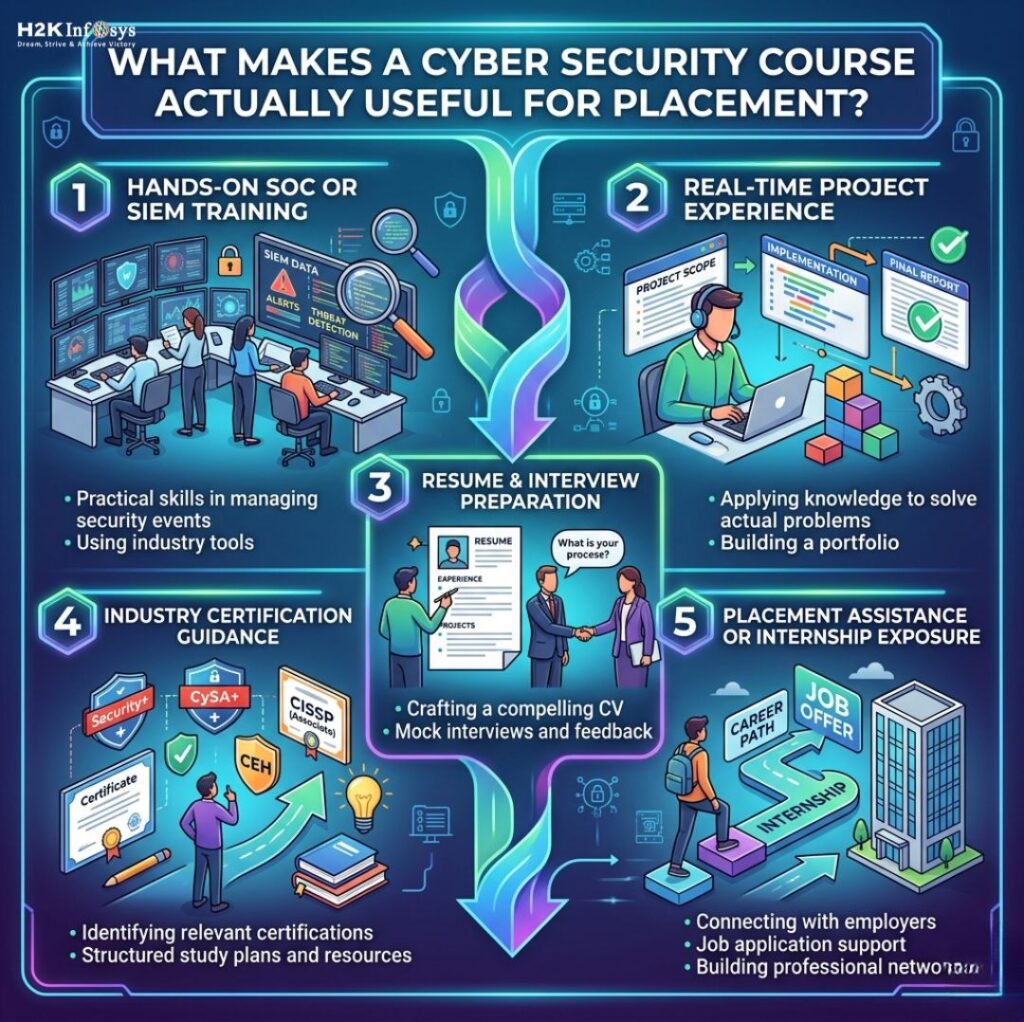
What Makes a Cyber Security Course Actually Useful for Placement?
A lot of students ask this question after getting overwhelmed by hundreds of online courses. Some are cheap. Some promise impossible salary numbers. Some barely touch practical labs.
From what I’ve observed, the courses that lead to real placements usually include five important things:
- Hands-on SOC or SIEM training
- Real-time project experience
- Resume and interview preparation
- Industry certification guidance
- Placement assistance or internship exposure
Without those pieces, students often finish cyber security jobs with training but still feel stuck when applying for jobs.
One hiring manager I spoke with last year said something interesting:
“We can train people on company processes, but we can’t teach curiosity and practical exposure from scratch during onboarding.”
That stuck with me.
Why Hands-On Learning Matters More Than Ever
Cyber security course isn’t like memorizing definitions from a textbook. Employers want people who understand how attacks happen in real environments.
For example, if a student has worked with:
- Splunk
- Wireshark
- Nessus
- Kali Linux
- Microsoft Sentinel
- CrowdStrike
- AWS Security tools
…they instantly stand out more during interviews.
This is one reason many students lean toward programs like H2K Infosys Cyber Security Training because the training usually includes practical labs, simulated enterprise scenarios, and instructor-led guidance instead of just recorded videos.
And honestly, live mentoring matters more than people realize. When students get stuck while analyzing logs or understanding threat detection workflows, having an instructor explain things in real time makes a huge difference.
Which Cyber Security Roles Are Hiring in the USA Right Now?
The U.S. market in 2026 is especially active in these areas:
Security Analyst Roles
These are often the most beginner-friendly entry points. Companies want analysts who can monitor alerts, investigate incidents, and respond quickly.
Cloud Security
AWS and Azure security skills are becoming extremely valuable. Businesses moved heavily to cloud infrastructure after remote work expanded globally, and security teams are still catching up.
SOC Analyst Positions
Security Operations Center jobs remain one of the fastest-growing areas for beginners entering cyber security jobs with training.
GRC and Compliance
Healthcare, finance, and insurance companies need professionals who understand compliance frameworks and risk management.
AI Security and Threat Detection
This one is growing fast. Organizations are now concerned about AI-assisted phishing, deepfake scams, and automated attacks.
I’ve noticed employers increasingly asking candidates about practical incident response situations rather than just certification knowledge.
Certifications That Help Students Get Hired
A good cyber security course should align with industry-recognized certifications.
The most valuable beginner-to-mid-level certifications currently include:
- CompTIA Security+
- Certified Ethical Hacker (CEH)
- CISSP (for experienced professionals)
- Splunk Certifications
- AWS Security Specialty
- Microsoft SC-200
Still, certifications alone don’t guarantee placement.
I know someone who had two certifications but struggled during interviews because they had never worked with live SIEM dashboards before. After joining a practical cyber security training with job placement program and practicing real attack simulations, interviews became much easier.
That’s the part many students overlook.
Why Placement Assistance Changes Everything
Learning skills is one thing.
Actually navigating the U.S. job market is another challenge entirely.
Students often need help with:
- Resume optimization
- LinkedIn branding
- Mock interviews
- Behavioral interview preparation
- Technical interview scenarios
- Networking strategies
Programs like H2K Infosys Placement Support Services focus heavily on these areas, which is one reason many career-switchers prefer structured training instead of self-study alone.
Especially for immigrants, international students, career changers, or professionals returning after a break, mentorship during the job search can reduce months of confusion.
Is Cyber Security Still Worth It in 2026?
Short answer: yes.
But only if you approach it practically.
The industry is evolving fast. Companies are no longer impressed by people who only know theory. They want professionals who can:
- Investigate suspicious activity
- Understand attack patterns
- Work with cloud systems
- Respond under pressure
- Communicate clearly during incidents
That’s why modern cyber security training and job placement programs focus heavily on simulations, live projects, and scenario-based learning.
And honestly, the students who succeed are usually the ones who keep practicing consistently outside class too. Even small habits reviewing security news daily, participating in labs, following breach investigations help build real-world understanding.
Final Thoughts
If you’re serious about getting placed in the USA, don’t choose a cyber security course based only on price or flashy marketing claims. Look for practical exposure, mentorship, placement guidance, and real project experience.
A program like H2K Infosys can be a strong option because it blends technical training with job-oriented preparation, which is honestly what many students need most in today’s hiring market.
The cyber security field still has huge opportunities but employers want proof that candidates can work in real environments, not just pass online quizzes. That distinction matters more now than ever.