Introduction
If the data analytics program actually teaches you how data is used in real jobs, not just how to follow steps in a tutorial. That difference sounds small, but it’s where most courses either succeed… or completely miss the point.
I’ve seen people finish a full data analytics program and still freeze when asked a basic business question like, “Why did sales drop last quarter?” Not because they didn’t learn tools, but because they never practiced thinking like an analyst.
So, What Should a Data Analytics Program Actually Do?
Let me put it this way: if a course feels too clean and straightforward, it’s probably not preparing you for reality.
Real data work is rarely neat.
You’ll open a dataset and immediately notice the following:
- Missing values
- Weird duplicates
- Columns that don’t make sense
A solid data analytics program should force you to deal with that kind of mess. That’s where the real learning happens.
The Stuff That Actually Builds Job Skills
Real Projects (The Kind You Can Talk About in Interviews)
This is a big one.
Employers don’t care if you “completed Module 7.” They care if you can explain:
- What problem you were solving
- What approach you took
- What your results meant
For example, analyzing why customer churn increased in a subscription app—that’s something you can actually discuss in an interview without sounding rehearsed.
Tools, but Used Properly
You’ll hear this everywhere: learn SQL, Python, and Power BI.
True. But just knowing them isn’t enough.
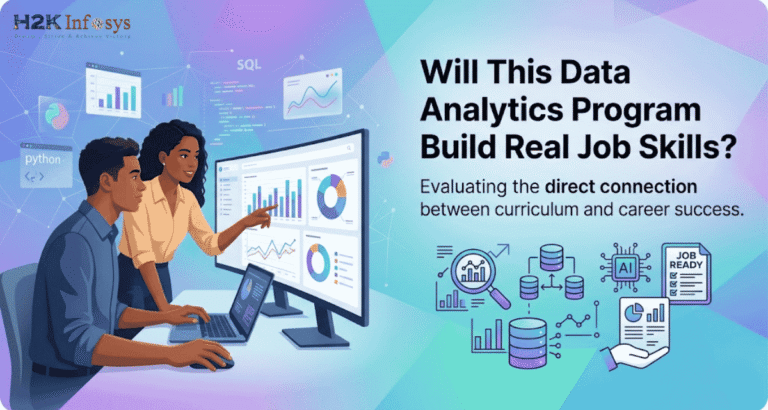
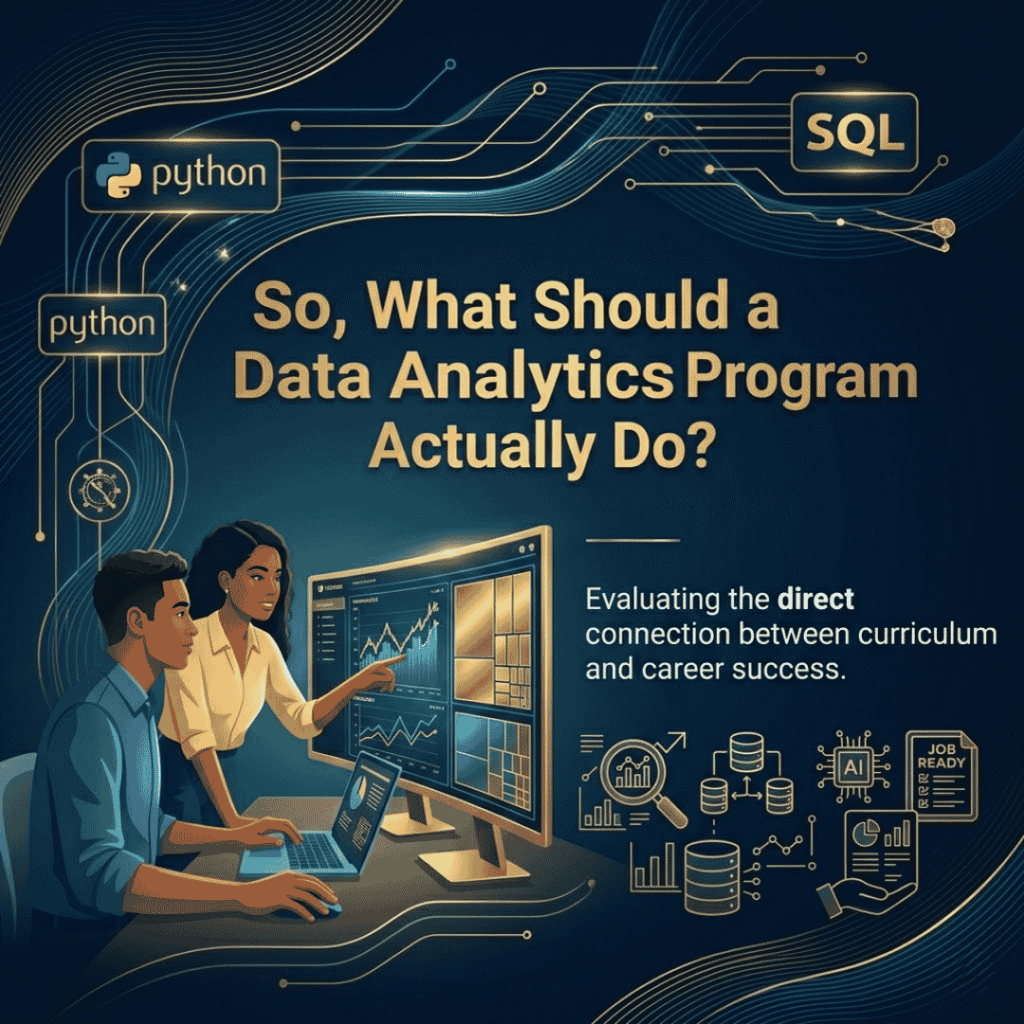
A good data analytics program will make you use these tools together:
- Pull data with SQL
- Clean and analyze it in Python
- Present it through dashboards.
That workflow matters way more than isolated lessons.
Thinking Like an Analyst (This Takes Time)
This part isn’t talked about enough.
You’re not just learning to “analyze data.” You’re learning to:
- Ask better questions
- Spot patterns that matter
- Ignore noise
Sometimes the hardest part is deciding what not to include in your analysis. That only comes with practice.
What You’ll Walk Away With (If the Program Is Solid)
A proper data analytics program should leave you with:
- Confidence handling messy datasets
- Comfort writing SQL queries without Googling every line
- A few strong projects you can actually explain
- The ability to translate numbers into decisions
And honestly, that last one is what gets people hired.
Job Market Reality in 2026
The demand is still there, but expectations are higher now.
Companies don’t just want someone who can build dashboards. They want someone who understands:
- Business context
- Data storytelling
- Basic automation
Entry-level roles like junior data analyst or business analyst are still common, but competition has increased. People who stand out usually have better project experience, not just certificates.
Mistakes That Slow People Down
I’ve noticed a pattern with learners who struggle to land jobs:
- They stick to passive learning (videos, notes, repetition).
- They avoid SQL because it feels intimidating.
- They don’t build a portfolio until it’s too late.
- They assume finishing a course = being job-ready
That last one is probably the biggest misconception.
Why Structured Programs Help (More Than You Think)
Self-learning is possible, sure. But it often looks like this:
- Jumping between random tutorials
- Learning tools without context
- Not knowing if you’re “job-ready” yet.
That’s where structured data analytics programs like H2K Infosys tend to make things easier.
They guide you through:
- Real-time projects
- Industry tools in the right order
- Resume and interview prep
That structure saves a lot of trial and error. If you’re serious about turning this into a career, it’s worth considering.
A Quick Reality Check from Current Trends
Data roles are evolving fast.
Now you’ll see analysts:
- Working alongside AI tools instead of competing with them
- Validating automated insights
- Using cloud-based datasets more frequently
So, a modern online data analytics program should reflect that shift. If it still feels stuck in 2020, that’s a warning sign.
FAQs
1. Can a data analytics program really get me hired?
It can, but only if you build real projects and understand how to explain your work.
2. How long before I’m job-ready?
Usually 3–6 months with consistent effort, assuming you’re practicing, not just watching.
3. Do I need strong coding skills?
Not really. SQL is essential, and Python helps, but you don’t need deep programming knowledge.
4. Are online courses enough?
They can be, especially if they include hands-on work and mentorship.
5. What matters most to employers?
Your ability to solve problems and communicate insights clearly.
Want to Go Deeper?
You can also explore topics like the following:
- How to build a strong data analytics portfolio
- Common SQL interview questions for beginners
- Tools every data analyst should learn in 2026
They all connect and help you move faster.
Final Thoughts
A data analytics program can absolutely help you build real job skills, but only if it pushes you beyond theory and into actual problem-solving.
If you’re choosing a course, don’t just look at the syllabus. Think about what you’ll be able to do by the end of it.
And if you want a more guided path, something like H2K Infosys can help you skip a lot of confusion and focus on what actually matters, getting job-ready.
Start small, stay consistent, and don’t wait until you feel “perfect” to begin. That part never really comes anyway.