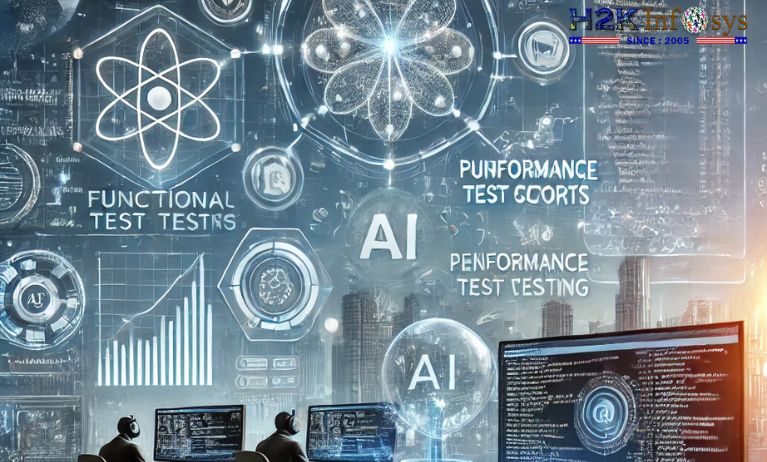
As technology continues to evolve at breakneck speed, Quality Assurance (QA) testing has shifted far beyond manual test cases and regression spreadsheets. Today’s QA professionals not only need strong analytical skills-they must also be AI‑savvy. With artificial intelligence increasingly embedded in software development lifecycles, QA testing courses have responded by integrating AI tools into their curricula.
But which AI tools are actually being taught in modern QA testing courses? Let’s break it down.
Why AI in QA Testing Matters
Before we explore the specific AI tools, it’s important to understand why AI has become indispensable in QA training.
Traditionally, QA involved manual testing, long hours of repetitive functional testing, and reactive bug detection. While those techniques still have merit, they’re slow and error‑prone. AI augments QA by:
- Automating repetitive testing tasks
- Predicting potential defect zones
- Improving test coverage with minimal human intervention
- Analyzing massive datasets to detect patterns humans can’t easily spot
- Accelerating release cycles through intelligent test suites
Modern QA courses now incorporate AI not as an optional topic but as a core component of learning.
How QA Courses Include AI Tools
Modern QA courses often categorize AI tools based on:
- Test Automation
- Test Case Generation
- Defect Prediction & Analysis
- Performance & Load Testing
- Visual/UI Testing
- Natural Language Processing for Test Scripting
Let’s look at the key AI Tools within each category.
1. AI‑Driven Test Automation AI Tools
These are among the most widely taught tools in contemporary QA courses.
a) Selenium with AI Extensions
While Selenium itself isn’t an AI tool, many QA programs teach it with AI‑enhanced frameworks such as:
- AI‑based locator strategies
- Self‑healing scripts
- Smart element detection
This bridges traditional automation with AI capabilities that reduce maintenance overhead.
b) Testim
Testim uses machine learning to identify stable test locators, decreasing test flakiness and improving reliability.
Key features taught:
- Smart DOM element learning
- Rapid self‑healing test scripts
- Visual test builders for low‑code QA automation
c) Mabl
Mabl is another tool gaining traction in QA syllabi for its full-stack intelligent automation capabilities.
Students learn:
- Auto‑scaling test execution
- Integrated visual and functional testing
- Continuous testing in CI/CD pipelines
d) Tricentis Tosca with AI
Tricentis Tosca integrates AI to reduce test case creation time and automate test design decisions.
AI teaching points include:
- Model‑based test automation
- Risk‑based testing driven by historical data
- Predictive analytics for test optimization
2. Automated Test Case Generation AI Tools
Generating quality test cases is one of the hardest parts of QA. AI has transformed this with tools that suggest and generate complete test suites.
a) TestCraft
TestCraft uses machine learning to automatically create and adapt test cases based on changes in the application.
The course teaches:
- Behavior‑driven test generation
- Self‑maintaining test models
- Integration with Scrum workflows
b) Functionalize
Functionize marries NLP and machine learning to generate test scenarios from plain English descriptions.
Students explore:
- Natural language test creation
- Cloud‑based execution
- Smart failure triage
3. Defect Prediction and Analysis Tools
QA teams increasingly rely on AI to assess where bugs are most likely to occur.
a) SonarQube with AI Plugins
SonarQube is foundational in many QA programs, but advanced courses introduce AI plugins that:
- Predict sections of code prone to defects
- Identify code smells more effectively
- Provide action‑oriented suggestions for remediation
b) DeepCode (now Snyk Code)
DeepCode uses deep learning to scan codebases and propose improvement pointers that traditional static tools miss.
Key teaching points:
- Semantic code understanding
- Automatic remediation suggestions
- Integration with Git workflows
c) Codacy
Codacy surfaced in QA syllabi as a tool that uses AI patterns to optimize code quality and flag repetitive bugs.
Participants learn about:
- Machine‑augmented style compliance rules
- Automated quality scoring
- Historical insights for technical debt
4. Performance & Load Testing Tools Enhanced by AI
AI isn’t just about functional correctness; performance matters too.
a) Neoload
Neoload uses AI to predict performance bottlenecks and optimize load test execution.
Students learn:
- Automated test scenario generation based on real usage
- Predictive performance analytics
- Continuous performance monitoring
b) LoadNinja
AI‑driven test scripts and crowd‑based performance insights make LoadNinja a popular choice in QA courses dealing with performance engineering.
Focus areas include:
- Scriptless performance testing
- Smart fault localization
- Adaptive load patterns
5. Visual/UI Testing with AI
Ensuring user interface stability across devices and user flows is a critical QA task enhanced by AI.
a) Applitools
Applitools is one of the most popular visual AI tools taught in QA programs.
What students learn:
- Visual comparisons using AI rather than pixel matching
- Responsive design testing
- Cross‑browser and cross‑device visual validation
b) Percy (by BrowserStack)
Percy uses AI to detect visual regressions and reduce noise from insignificant pixel changes.
Key learning outcomes:
- Automated visual diffs
- Integration with CI tools
- Intelligent baseline management
6. Natural Language Processing (NLP) in QA
The intersection of NLP and QA is one of the most exciting advancements in recent years.
QA courses now teach tools that convert plain English test objectives into executable scripts.
a) ChatGPT for Test Scripting
Courses often include guided labs showing how:
- ChatGPT can suggest test cases
- Provide test data scenarios
- Generate automation templates
This practice teaches students how to use AI assistants responsibly and effectively in real QA workflows.
b) GPT‑Powered Test Documentation AI Tools
Some platforms integrate GPT models to generate:
- Test plans
- Test strategy documents
- Project summaries
This helps QA teams focus on high‑level strategy instead of documentation grunt work.
7. Analytics & Reporting Tools Powered by AI
Data is at the center of QA decisions, and AI enhances how QA teams interpret data.
a) qTest Insights
An analytics platform with predictive AI capabilities that forecasts defects and helps teams make data‑driven decisions.
Students explore:
- Trend analysis
- KPI dashboards with AI forecasting
- Root‑cause insights
b) TestRail with Plugins
Modern courses teach how TestRail integrates with AI-based reporting plugins that surface:
- Risk scores
- Test prioritization recommendations
- Coverage gaps
The Future of AI in QA Courses
So many tools are emerging that QA education is becoming more dynamic and multidisciplinary. Beyond tools already mainstream, QA curricula are beginning to introduce:
- AI assistants for exploratory testing
- Generative AI for autonomous test generation
- Advanced anomaly detection for production testing
- AI‑assisted mobile app testing frameworks
- Continuous learning systems that improve tests over time
What this means for learners is that QA isn’t just about verifying whether software works – it’s about thinking like an intelligent system, leveraging AI as a collaborator rather than a mere utility.
How These Tools Are Taught in Courses
Modern QA courses don’t just list these tools – they often include:
- Hands‑on labs where students configure and run AI‑assisted test suites
- Project work where learners use AI tools in real‑world scenarios
- Case studies showing how top companies apply AI in QA
- Best practices for integrating AI into DevOps and CI/CD pipelines
- Ethics modules covering AI bias, transparency, and responsible automation
This blend of theoretical knowledge and practical application ensures learners are prepared for industry demands.
Why Learning These Tools Matters for Your Career
Whether you’re starting as a QA analyst or advancing to QA architect, AI skills will be a differentiator.
Here’s what mastering AI in QA gives you:
- Faster test cycles
- Improved test accuracy
- Higher test coverage
- Reduced manual effort
- Competitive advantage in job markets
Employers today are looking for QA professionals who not only understand software quality but can use data‑driven AI tools to improve it.
Final Thoughts
AI is reshaping QA testing in profound ways, and modern Quality assurance training and placement are keeping pace by teaching the tools that define the next generation of software testing.
From intelligent automation and visual validation to predictive defect detection and NLP-powered test generation, these tools aren’t just buzzwords they are becoming core competencies for QA practitioners.
If you’re pursuing QA education or planning to level up your testing career, getting familiar with these AI tools isn’t optional; it’s essential.