Introduction
Cybersecurity has quickly become one of the most in-demand skills in today’s digital world.
At H2kinfosys, learners gain practical exposure to real-world concepts through Cybersecurity 101 training, helping beginners build a strong foundation. From protecting personal data to securing enterprise systems, the need for skilled professionals continues to grow. For beginners stepping into this field, one of the most common questions is: How fast can I actually learn cybersecurity fundamentals? The answer depends on several factors, including your background, learning approach, consistency, and the resources you choose.
In this blog, we’ll break down a realistic timeline, what influences your learning speed, and how you can accelerate your journey into cybersecurity fundamentals effectively.
Understanding Cybersecurity Fundamentals
Before diving into timelines, it’s important to understand what cybersecurity fundamentals actually include. At a beginner level, you are expected to learn:
- Basic networking concepts (IP addresses, DNS, TCP/IP)
- Operating systems (Windows, Linux basics)
- Cyber threats and attack types (malware, phishing, ransomware)
- Security principles (CIA triad: Confidentiality, Integrity, Availability)
- Basic cryptography
- Introduction to tools like firewalls and antivirus software
Mastering cybersecurity fundamentals ensures you have a solid base for advanced learning.
How Long Does It Take to Learn the Basics?
1. Fast Track (1–3 Months)
If you are highly dedicated and can invest 4–6 hours daily, you can grasp cybersecurity fundamentals in about 1 to 3 months. This is often possible if:
- You follow structured learning paths
- You already have some IT or technical background
- You engage in hands-on labs consistently
This timeline is common among learners enrolled in intensive programs or bootcamps focused on cybersecurity fundamentals.
2. Moderate Pace (3–6 Months)
For most beginners, this is the most realistic timeline. With 1–3 hours of daily study, you can:
- Understand core concepts
- Practice basic labs
- Gain familiarity with security tools
This pace allows better retention and helps you build cybersecurity fundamentals without burnout.
3. Slow and Steady (6–12 Months)
If you’re learning part-time with limited hours per week, it may take 6 to 12 months to build a solid foundation. While slower, this approach:
- Improves long-term understanding
- Allows deeper exploration of topics
- Works well for non-technical backgrounds
Even at this pace, you can steadily develop cybersecurity fundamentals.
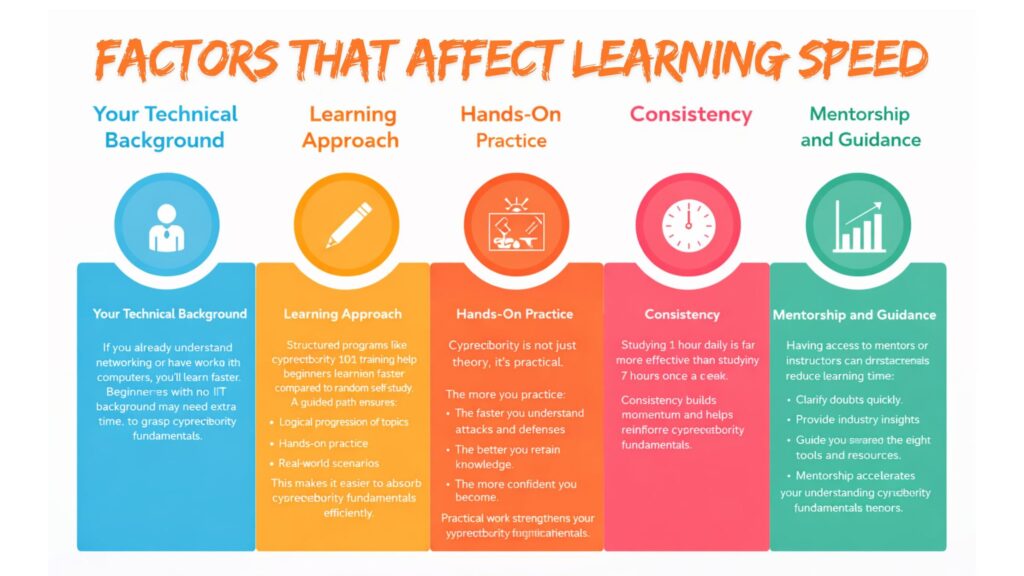
Factors That Affect Learning Speed
1. Your Technical Background
If you already understand networking or have worked with computers, you’ll learn faster. Beginners with no IT background may need extra time to grasp cybersecurity fundamentals.
2. Learning Approach
Structured programs like cybersecurity 101 training help beginners learn faster compared to random self-study. A guided path ensures:
- Logical progression of topics
- Hands-on practice
- Real-world scenarios
This makes it easier to absorb cybersecurity fundamentals efficiently.
3. Hands-On Practice
Cybersecurity is not just theory, it’s practical. The more you practice:
- The faster you understand attacks and defenses
- The better you retain knowledge
- The more confident you become
Practical work strengthens your cybersecurity fundamentals significantly.
4. Consistency
Studying 1 hour daily is far more effective than studying 7 hours once a week. Consistency builds momentum and helps reinforce cybersecurity fundamentals.
5. Mentorship and Guidance
Having access to mentors or instructors can drastically reduce learning time. They help:
- Clarify doubts quickly
- Provide industry insights
- Guide you toward the right tools and resources
Mentorship accelerates your understanding of cybersecurity fundamentals.
Step-by-Step Learning Roadmap for Beginners
Step 1: Learn Basic IT Concepts (Weeks 1–2)
Start with:
- Computer fundamentals
- Networking basics
- Introduction to operating systems
This step lays the groundwork for cybersecurity fundamentals.
Step 2: Understand Core Security Concepts (Weeks 3–6)
Focus on:
- Types of cyber threats
- Security models
- Risk management basics
You’ll begin to build strong cybersecurity fundamentals during this phase.
Step 3: Explore Tools and Practical Skills (Weeks 7–10)
Begin hands-on practice with:
- Network scanning tools
- Basic Linux commands
- Security monitoring basics
This is where cybersecurity fundamentals become more practical and engaging.
Step 4: Build Mini Projects (Weeks 11–12)
Apply your knowledge by:
- Setting up a secure network
- Simulating phishing attacks (in labs)
- Practicing vulnerability scanning
Projects reinforce your cybersecurity fundamentals through real-world application.
Can You Learn Cybersecurity Without Coding?
Yes, beginners can learn cybersecurity fundamentals without deep coding knowledge. However:
- Basic scripting (Python, Bash) helps automate tasks
- Understanding code improves vulnerability analysis
Coding enhances your cybersecurity fundamentals but is not mandatory initially.
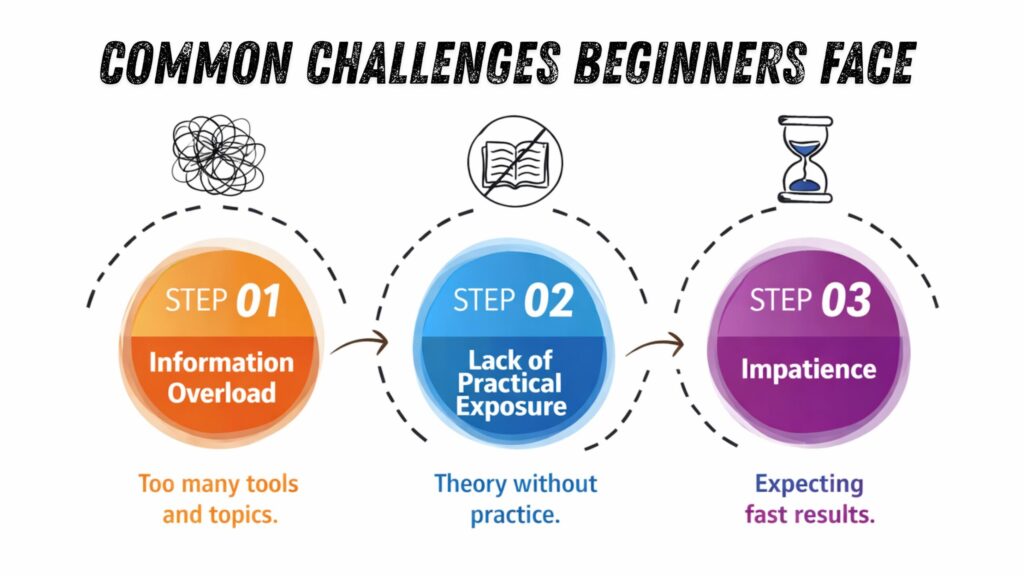
Common Challenges Beginners Face
1. Information Overload
Cybersecurity is vast. Beginners often feel overwhelmed by:
- Too many tools
- Too many topics
- Conflicting learning paths
Focusing on cybersecurity fundamentals helps reduce confusion.
2. Lack of Practical Exposure
Reading theory without practice slows down learning. Hands-on experience is essential to strengthen cybersecurity fundamentals.
3. Impatience
Many beginners expect quick results. While basics can be learned fast, mastering cybersecurity fundamentals takes time.
Tips to Learn Faster
1. Set Clear Goals
Define what you want to achieve:
- Learn fundamentals in 3 months
- Prepare for entry-level roles
- Build a basic portfolio
Clear goals help you stay focused on cybersecurity fundamentals.
2. Use the Right Resources
Choose:
- Structured courses
- Hands-on labs
- Beginner-friendly tutorials
The right resources simplify learning cyber security fundamentals.
3. Practice Daily
Even 1 hour daily can make a big difference. Consistency is key to mastering cybersecurity fundamentals.
4. Join Cybersecurity Communities
Engaging with others helps you:
- Learn from real experiences
- Stay updated
- Get motivation
Communities support your journey in learning cyber security fundamentals.
5. Build a Learning Routine
Create a schedule:
- 30% theory
- 70% practical
This balance ensures faster mastery of cybersecurity fundamentals.
Is Cybersecurity Hard for Beginners?
Cybersecurity is not inherently difficult, but it can feel complex due to its broad scope. The key is to:
- Start small
- Focus on basics
- Build gradually
With the right mindset, you can confidently learn cyber security fundamentals.
Role of Professional Training
Enrolling in cyber security training can significantly speed up your journey. These programs offer:
- Structured curriculum
- Hands-on labs
- Industry-relevant skills
- Placement support (in some cases)
They help you master cyber security fundamentals in a guided way.
What Can You Achieve in 3 Months?
If you dedicate time and effort, within 3 months you can:
- Understand basic concepts
- Identify common cyber threats
- Perform simple security tasks
- Use beginner-level tools
This means you’ll have a solid grasp of cybersecurity fundamentals.
What Comes After Fundamentals?
Once you complete the basics, you can move into specialized areas like:
- Ethical hacking
- Network security
- Cloud security
- Security analysis
All these domains build upon your cyber security fundamentals.
Conclusion
So, how fast can beginners learn cyber security fundamentals? The honest answer is it depends on your dedication, consistency, and learning strategy. With the right cyber security training, many beginners can build a solid foundation in about 3 months, while others may take 6 months for deeper understanding. The key is not speed but quality. Rushing through topics without clarity can slow your progress later. Focus on strong fundamentals, regular practice, and structured learning. Cybersecurity offers excellent career opportunities, and with persistence and the right Cyber security training, beginners can confidently grow and achieve their career goals faster than expected.