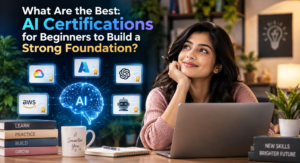
If you’re looking to actually strengthen your resume not just “add more stuff” to it AI certifications are worth thinking about. Not in a hype-driven way, but in a practical sense. How They show you didn’t just read a few articles or watch random videos… you actually spent time understanding how things work in a fast changing field, especially when you pursue structured programs like those offered by H2K Infosys.
And in AI Certifications, that effort shows. A solid Artificial intelligence certification online usually means you’ve gone beyond surface-level knowledge and built a base in things like machine learning or deep learning. That alone puts you ahead of a lot of people who just list “AI” as a skill without much depth.
One thing that does make a difference, though where the certification comes from. If it’s from a recognized provider like H2K Infosys, it tends to carry more weight. Recruiters notice names they trust. It’s subtle, but it helps you stand out when profiles start looking similar.
So what is an AI certification, really?
In simple terms, it’s proof that you understand both the theory and the practical side of AI. Not just concepts but how to apply them.
Most programs walk you through Ai and machine learning course, neural networks, deep learning, NLP, and some level of data science. But more importantly, you’re usually working on problems, projects, maybe even messy datasets (which is where the real learning happens, honestly).
And at this point, AI Certifications isn’t some niche area anymore. It’s baked into how companies operate whether that’s automating workflows, improving customer experience, or making sense of large datasets. So when you have a certification, you’re basically telling employers, “I can contribute here I know how this works in practice.”
Why do people actually go for these certifications?
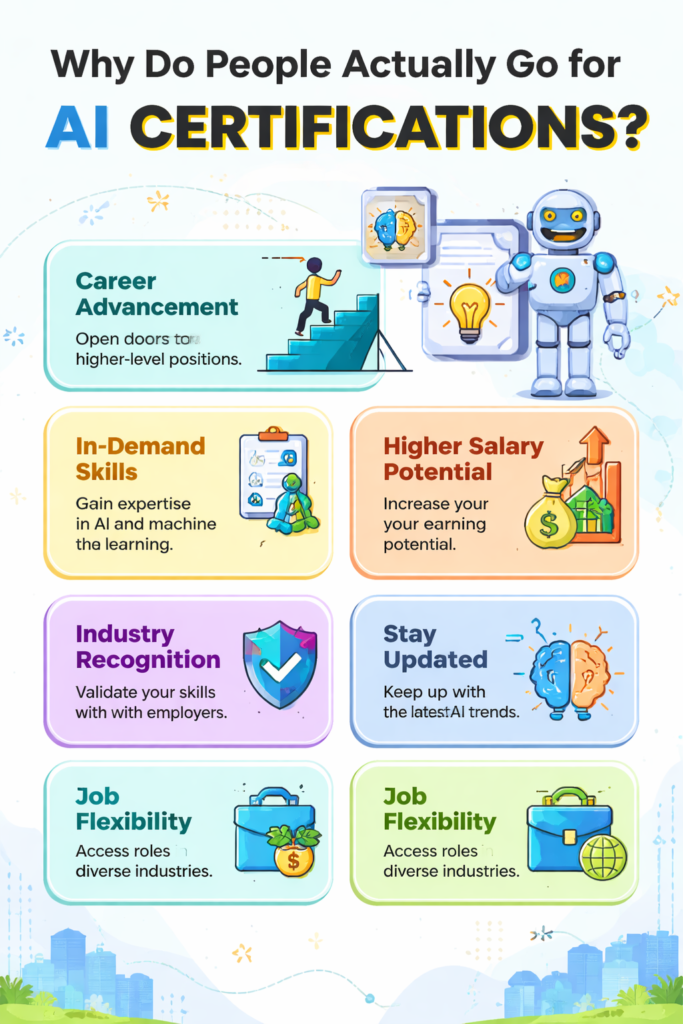
There’s no single reason. It’s usually a mix of things:
Career movement
Sometimes it’s about switching roles, sometimes moving up. Either way, it signals you’re ready for more technical or specialized work.
Better salary prospects
Not always immediate but yes, AI Certifications skills are valued. Companies are actively looking for people who can work with data and models.
A bit of an edge
Let’s be real competition is there. AI Certifications gives you something concrete to point to.
Trust factor
If your training comes from a known platform, it reduces doubt. Employers feel more comfortable assigning real responsibilities.
Practical exposure
Many courses focus on hands-on work. And that’s usually the part that sticks.
Where AI Certifications actually shows up (beyond theory)
You start noticing it everywhere once you’ve worked with it a bit:
- Predictive analytics – forecasting trends, customer behavior, demand patterns
- NLP – chatbots, sentiment analysis, virtual assistants
- Automation – repetitive tasks quietly handled in the background
- Recommendation engines – why platforms seem to “get” your preferences
- Image and speech recognition – healthcare scans, security systems, even phone features
It’s not futuristic anymore it’s already part of daily operations in many industries.
Why certifications matter a bit more now
AI Certifications isn’t slowing down. If anything, it’s becoming more integrated into everything.
- Roles are growing quickly data scientists, ML engineers, AI specialists
- Tech changes fast, so staying current actually matters
- Some programs introduce you to communities or peers (which can lead to unexpected opportunities)
- You start thinking differently more structured, more data-driven
- Employers see certifications as a signal that you’re trained on current tools and practices
It’s not just about learning it’s about staying relevant.
Skills you’ll need (and no, you don’t need to be perfect at all of them)
A lot of people hesitate here, but the entry point is more manageable than it seems.
- Programming – Python is the main one. You’ll see R or Java sometimes, but Python dominates
- Math & stats – basic understanding helps (linear algebra, probability, statistics)
- Data handling – cleaning, organizing, analyzing data (Pandas, NumPy, that kind of thing)
- ML concepts – supervised vs unsupervised learning, reinforcement learning basics
- Cloud platforms – AWS, Google Cloud, Azure show up often
- Deep learning – neural networks for more complex tasks
Most people don’t learn all of this at once. It builds gradually.
What happens after you get certified?
You’ve got options. Some people pivot careers, others grow within their current role.
Common paths include:
- Machine Learning Engineer
- Data Scientist
- AI Researcher
- AI Consultant
- Business Intelligence Analyst
- Robotics Engineer
- AI Certifications Product Manager
There’s no single path it depends on what you lean toward.
AI Certifications in large organizations (what it actually looks like)
Big companies aren’t just experimenting anymore they’re using AI Certifications in practical ways:
- Automating routine processes
- Making decisions based on large-scale data analysis
- Improving supply chain efficiency
- Personalizing customer interactions
- Detecting security threats in real time
It’s less about replacing people and more about making systems smarter and faster.
Roles where AI Certifications is used regularly
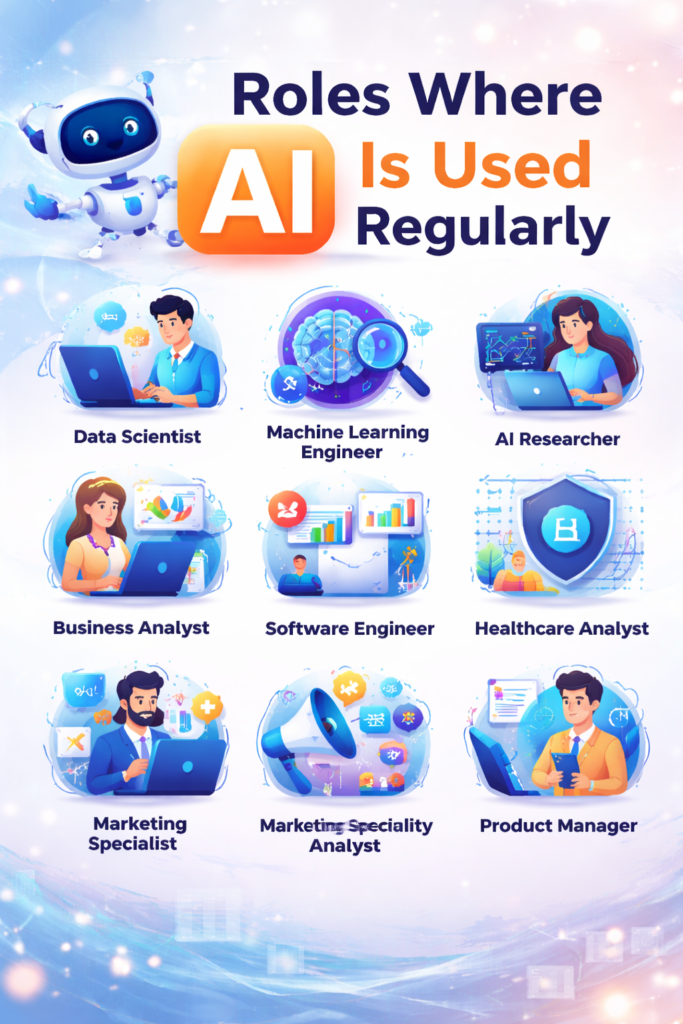
Not every job is “AI-focused,” but many roles use it as part of the workflow:
- Data Scientist
- Machine Learning Engineer
- AI Certifications Research Scientist
- Software Engineer (with AI components)
- AI Certifications Developer
- Business Intelligence Analyst
- Robotics Engineer
Some build AI systems, others use them it varies.
Quick answers to common questions
Do AI certifications help your resume?
Yes. They show focused, relevant skills not just general interest.
Are AI Certifications online courses taken seriously?
More than before, especially if they include real projects and come from known platforms.
How long does it take?
Depends on the course. Could be a few weeks, could be a few months.
Where do you start?
Usually with programming and basic math, then move into machine learning. A structured course makes the path clearer.
The simple takeaway
- AI Certifications show you’ve actually learned something not just claimed it
- They can support career growth and better opportunities
- AI Certifications is already part of real-world systems across industries
- Many tech roles rely on these skills every day
If you’re thinking about getting into AI Certifications, starting with a structured course (something like what H2K Infosys offers) can make the process feel a lot less overwhelming. It’s not instant but it’s a solid step forward.