H2K Infosys believes an effective Ai Course Certification isn’t just about ticking off topics on a syllabus. That part matters, sure but it’s really about how everything fits together. You can have the most comprehensive curriculum on paper, but if it doesn’t translate into real skills, it falls flat
AI Training Program actually makes a difference? Hands-on work. Real tools. A learning path that doesn’t just dump information on you but builds your ability step by step. The best programs don’t treat theory and practice like separate worlds they mix them. You learn something, then you use it right away. That’s how people move from “I get the idea” to “I can actually build this.”
And honestly, any solid AI Training Program should lean heavily on projects, tools, and skills you’ll use in a jobnot just definitions from a textbook.
So, what is an AI training program, really?
At the simplest level, it’s a structured AI Training Program way to learn how to build intelligent systems. That usually means diving into machine learning, deep learning, and data-driven methods.
Most programs cover things like:
- Core ideas—machine learning, neural networks, NLP
- Programming (usually Python, plus libraries like NumPy and Pandas)
- Building and testing models
- Getting those models into real-world use (deployment)
The big difference from a regular programming course? You’re not just writing code. You’re teaching systems to recognize patterns, make predictions, and sometimes even take decisions. That shift is… bigger than it sounds.
Why picking the right program actually matters
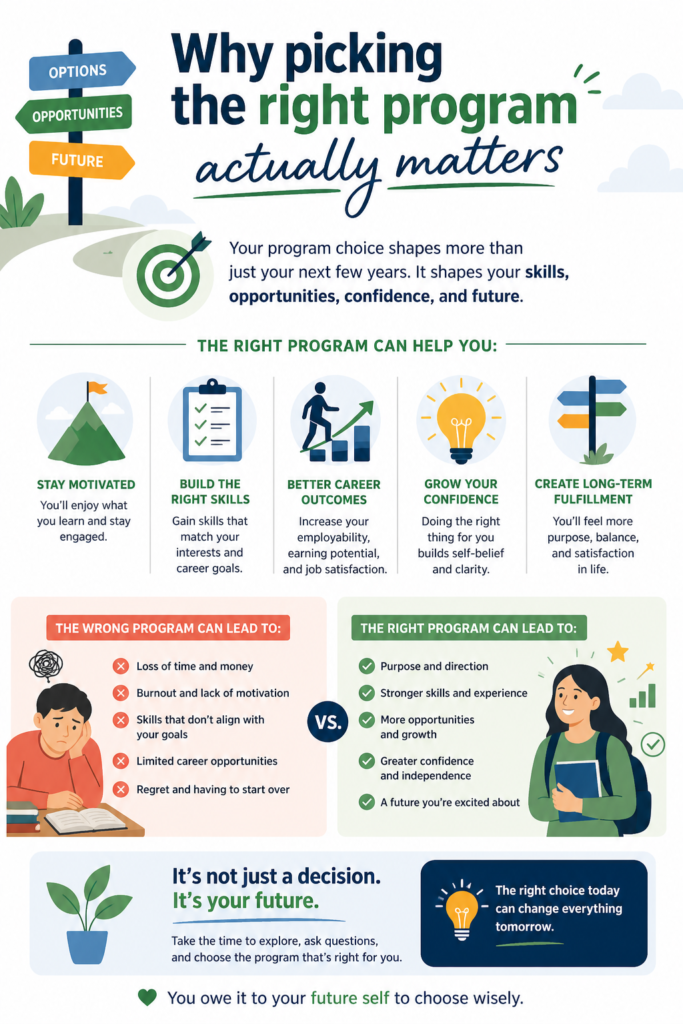
Not all programs are equal—and you’ll notice pretty quickly once you try to apply what you’ve learned.
A few things that tend to separate the good from the not-so-good:
- Relevance to industry: AI changes fast. If the material feels dated, it probably is—and that can hurt when you’re job hunting.
- Practical exposure: Employers expect you to have handled real data (messy, incomplete, frustrating data). Not just clean examples.
- Tool familiarity: Frameworks like TensorFlow or PyTorch aren’t “nice to have” anymore. They’re expected.
- Career alignment: You should clearly see how what you’re learning connects to roles like ML Engineer or Data Scientist.
Some Artificial intelligence Training Program look impressive at first glance but lean too much on theory. That gap becomes obvious the moment you try to build something end-to-end.
What should you actually look for?
1. A curriculum that builds—not jumps around
A good program doesn’t throw you into the deep end immediately. It builds up:
- Machine Learning (supervised, unsupervised)
- Deep Learning (CNNs, RNNs, transformers)
- NLP (text classification, sentiment analysis)
- Computer Vision (image recognition, object detection)
There should be a clear progression. If it feels random, that’s usually not a great sign.
2. Real projects (not toy examples)
This is where things start to click.
Good projects might involve:
- Predicting customer behavior using actual datasets
- Building image classifiers
- Creating chatbots using NLP
And ideally, the data isn’t perfectly clean—because it never is in real life.
You should get used to:
- Handling missing values
- Cleaning messy data
- Evaluating models with real metrics (precision, recall, etc.)
That’s the kind of experience that sticks.
3. Exposure to industry tools
This one’s pretty much non-negotiable.
You’ll likely work with:
- Programming: Python (sometimes R)
- ML frameworks: TensorFlow, PyTorch, Scikit-learn
- Data tools: Pandas, NumPy
- Visualization: Matplotlib, Seaborn
- Deployment: Docker, Flask, FastAPI
- Cloud: AWS, Azure, Google Cloud
It’s not enough to recognize the names—you should actually use them. Break things. Fix them. That’s part of it.
4. A clear learning path
Good AI Training Program don’t leave you wondering what’s next.
Typically, it looks something like:
- Beginner: Python basics, stats, simple ML
- Intermediate: Model building, feature engineering
- Advanced: Deep learning, deployment, scaling
You should be able to see your progress—not just feel like you’re jumping between topics.
5. Real-world workflows
In practice, AI Training Program follow a process:
- Collect data
- Clean and preprocess it
- Engineer features
- Train models
- Evaluate performance
- Deploy and monitor
And honestly? The messy parts—bad data, performance issues, model drift—are just as important as the modeling itself.
6. Deployment and MLOps (often skipped, but critical)
A lot of beginner AI Training Program stop after training a model. That’s… not really enough.
In real systems, you also need to know:
- How to serve models via APIs
- How to manage CI/CD pipelines
- How to monitor models after deployment
- How to use tools like Docker
Most real-world failures don’t happen because the model is bad. They happen because deployment wasn’t handled well.
7. Instructors with actual experience
This one’s easy to overlook, but it shows.
You want instructors who’ve worked on real systems. They’ll talk about:
- Scaling challenges
- Data issues in production
- Trade-offs you won’t find in textbooks
If everything sounds too clean and theoretical… it probably is.
8. Meaningful assessments
A certificate should mean something.
Look for:
- Practical assignments
- Capstone projects
- Scenario-based evaluations
Basically—does it prove you can do something, or just that you completed the course?
9. Flexibility (because life happens)
Not everyone can study full-time.
Things that help:
- Self-paced learning
- Recorded sessions
- Weekend or evening classes
AI takes time to learn. Flexibility makes it realistic.
10. Career support (nice bonus)
Some programs also offer:
- Resume help
- Interview prep
- Practice with real interview questions
Not essential but definitely useful when you’re trying to break into the field.
How AI actually plays out in real projects
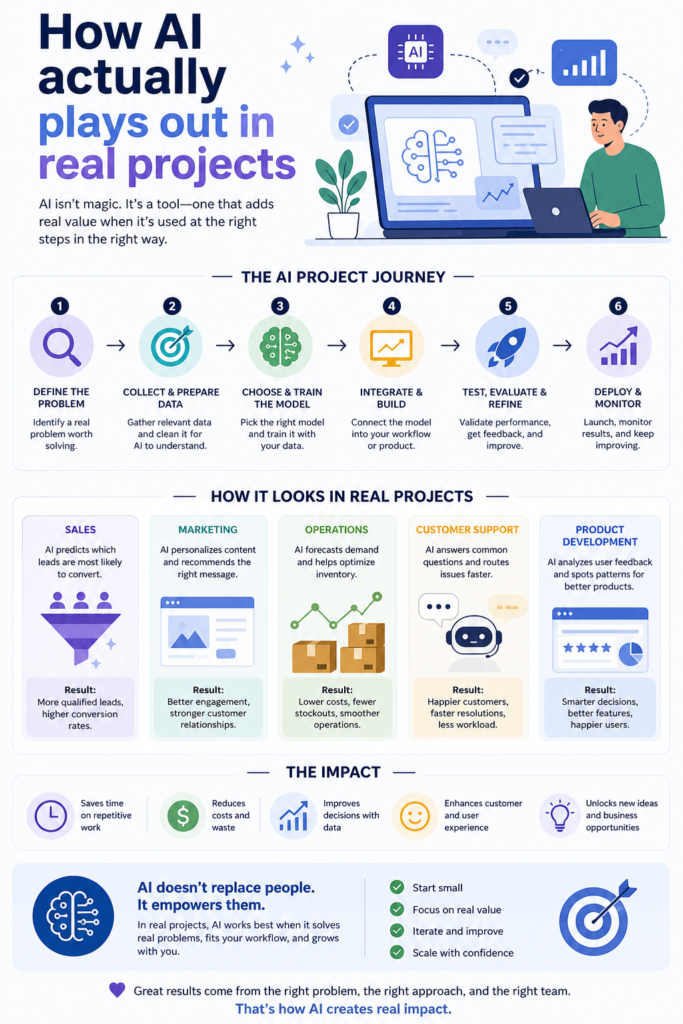
Take something like fraud detection:
- Data comes in (often in real time)
- It’s cleaned and processed
- A model is trained (say, a classification model)
- Predictions are served through an API
- Performance is monitored over time
Sounds straightforward, but then reality kicks in:
- The data is imbalanced
- Predictions need to be fast (low latency)
- There are regulatory constraints
That’s the kind of complexity you want exposure to—not just ideal scenarios.
Skills you’ll need along the way
Technical:
- Python
- Math (linear algebra, probability)
- Data analysis
- Machine learning algorithms
Practical:
- Data preprocessing
- Model evaluation
- Debugging
Soft skills (underrated, honestly):
- Problem-solving
- Analytical thinking
- Interpreting results
Where AI Training Program shows up in the real world
Pretty much everywhere now:
- Healthcare: disease prediction
- Finance: fraud detection, risk analysis
- Retail: recommendation systems
- Manufacturing: predictive maintenance
Behind the scenes, there’s always more going on—data privacy, scaling, system integration… things you don’t always see in tutorials.
Roles that use AI daily
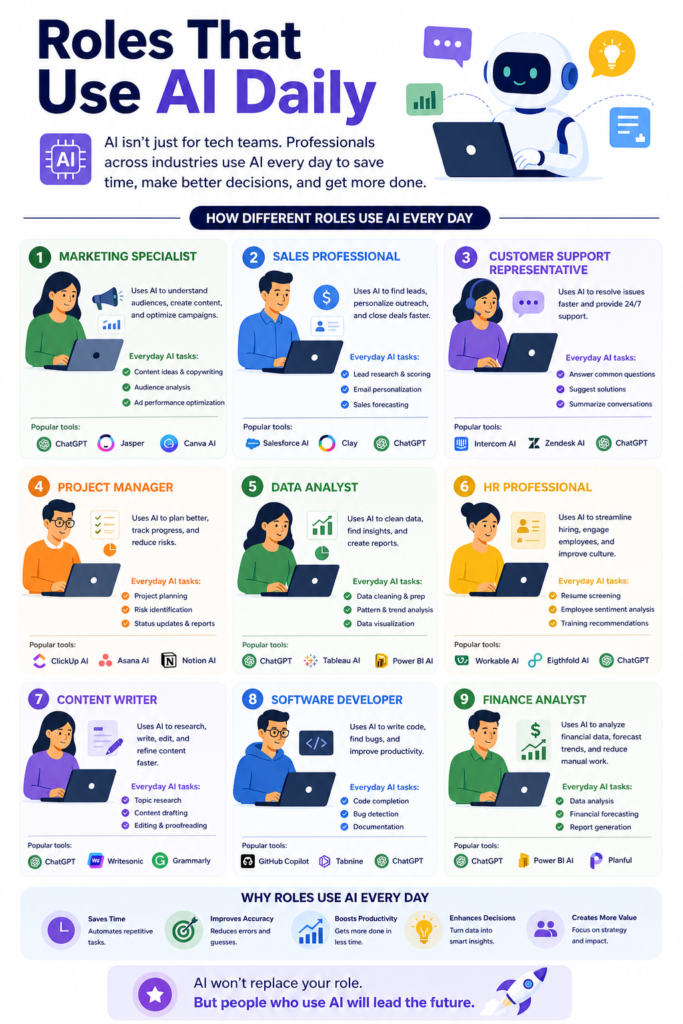
- Data Scientist
- ML Engineer
- AI Engineer
- Data Analyst
Each role leans slightly differently—some more toward modeling, others toward deployment.
Career paths after learning AI Training Program
Common directions include:
- Machine Learning Engineer
- Data Scientist
- AI Research Assistant
- NLP Engineer
- Computer Vision Engineer
Over time, people usually specialize—maybe in NLP, maybe computer vision—and grow into more senior roles.
Quick answers (because everyone asks these)
Where should beginners start?
Python and basic statistics. Jumping straight into deep learning usually backfires.
Do certifications matter?
They do—but only if they reflect real, practical skills.
How long does it take?
Anywhere from 3 to 9 months, depending on depth and pace.
Do you need coding experience?
It helps, but many programs start from scratch.
AI vs Machine Learning?
Machine learning is part of AI. AI Training Program usually cover a broader scope ML, NLP, computer vision, system design
A few takeaways
- The best AI Training Program mix theory with hands-on work
- Real projects make a huge difference
- Knowing tools isn’t optional anymore
- Deployment and MLOps are often overlooked—but crucial
- A structured path helps you actually progress
- Certifications should reflect real ability, not just completion
If something feels too easy or too theoretical… it probably won’t prepare you for real work. That’s usually a good instinct to trust.