If you are trying to find the best Artificial Intelligence Course Online in 2026, here’s the short answer: choose a program that teaches real-world AI skills through hands-on projects, current industry tools, mentorship, and job-focused learning not just theory videos you forget after two weekends. The strongest AI programs today combine machine learning, generative AI, cloud deployment, and practical career support in one path.
And honestly? That’s where a lot of people get stuck.
There are thousands of Artificial Intelligence Course Online now. Some are brilliant. Some are glorified slide decks with dramatic marketing. A few still teach outdated workflows from 2019 like nothing changed after ChatGPT, multimodal AI, or enterprise automation became mainstream.
I’ve seen people spend months bouncing between random YouTube playlists, buying cheap “lifetime access” courses during sales, then realizing they still can’t build anything meaningful or explain AI concepts in an interview without sounding rehearsed.
So this guide is built differently.
Instead of listing generic tips, we’ll break down what actually matters when choosing an artificial intelligence engineer course today, what hiring managers are quietly looking for in 2026, and why structured programs with real mentorship especially platforms like H2K Infosys are getting more attention from working professionals and career switchers.
Why AI Courses Exploded in Popularity So Fast
A few years ago, learning AI felt like something reserved for research labs or people with PhDs.
Now? AI is everywhere.
Banks use predictive analytics to detect fraud. Machine learning for diagnostics in health care companies. Automation of analysis of customer behavior in retail companies. Even small startups are integrating generative AI tools into daily workflows.
The big shift happened after the generative AI wave accelerated globally. Once tools like ChatGPT, Gemini, Claude, and enterprise copilots became mainstream, companies realized they didn’t just need “developers.” They needed professionals who understand AI systems, workflows, prompts, automation, data pipelines, and model behavior.
That changed hiring expectations almost overnight.
Which is why demand for Artificial Intelligence Course Online increased massively across the U.S., India, Canada, and Europe.
But demand also created noise.
A lot of online AI programs started promising things like:
- “Become an AI Engineer in 30 Days”
- “Zero Coding to AI Expert Instantly”
- “Guaranteed Six-Figure Salary”
Realistically, serious AI learning takes consistency, guided practice, and project exposure.
That’s why choosing the right Artificial Intelligence Course Online matters more now than it did even two years ago.
What Makes an AI Course Actually Worth Your Time?
This is the part most ranking articles skip.
People assume the “best” course means the one with the biggest brand name.
Not always.
Sometimes the better course is the one that helps you stay accountable, practice weekly, and build projects that resemble real company workflows.
A strong artificial intelligence engineer course should include:
1. Real Project-Based Learning
You should build things.
Not just watch someone else build things.
A surprising number of online AI courses are still mostly passive learning. You watch videos, take a quiz, download a certificate, and move on.
But recruiters increasingly care about practical application.
Can you:
- Build a machine learning pipeline?
- Fine-tune a model?
- Do you work with Python and AI frameworks?
- Understand prompt engineering?
- Deploy AI solutions?
- Explain your project decisions?
That’s why project-heavy training matters.
One thing learners often appreciate about H2K Infosys is that the training approach leans heavily toward hands-on implementation instead of purely academic theory. That distinction matters more than people realize.
2. Updated Curriculum for 2026 AI Trends
This one is huge.
AI evolves ridiculously fast.
A course built around outdated tools can quietly waste months of your time.
Modern AI programs should include exposure to:
- Generative AI concepts
- Large Language Models (LLMs)
- Prompt engineering
- AI ethics and responsible AI
- Machine learning workflows
- Deep learning basics
- Python for AI
- TensorFlow or PyTorch
- Cloud AI deployment
- AI automation tools
- Real-world datasets
Some courses still barely mention generative AI, which feels strange considering how companies are integrating AI copilots into enterprise operations right now.
3. Instructor Support and Mentorship
This gets underestimated until someone hits a wall.
Learning AI alone can feel overwhelming.
Especially when:
- Your code breaks
- Your model accuracy drops
- You don’t understand hyperparameters
- You’re trying to prepare for interviews
- You’re balancing work and learning after 9 PM
That’s where mentor-led programs become valuable.
The reason many learners prefer structured platforms like H2K Infosys is because they combine instructor-led sessions with practical guidance. That human support can make a massive difference when concepts become complex.
And honestly, motivation drops fast in fully self-paced programs if there’s no accountability.
The Hidden Problem With Many AI Courses Online
A lot of AI content online looks impressive on the surface.
Cinematic trailers. Fancy dashboards. Buzzwords everywhere.
But when students finish the course, they still struggle to answer practical interview questions.
I’ve personally seen resumes filled with certificates but almost no deployable projects.
That’s becoming a bigger issue because companies are changing how they evaluate AI talent.
Hiring managers increasingly ask candidates to:
- Explain business use cases
- Demonstrate AI workflows
- Walk through project architecture
- Discuss model limitations
- Show practical problem-solving
This is why project-oriented AI and machine learning courses have become more respected than purely theoretical certification paths.
The strongest learners today are usually the ones who practiced consistently on real-world scenarios.
Who Should Take an Artificial Intelligence Engineer Course?
People sometimes assume AI is only for software engineers.
Not true anymore.
The AI industry has widened dramatically.
Today, these professionals are actively moving into AI careers:
- Software developers
- Data analysts
- QA engineers
- Cloud professionals
- Business analysts
- Automation engineers
- Fresh graduates
- IT professionals returning after career breaks
- Working professionals looking to future-proof their careers
I’ve even seen marketing professionals learn AI automation because their companies started integrating AI-assisted workflows into content operations.
That’s how broad the impact has become.
The key is choosing the right learning pace and support structure.
Some learners do well with university-style theory.
Others need guided implementation and industry-oriented training.
H2K Infosys tends to appeal more to career-focused learners who want practical exposure aligned with current hiring expectations.
What Employers Expect From AI Professionals in 2026
This part matters more than most course reviews admit.
Recruiters are no longer impressed by certificates alone.
The AI hiring market matured.
Companies now want people who can solve practical business problems using AI not just recite definitions.
Here’s what employers increasingly look for:
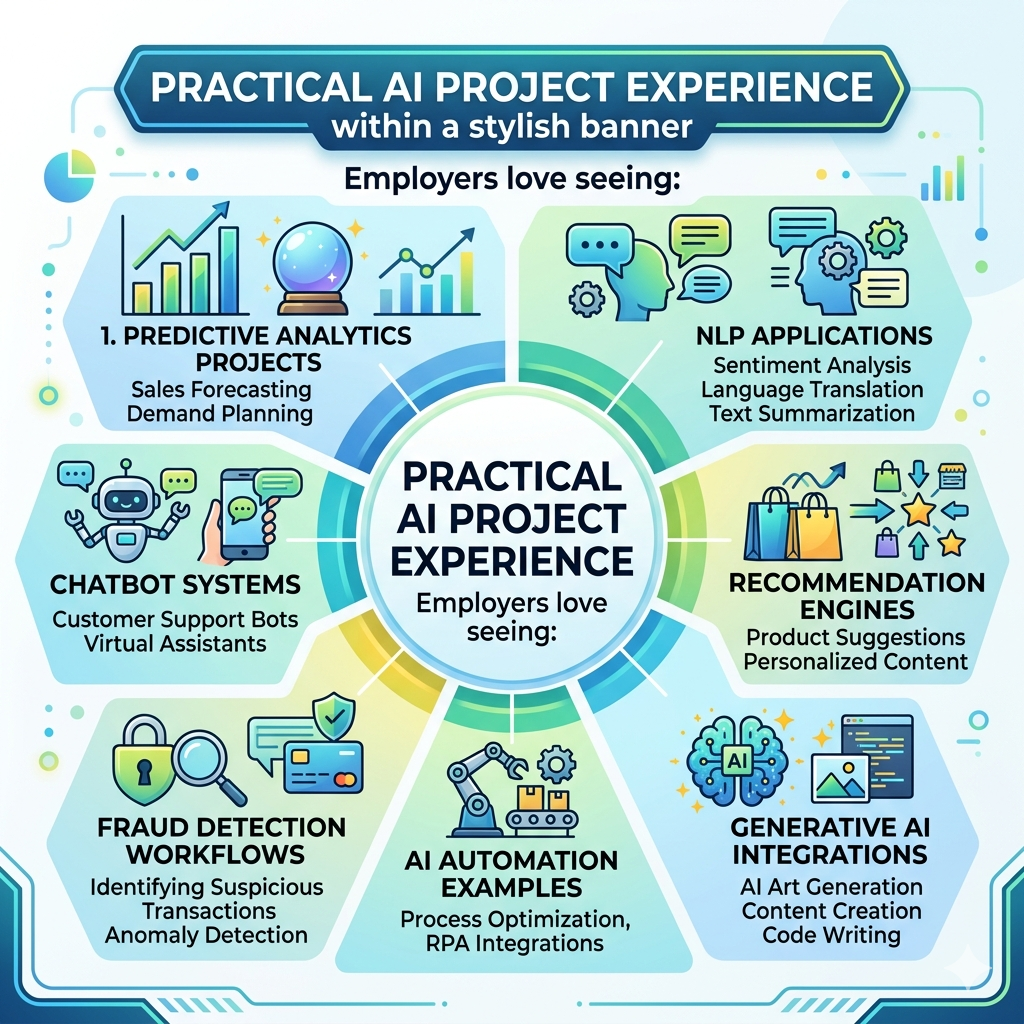
Practical AI Project Experience
Employers love seeing:
- Predictive analytics projects
- NLP applications
- Chatbot systems
- Recommendation engines
- Fraud detection workflows
- AI automation examples
- Generative AI integrations
A good Artificial Intelligence Course Online should help learners build portfolio-ready projects.
Communication Skills
This surprises technical learners sometimes.
You need to explain AI decisions clearly.
Can you describe why you selected a model? Can you explain bias risks? Can you discuss performance tradeoffs?
AI professionals who communicate clearly often stand out during interviews.
Understanding of Business Context
This became increasingly important after enterprises started deploying AI at scale.
Businesses don’t just want “AI engineers.”
They want people who understand:
- efficiency
- automation
- customer experience
- scalability
- compliance
- operational value
The strongest Artificial Intelligence Course Online teach technical skills alongside business application thinking.
Why Structured Learning Still Beats Random Tutorials
You can absolutely learn parts of AI for free online.
There’s incredible content available.
But there’s a difference between:
“Watching AI content”
and
“Becoming job-ready.”
That gap is where many learners struggle.
Random tutorials often create fragmented knowledge.
You learn one model here. One tool there. A prompt engineering trick somewhere else.
But you never build a structured understanding.
That’s why many professionals eventually move toward organized training platforms like H2K Infosys after trying scattered self-learning paths.
A structured roadmap saves time.
And honestly, time matters.
Especially for working professionals balancing:
- jobs
- family responsibilities
- upskilling
- interview preparation
- certification goals
A guided artificial intelligence engineer course helps remove the “what should I learn next?” confusion.
The Rise of Generative AI Changed AI Learning Completely
This is probably the biggest shift in modern AI education.
Before 2023, many AI programs focused heavily on traditional machine learning theory.
Now companies are aggressively exploring:
- AI copilots
- LLM workflows
- enterprise automation
- retrieval-augmented generation (RAG)
- AI agents
- multimodal systems
- AI-powered analytics
Courses that ignore these trends already feel outdated.
And learners know it.
A modern Artificial Intelligence Course Online should introduce practical generative AI concepts alongside traditional machine learning foundations.
That combination matters because employers increasingly want hybrid skill sets.
You don’t necessarily need to become a research scientist.
But you do need to understand how modern AI systems function in business environments.
This is one reason career-focused programs like H2K Infosys have gained visibility they’re aligning training more closely with practical industry usage instead of purely academic theory.
Red Flags to Watch Before Enrolling in Any AI Course
Not every AI course delivers what it promises.
A few warning signs are easy to miss.
Unrealistic Salary Promises
Be careful with courses guaranteeing instant high-paying jobs.
AI careers are strong, yes.
But real growth still requires:
- skill-building
- project work
- interview prep
- consistency
Outdated Curriculum
If a course barely mentions generative AI, modern AI workflows, or cloud deployment, that’s not ideal in 2026.
No Hands-On Work
Watching videos alone is not enough.
Practical implementation is critical.
Weak Mentor Support
AI concepts become difficult quickly.
Without support, many learners lose momentum.
No Career Guidance
Interview preparation, resume support, and mock sessions matter more than people expect.
This is another area where structured learning providers like H2K Infosys often stand out because they focus beyond just content delivery.
What a Good Learning Path Usually Looks Like
People often ask:
“What should I learn first in AI?”
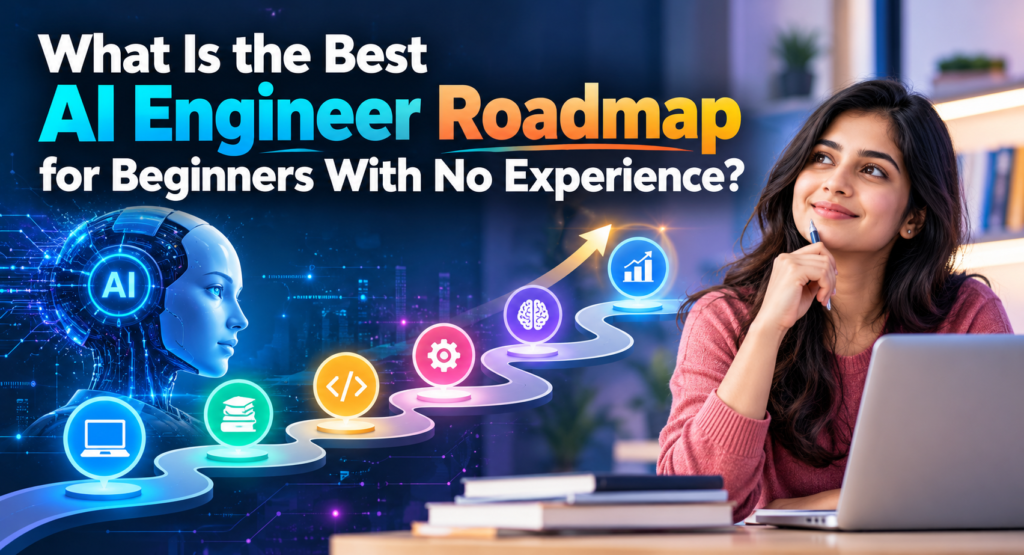
A realistic progression usually looks something like this:
Step 1: Python Fundamentals
You don’t need to become a hardcore software engineer first.
But you should understand:
- variables
- functions
- loops
- data handling
- libraries
Step 2: Data Analysis Basics
Understanding data is foundational.
This includes:
- Pandas
- NumPy
- visualization
- preprocessing
Step 3: Machine Learning Concepts
This is where many AI and machine learning courses begin introducing:
- supervised learning
- unsupervised learning
- regression
- classification
- clustering
Step 4: Deep Learning & Neural Networks
Here learners explore:
- neural networks
- CNNs
- NLP basics
- model training
Step 5: Generative AI & LLMs
This is now becoming essential.
Learners increasingly need exposure to:
- prompt engineering
- LLM applications
- retrieval systems
- AI automation
- chatbot workflows
Step 6: Real Projects + Deployment
This step matters massively.
Building usable projects creates confidence and interview credibility.
A strong Artificial Intelligence Course Online guides students through practical implementation instead of stopping at theory.
Why Many Professionals Prefer H2K Infosys for AI Training
There are countless online learning platforms now.
So why do many learners lean toward H2K Infosys?
A few practical reasons keep coming up in discussions among professionals:
Industry-Oriented Learning
The focus tends to stay aligned with real-world implementation instead of purely academic explanations.
That’s important because enterprise AI environments look very different from textbook examples.
Instructor-Led Sessions
Live guidance helps learners ask questions in real time.
This becomes especially valuable when dealing with machine learning workflows, debugging, or AI project architecture.
Hands-On Training
Many learners specifically look for project exposure because employers increasingly expect practical capability.
Career-Focused Approach
Resume preparation, mock interviews, and job-oriented support can genuinely help learners transition into AI roles faster.
Flexibility for Working Professionals
A lot of AI learners today are already employed full-time.
Programs that accommodate busy schedules tend to perform better among career-switching professionals.
And honestly, that flexibility matters more than flashy marketing.
AI Careers Are Expanding Beyond Traditional Tech Roles
One interesting trend in 2026 is how AI skills are spreading into nontraditional industries.
We’re seeing AI adoption in:
- healthcare
- logistics
- finance
- cybersecurity
- education
- retail
- manufacturing
- HR automation
- customer support
That means AI literacy itself is becoming valuable.
Even professionals who don’t become full-time AI engineers benefit from understanding AI workflows and automation.
That’s partly why AI and machine learning courses now attract such a broad audience.
Companies increasingly want employees who can work alongside AI systems effectively.
A Quick Reality Check About Learning AI
AI is exciting.
But it can also feel intimidating at first.
Especially if you come from a non-programming background.
A lot of people quietly worry:
“What if I’m not technical enough?”
Truthfully, consistency matters more than perfection.
The learners who succeed are usually the ones who:
- practice regularly
- build projects
- ask questions
- stay patient
- follow structured learning
Not necessarily the people who memorize the most theory.
That’s why mentorship-driven learning environments often help learners progress faster.
You don’t have to figure out every concept alone.
Final Thoughts
Choosing the right Artificial Intelligence Course Online in 2026 is less about collecting certificates and more about building practical, future-ready skills.
The AI industry is evolving incredibly fast.
And while there are endless AI and machine learning courses available online, the programs that stand out are the ones focused on real implementation, updated industry trends, mentorship, and career readiness.
That’s why many learners are increasingly turning toward structured, hands-on platforms like H2K Infosys. The combination of practical projects, instructor guidance, and job-oriented learning aligns closely with what modern employers actually expect.
At the end of the day, the best Artificial Intelligence Course Online is the one that helps you move from “learning concepts” to confidently applying AI in real-world scenarios.
And honestly, that transition is where real career growth begins.