Yes, you can pursue artificial intelligence courses even if you don’t come from an IT background, especially with programs offered by H2K Infosys. In fact, a lot of people doing it right now started exactly where you are curious, slightly unsure, but willing to try.
So… is AI really open to non-tech folks?
Honestly? Yeah.
You won’t wake up one day and suddenly “get” AI just by enrolling in one of those online courses for artificial intelligence. It takes some patience. A bit of confusion at first. And then, slowly, things start making sense.
I’ve seen people from completely unrelated fields banking, logistics, even teaching shift into AI-related roles. Not overnight. But steadily. What helped them wasn’t some genius-level coding skill. It was having a structured path instead of randomly jumping between tutorials.
Why non-IT backgrounds aren’t a disadvantage
This part surprises people.
AI isn’t just about writing code all day. It’s about solving real problems. And if you already understand how a business works or how customers behave you’re actually ahead in some ways.
Think about it:
- A healthcare worker understands patient data better than most developers
- Someone in sales knows customer patterns intuitively
- A finance professional already thinks in terms of risk and numbers
So when you take courses of artificial intelligence, you’re not starting from zero. You’re just adding a technical layer to what you already know.
Where H2K Infosys comes in
There’s no shortage of AI courses online. That’s actually part of the problem it’s overwhelming.
Some courses go too deep, too fast. Others stay so basic that you don’t feel job-ready even after finishing them.
H2K Infosys sits somewhere in the middle, which… oddly enough, is exactly what most beginners need.
They don’t assume you know everything already
You start simple. Like, really simple:
- What AI actually is
- Basic Python no prior coding needed
- Real-life examples that don’t feel abstract
You actually do things, not just watch
This is where many learners get stuck elsewhere too much passive learning.
Their artificial intelligence training course pushes you into
- Hands-on exercises
- Real datasets (messy, like in real jobs)
- Small projects that build confidence over time
At first, it feels slow. Then suddenly you realize you’re understanding things you used to skip.
A quick real-life type situation
I remember someone I think they were working in operations who decided to move into analytics. Zero coding background. None.
The first few weeks? Rough. They struggled with basics.
But after sticking with a structured program something like what H2K offers, things started clicking:
- They could read and understand data
- Build simple models
- Actually explain what they were doing (which is huge in interviews)
Not some dramatic transformation but enough to shift their career direction.
That’s usually how it goes.
What you’ll learn in artificial intelligence courses
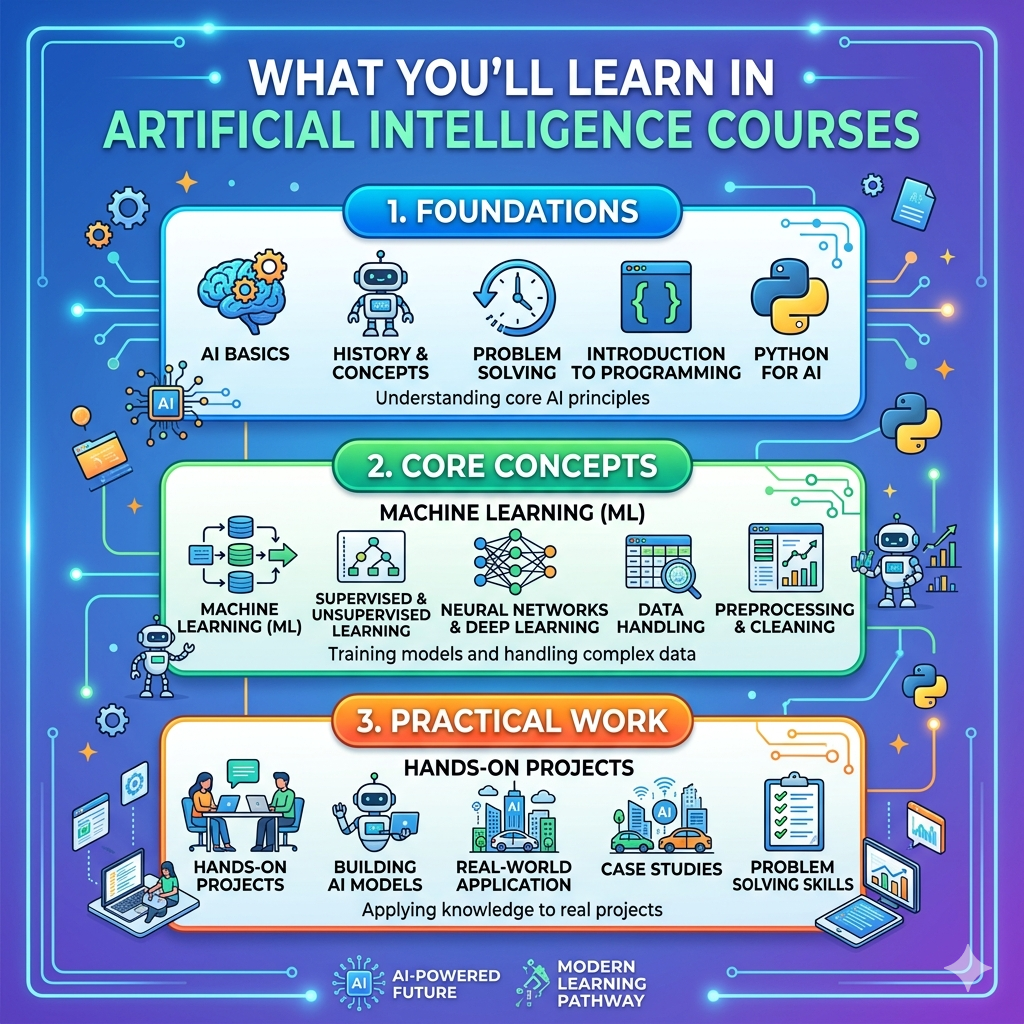
Most online courses for artificial intelligence at H2K Infosys follow a gradual path. Nothing too chaotic.
You’ll move through:
- Foundations like AI basics, Python
- Core concepts like machine learning, data handling
- Practical work like projects, case studies
And yeah, you will feel stuck at times. That’s normal. Everyone does.
Is it worth stepping into AI right now?
If you’re asking in 2026 this is probably one of the best times.
AI isn’t some niche skill anymore. It’s everywhere:
- Retail companies predicting what you’ll buy
- Banks catching fraud before it happens
- Even small businesses automating customer support
So learning AI now isn’t just about switching careers. Sometimes it’s about staying relevant in the one you already have.
Final thought
If you’re coming from a non-IT background, the hesitation makes sense. It’s a big shift. No point pretending otherwise.
But you don’t need to have everything figured out before you start.
What you do need is:
- A clear learning path
- Some consistency
- And a course that actually prepares you for real work not just theory
That’s where something like H2K Infosys’ artificial intelligence training course tends to help. It bridges that awkward gap between “I’ve learned something” and “I can actually use this.”
And that gap? That’s where most people give up.