Choosing the right AI training program especially with a provider like H2K Infosys isn’t really about chasing whatever course happens to be trending this week. It’s more personal than that. It comes down to fit where you are right now, and where you’re actually trying to go. Sounds simple, but people skip that step all the time.
Your current skill level matters more than you think. Your career direction too. And honestly, how practical the course is… that can make or break the whole experience.
The better Ai Machine learning Courses don’t just sit in theory all day. They pull in real tools, actual workflows, and projects that feel a bit closer to what real IT teams deal with. That balance understanding the idea and then actually doing something with it that’s usually when things start to click.
What Is an Right AI Training Program?
At its core, an Right AI Training Program is just a structured way to learn how AI works, step by step. You don’t jump into the deep end right away you build up to it.
Most programs tend to cover a mix of things:
- Core concepts like supervised learning or neural networks
- Programming (usually Python, sometimes R)
- Tools like TensorFlow, PyTorch, or Scikit-learn
- And probably the most valuable part projects that simulate real-world scenarios
Some courses are designed for complete beginners. Others go deep into specialization. There’s no universal “best” option it really depends on where you’re starting.
Why Choosing the Right Program Actually Matters
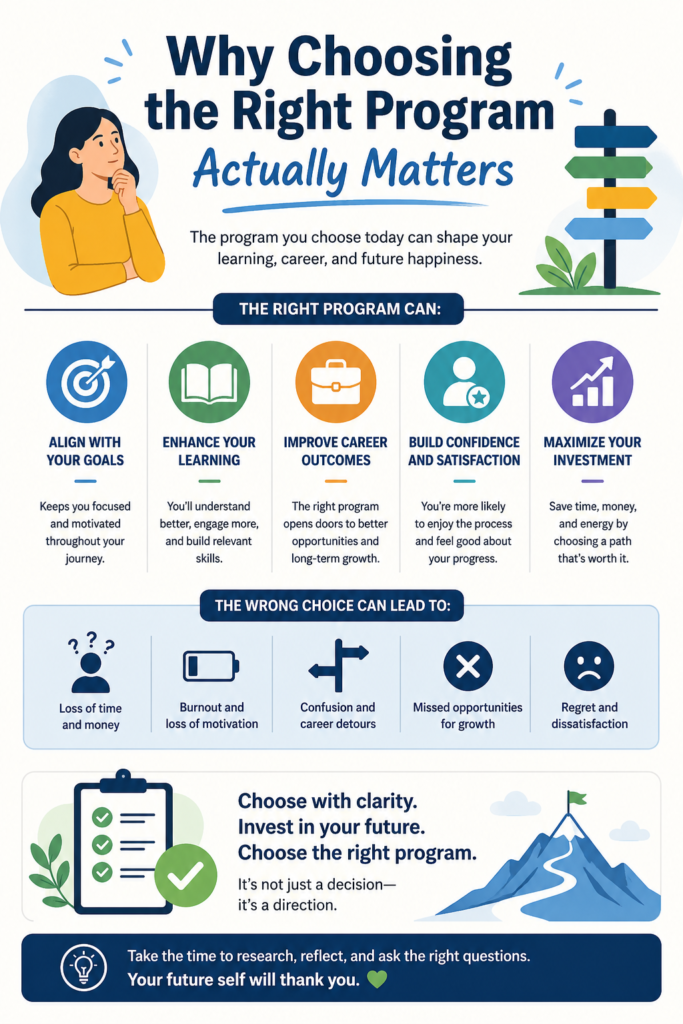
This part gets underestimated… a lot.
If a Right AI Training Program doesn’t line up with your goals, you can end up learning quite a bit—but not the right things. That’s where people get stuck later, especially when they try to apply what they’ve learned in an actual job.
And if you’re already working, time is limited. So it’s not just about learning it’s about learning something useful. Otherwise, it starts to feel like effort without direction, which gets frustrating pretty quickly.
What You Should Think About Before Choosing
1. Your Career Goals
Not all AI roles are the same, even though they’re often grouped together.
- Data analysts focus more on visualization, SQL, and some ML
- Machine learning engineers build and deploy models
- AI developers mix software engineering with AI concepts
- Business analysts work more with interpreting AI-driven insights
Even having a rough direction early on helps more than people expect.
2. Your Current Skill Level
This is where people tend to misjudge themselves either thinking they know more than they do, or the opposite.
- Beginner courses usually don’t expect coding experience
- Intermediate ones assume some programming knowledge
- Advanced programs dive into deep learning, optimization, deployment
If you go too advanced too soon, it can feel overwhelming. Too basic, and you’ll probably feel stuck or bored.
3. Tools and Technologies
In the real world, Right AI Training Program isn’t just ideas it’s built using tools. A decent program should include things like:
- Python (most common)
- Frameworks like TensorFlow or PyTorch
- Data tools like Pandas and NumPy
- Visualization tools such as Tableau or Power BI
- Deployment tools like Docker or Kubernetes
- Some exposure to cloud platforms (AWS, Azure, GCP)
But here’s the thing it’s not about how many tools they list. It’s about how they’re actually used together. Context matters.
How AI Actually Works in Practice
In real projects, Right AI Training Program usually follows a pretty structured flow though it rarely feels that clean when you’re doing it.
- Data gets collected (databases, APIs, logs…)
- It’s cleaned and prepared (usually messier than expected)
- A model is selected
- The model is trained
- Performance gets evaluated (accuracy, precision, etc.)
- Then it’s deployed
- And later… monitored, updated, sometimes fixed
Take retail, for example. Right AI Training Program might analyze customer behavior and recommend products in real time. That kind of end-to-end workflow is what good training programs try to mimic not just isolated pieces.
What Skills Do You Actually Need?
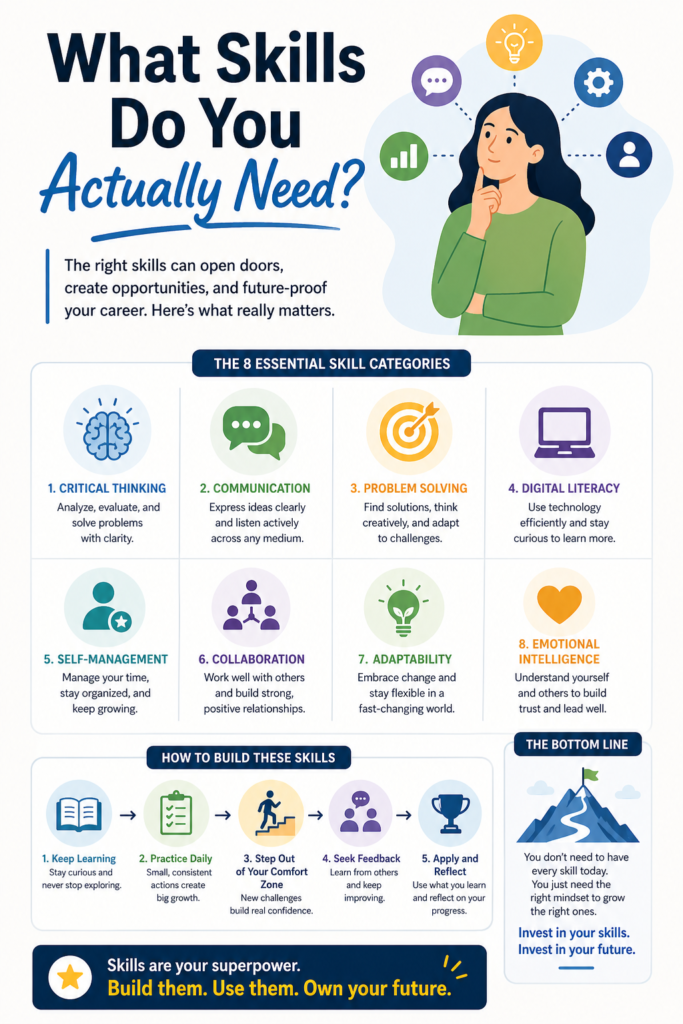
You don’t need everything from day one, but a few basics definitely help:
Core skills:
- Programming (Python is the usual starting point)
- Basic math—statistics and probability
- Data handling and preprocessing
- Understanding machine learning algorithms
Helpful extras:
- Problem-solving mindset
- Analytical thinking
- Some awareness of business use cases
And if you go a bit further things like cloud basics, Git, APIs they start adding real value.
How AI Is Used in Companies
Right AI Training Program isn’t experimental anymore it’s already part of everyday operations in many industries.
- Healthcare uses it for diagnosis support
- Finance relies on it for fraud detection
- Retail builds recommendation systems
- Manufacturing uses predictive maintenance
- IT teams apply it for anomaly detection
That said, real systems aren’t always neat. There are constraints data privacy, scalability, integration issues. Good programs usually touch on that reality, at least a little.
Common Roles That Use AI
A few roles come up often:
- Data Scientist (modeling and analysis)
- Machine Learning Engineer (deployment and optimization)
- Right AI Training Program (building AI into applications)
- Business Intelligence Analyst (working with insights)
Each role leans on a slightly different mix of skills. Which is why aligning your course with your goal actually matters.
Career Paths After Right AI Training Program
Once you finish a program, there are a few directions you might take:
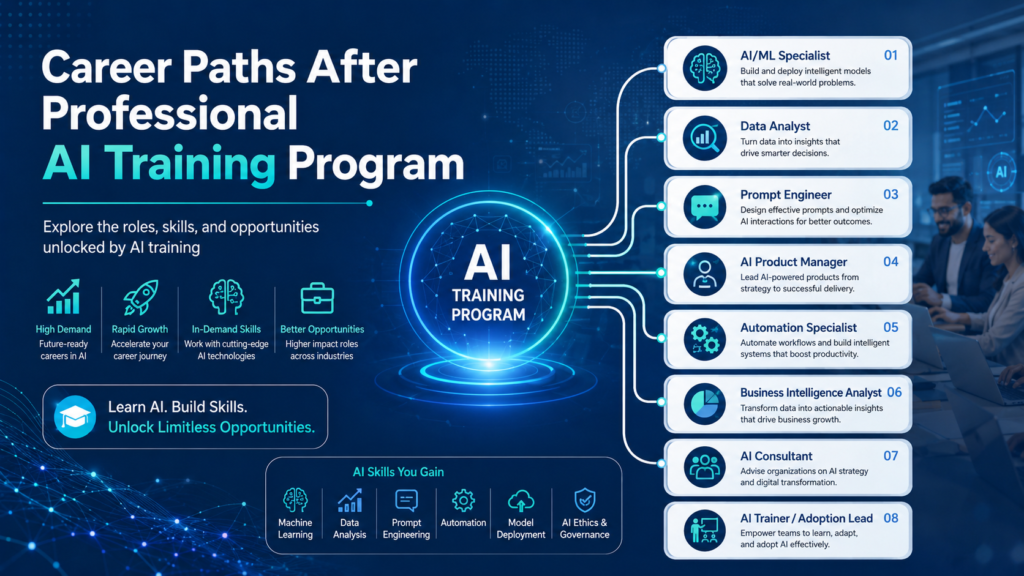
- Entry-level AI or data roles
- Data analyst or junior data scientist positions
- Hybrid roles that combine domain knowledge with AI
A typical progression could look like:
Junior Data Analyst → Data Scientist → Senior ML Engineer → AI Architect
But honestly… it’s rarely that neat. Projects, experience, and opportunities tend to shape the path more than job titles do.
How to Tell If a Program Is Actually Good
A few things usually stand out:
- Hands-on projects (not just theory)
- Real datasets and end-to-end workflows
- Instructors with actual industry experience
- A structured path from basics to advanced topics
- Coverage of deployment or MLOps (a lot of courses skip this)
If those pieces are missing, something tends to feel incomplete.
Challenges You Might Run Into
Learning Right AI Training Program isn’t always smooth. Some parts take time to settle in:
- Understanding math concepts
- Moving from theory to implementation
- Dealing with messy, real-world data
- Debugging models (this can get frustrating)
- Handling large datasets
Programs with guided support or practical exercises usually make this easier but there’s still a learning curve.
What a Typical Learning Path Looks Like
Most people move through something like this:
- Foundations: Python, basic statistics
- Intermediate: machine learning models
- Advanced: deep learning, NLP
- Practical: projects, deployment, real-world scenarios
Not always perfectly in that order but close enough.
Quick FAQs
How long does it take?
Usually 3 to 9 months, depending on how deep you go and your pace.
Do you need coding experience?
Not always. Some beginner programs start from scratch.
Are certifications important?
They help, but practical skills tend to matter more.
Can you switch careers with Right AI Training Program?
Yes—especially if you’ve worked on real projects.
AI vs Machine Learning?
AI is the broader field. Machine learning is a subset focused on data-driven models.
Final Thoughts
At the end of the day, choosing the right Ai Training Courses is really about alignment your goals, your current level, and how practical the learning actually is.
The Right AI Training Program that tend to stick with people aren’t just the ones that explain concepts well. They’re the ones that let you do something with those concepts. That shift from understanding to applying is where confidence usually builds.
If you’re exploring structured, hands-on options, programs like those from H2K Infosys try to bridge that gap between theory and real-world work. And that’s often what makes the difference not just knowing something, but feeling ready to actually use it