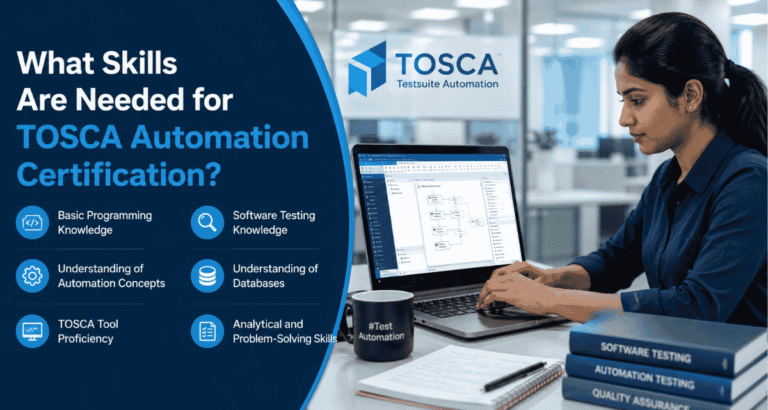
If you’re aiming for a TOSCA Automation Certification, the biggest thing to know is this: companies are not just looking for someone who can click through the tool. They want people who understand testing, business workflows, and how automation actually behaves in real projects. That’s the part many beginners miss at first.
A few years ago, automation hiring mostly revolved around coding-heavy tools. Now? Enterprise companies are leaning harder toward low-code platforms like Tricentis Tosca because teams need faster releases without maintaining thousands of fragile scripts. That shift is exactly why demand for skilled TOSCA Automation Course professionals keeps climbing in 2026.
And honestly,people coming from manual testing backgrounds are adapting surprisingly well.
Start With Testing Basics First
Before diving deep into automation, you need a decent grip on software testing itself. Sounds obvious, maybe, but plenty of learners rush straight into automation modules and then struggle during certification exercises.
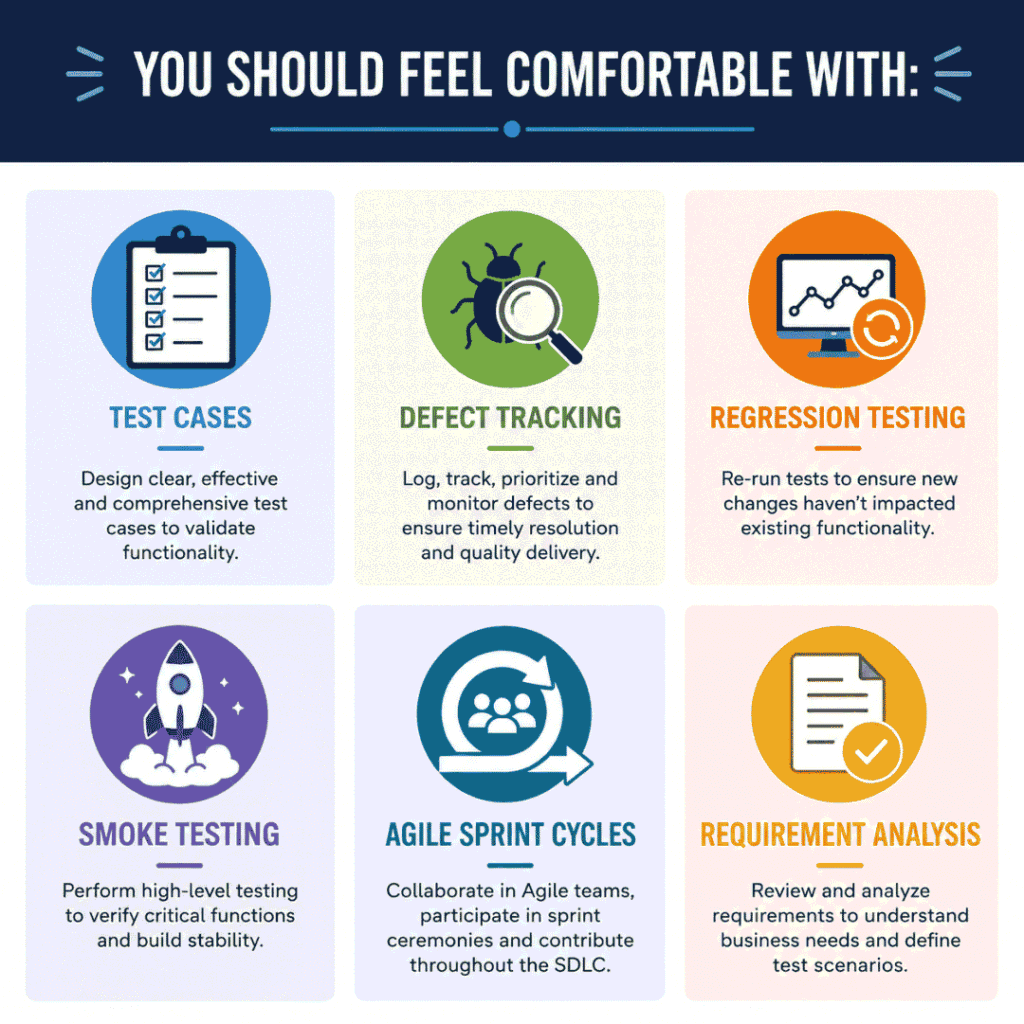
You should feel comfortable with:
- Test cases
- Defect tracking
- Regression testing
- Smoke testing
- Agile sprint cycles
- Requirement analysis
Imagine this situation for a second. A banking application changes one small payment workflow before production release. The tester now has to decide which scenarios are risky enough to retest immediately.That decision-making process matters just as much as automation execution.
Most good TOSCA Training Online programs spend time on this foundation because enterprise testing is rarely “tool-only” work.
You Don’t Need Heavy Programming Skills
This is probably the most searched question around Tosca.
No, you do not need advanced coding knowledge to start learning it.
That’s actually one reason why so many QA professionals move toward TOSCA Automation Course after years of manual testing. The model-based approach reduces dependency on scripting while still allowing large-scale automation.
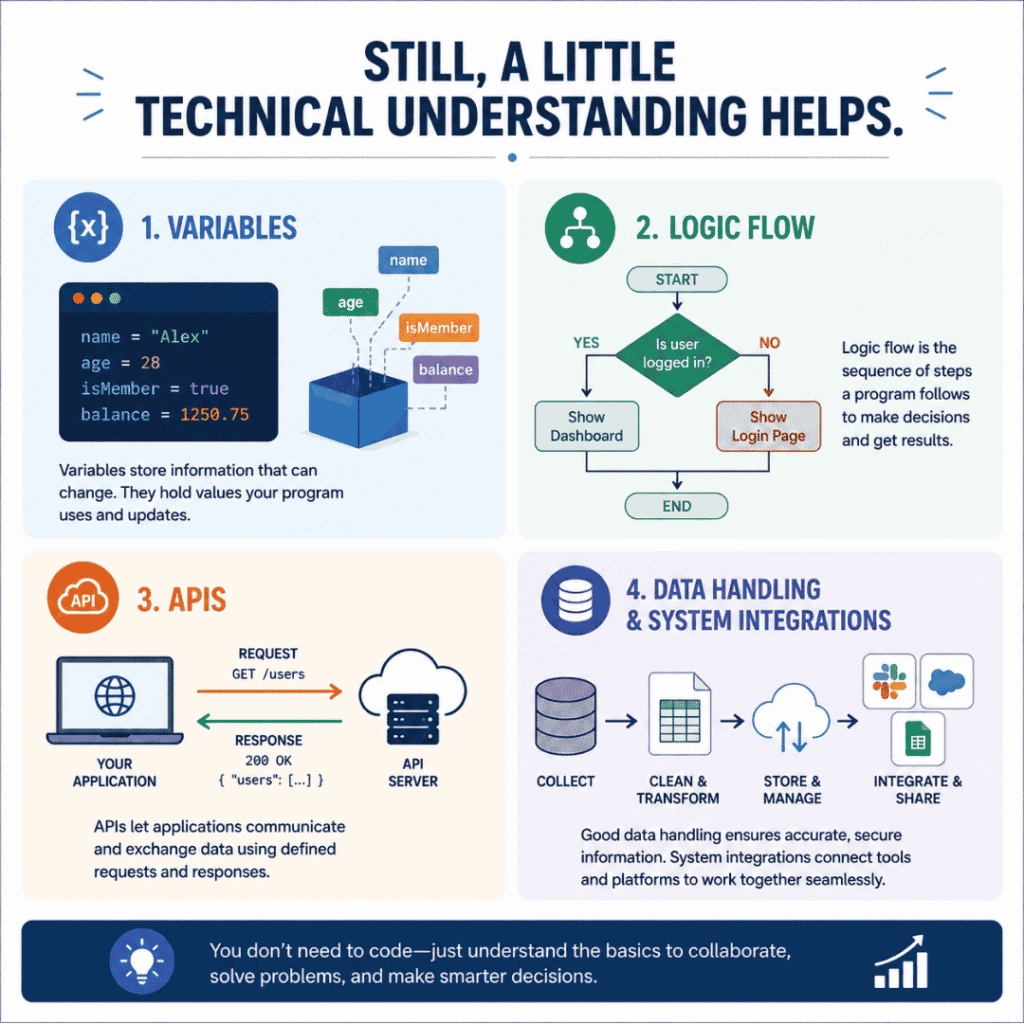
Still, a little technical understanding helps. Things like:
- Variables
- Logic flow
- APIs
- Data handling
- System integrations
Nothing extremely advanced. You’re not expected to become a hardcore developer overnight.
In real projects, most automation engineers spend more time troubleshooting business workflows than writing complicated code anyway.
Understanding TOSCA Commander Is Essential
At some point, every learner spends hours inside TOSCA Automation Course Commander trying to organize modules correctly. It feels confusing initially. Then one day it suddenly clicks.
You should know how to:
- Create reusable modules
- Build execution lists
- Manage test data
- Generate reports
- Handle reusable test cases
- Maintain automation assets
People who practice these tasks repeatedly during Tricentis TOSCA Training usually gain confidence much faster than those relying only on recorded videos.
That hands-on repetition matters during interviews too. Recruiters often ask practical questions like:
“What would you do if a reusable module suddenly fails across multiple test cases?”
They want thinking, not memorized definitions.
API Testing Skills Are Becoming More Important
This area has grown fast recently.
Modern applications are deeply connected through APIs now. Even if the front-end looks perfect, backend integrations can still fail quietly underneath.
That’s why companies increasingly expect Tosca testers to understand:
- REST APIs
- JSON validation
- Authentication methods
- API response handling
- Service testing
A retail checkout system is a good example. One failed inventory API can break the order process completely while the website itself still appears normal to customers.
Strong API testing skills make a candidate stand out immediately.
Honestly, this is where many experienced testers start becoming more valuable to enterprise teams.
Risk-Based Testing Knowledge Helps a Lot
Tosca is widely known for risk-based testing capabilities, and companies love that approach because testing everything manually is no longer realistic.
Instead of running thousands of unnecessary scenarios, teams prioritize the areas with the highest business impact.
You should understand concepts like:
- Requirement prioritization
- Business risk analysis
- Test optimization
- Impact assessment
This sounds theoretical until you work on a real release cycle with limited time.Then suddenly it makes perfect sense.
Agile and DevOps Awareness Matters Now
Automation testing no longer works in isolation.
QA teams collaborate closely with developers, DevOps engineers, product owners, and release managers. So even Tosca professionals are expected to understand modern delivery environments.
That usually includes:
- Jira workflows
- Jenkins basics
- Continuous testing
- CI/CD awareness
- Sprint execution models
A lot of enterprise organizations now integrate Tosca directly into automated pipelines. That trend has accelerated quite a bit over the last two years as companies push for faster production releases.
Soft Skills Matter More Than People Expect
This part rarely gets enough attention.
Communication and analytical thinking genuinely affect success in automation roles.
Sometimes the problem is not technical at all. Maybe the requirement was unclear. Maybe the environment changed unexpectedly. Maybe test data became invalid overnight.
Strong testers know how to investigate instead of panic.
One QA architect I worked with used to say:
“Automation tools don’t solve confusion. People do.”
That stuck with me because it’s painfully accurate in enterprise projects.
Common Mistakes Beginners Make
A few patterns show up constantly during certification preparation.
Learning Only Theory
Watching tutorials feels productive until you open a real project and don’t know where to begin.
Ignoring Real-Time Scenarios
Certification questions increasingly reflect practical enterprise situations, not just textbook definitions.
Avoiding API Testing
A lot of learners stay focused only on UI automation.That creates skill gaps quickly.
Depending Too Much on Memorization
Tosca certification rewards understanding, not cramming.
Career Opportunities After TOSCA Automation Certification
The job market for Tosca professionals still looks strong heading into 2026, especially in enterprise-heavy industries.
Typical roles include:
- Automation Test Engineer
- QA Analyst
- SAP Automation Tester
- Continuous Testing Engineer
- SDET
- API Automation Tester
Industries hiring aggressively include:
- Banking
- Healthcare
- Insurance
- Retail
- Telecom
- ERP consulting
Individuals who complete the TOSCA structured online training can transition into enterprise automation roles more quickly, relying on the core competencies they have mastered in advance.
At H2K Infosys, many learners work through project-based assignments that mirror real production environments instead of only practicing isolated examples. That tends to help when facing scenario-based interview rounds.
Why Structured Training Still Helps
Some people successfully self-learn Tosca,definitely.But structured learning usually shortens the struggle phase quite a bit.
A solid Tricentis TOSCA Training program generally includes:
- Live projects
- Automation frameworks
- API testing practice
- Resume preparation
- Certification guidance
- Mock interviews
- Agile workflow exposure
That combination matters because recruiters increasingly want practical experience, even from entry-level candidates.
If you’re serious about moving into automation testing,guided learning can honestly remove a lot of unnecessary trial and error.
Frequently Asked Questions
Is Tosca good for beginners?
Yes. Tosca is beginner-friendly compared to many scripting-heavy automation tools, especially for manual testers transitioning into automation.
How difficult is TOSCA Automation Certification?
The certification is manageable if you practice consistently with real scenarios and understand testing fundamentals properly.
Do companies really use Tosca in production?
Absolutely. Large enterprises in banking, healthcare, retail, and SAP ecosystems use Tosca extensively for automation testing.
Is API testing important for Tosca careers?
Very important now. Modern applications rely heavily on APIs, so companies increasingly expect automation testers to validate backend integrations too.
Can I get a job after TOSCA Training Online?
Yes, especially if your training includes real-time projects, interview preparation, and hands-on automation exercises.
Related Topics You Can Explore
You can also explore topics like:
- “Best Real-Time Projects for Tosca Beginners”
- “How to Crack TOSCA Automation Certification”
- “Tosca vs Selenium Career Comparison”
- “Top API Testing Skills for Automation Testers”
Final Thoughts
The skills needed for TOSCA Automation Certification are really a mix of technical ability, testing logic, and practical problem-solving. That balance is what employers care about now.
People who succeed in this field usually spend less time memorizing tool screens and more time understanding how real applications behave under pressure. That’s the difference.
And with enterprise automation continuing to expand,this is still a strong career path for testers wanting better opportunities,stronger salaries,and more future-proof skills.
If you want structured guidance with project-based exposure, platforms like H2K Infosys can help bridge the gap between certification preparation and actual enterprise automation work.