
The Business Analyst training program with H2K Infosys does not guarantee you will get a job. However, it will definitely increase the possibilities with the addition of practical projects, real-life tools, and placement assistance. A real truth of the matter is that training for Business Analysts is a way of creating opportunities. However, obtaining the opportunity hinges on your skills, practice, and the way you sell yourself to the employers.
Many people ask similar questions, and that is why I want to speak on this matter directly before someone signs up for ba training or looks into business analyst courses online.
The Honest Truth About Job Guarantees
Many people assume that finishing a business analyst certification online program means a job offer will appear automatically. I wish it worked that way. In reality, companies hire people who can solve business problems, not just people who have completed a course.
That said, Business Analyst training absolutely plays a big role.
A solid business analysis online training program teaches you things employers actually look for:
- Requirement gathering techniques
- Stakeholder communication
- Tools like JIRA, SQL, and Excel
- Agile and Scrum workflows
- Documentation like BRDs and user stories
Without structured Business Analyst training, most beginners struggle to even understand how real projects run.
Why Training Still Matters So Much
Think of Business Analyst training like learning to drive.
You can read the driving manual, sure. But until you sit behind the wheel and practice on real roads, you’re not really ready.
Good business analyst classes work the same way. The best programs simulate real project environments where you learn how analysts actually work with product managers, developers, and clients.
I’ve spoken with hiring managers who say something interesting:
“We don’t expect entry-level analysts to know everything. But we expect them to understand how projects flow.”
That understanding usually comes from Business Analyst training that includes hands-on work.
What Employers Actually Look For
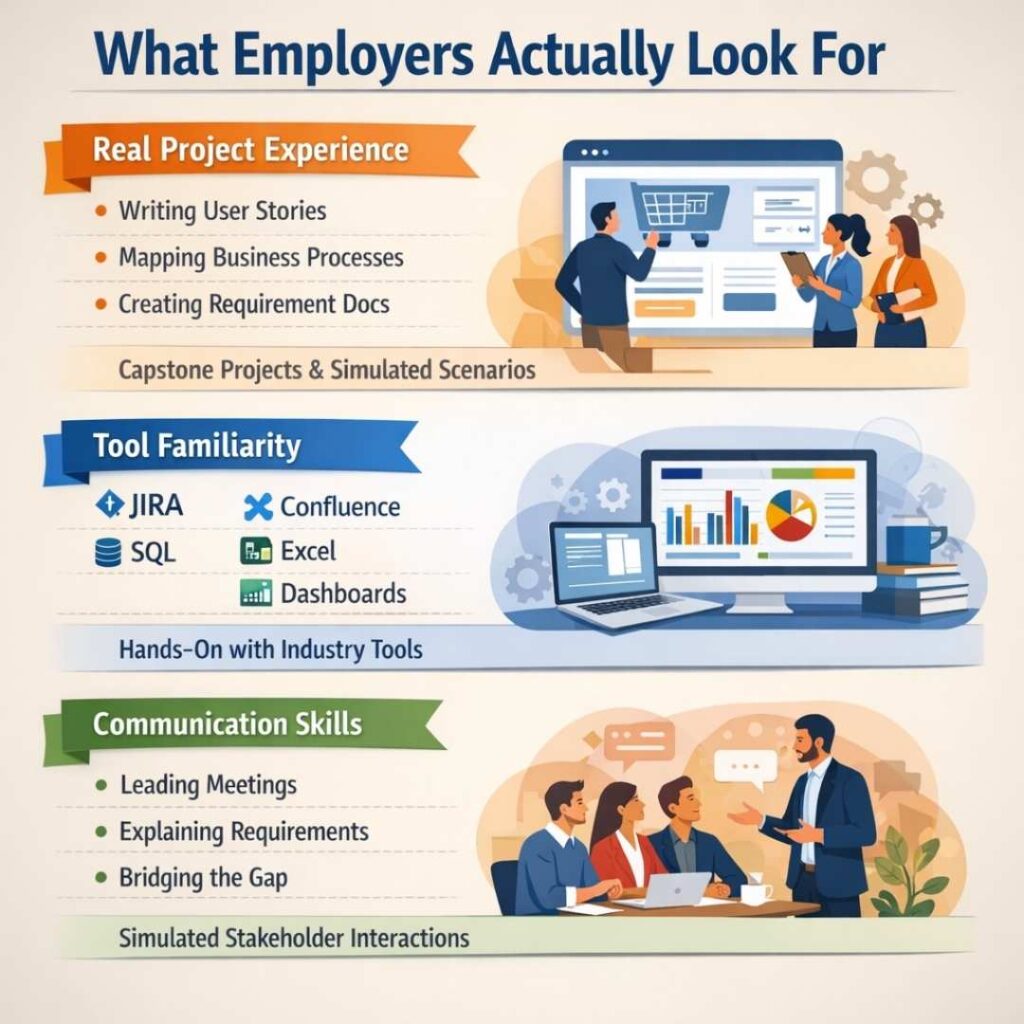
From what I’ve seen in the industry lately, employers care about three things more than the certificate itself.
1. Real Project Experience
The strongest Business Analyst training programs include capstone projects or simulated client scenarios.
For example, a trainee might work on a mock e-commerce platform and practice:
- Writing user stories
- Mapping business processes
- Creating requirement documents
When you walk into an interview with this kind of experience, it shows.
2. Tool Familiarity
Modern BA Training often includes the tools companies use daily.
Typical tools include:
- JIRA
- Confluence
- SQL
- Excel dashboards
- Tableau or Power BI
Hands-on Business Analyst training that covers these tools makes a candidate much more attractive to employers.
3. Communication Skills
Here’s something many newcomers don’t realize: business analysts spend a lot of time talking.
You’re constantly translating technical ideas for non-technical stakeholders.
Good Business Analyst training programs actually simulate stakeholder meetings or requirement workshops. That kind of practice helps a lot when you’re facing real project discussions later.
Do Training Institutes Provide Placement Support?
Some do and it can help.
Programs offering business analyst training and placement often provide:
- Resume preparation
- Mock interviews
- Networking with hiring partners
- Job referrals
But placement support is not the same as a guaranteed job.
Even the best Business Analyst training providers can’t control hiring decisions inside companies.
Still, these services can shorten your job search dramatically.
A Realistic Example
An example I’ve witnessed occurs frequently.
Completing Business Analyst training with a structured course that includes projects and mentorship. While taking the course, they create a portfolio with:
- Requirement documentation
- Agile user stories
- Process flow diagrams
At that point, they can discuss real situations during job interviews.
Now contrast that with someone who has only watched a few videos and studied theory. The difference is quickly captured.
And this is also why practical Business Analyst training leads to better/faster hiring outcomes.
Business Analytics Has Plenty of Opportunities
This isn’t too surprising, as the demand is there.
The constant movement of business analysts into new industries shows how much they are needed. Positioning analysts to interpret data and business objectives into software requirements is how the industry is streamlining processes during digital transformations in banking, retail, and healthcare.
As more and more consulting firms release industry reports, there is a proven fact that hybrid roles are becoming more and more valuable.
With these reports, there is a clear fact that structured training in business analytics is becoming a common entrance into the tech world, especially for people from non-IT backgrounds.
What Makes a Training Program Worth It?
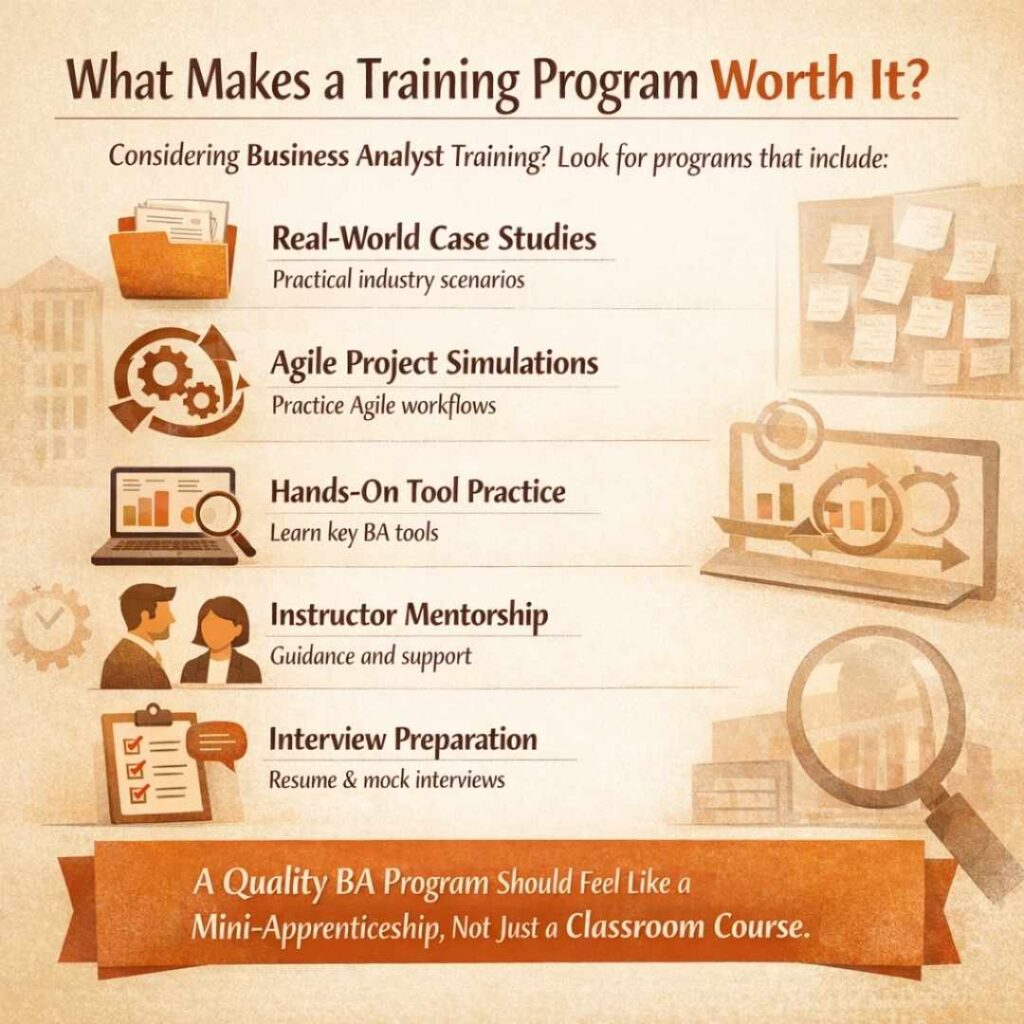
If you’re considering Business Analyst training, a few features really matter.
Look for programs that include:
- Real-world case studies
- Agile project simulations
- Hands-on tool practice
- Instructor mentorship
- Interview preparation
Quality Business Analyst training should feel closer to a mini-apprenticeship than a traditional classroom course.
My Practical Advice for New Learners
If you’re planning to start Business Analyst training, here’s what I usually tell beginners:
- Don’t chase certificates alone. Focus on skills.
- Build a small portfolio of project documentation.
- Practice explaining requirements clearly.
- Participate in mock interviews.
When students actively apply what they learn during Business Analyst training, their confidence during interviews improves dramatically.
Conclusion
Does that mean Business Analyst training guarantees you get a job?
No training can say that.
However, training in Business Analysis is one of the more effective ways to help you get into the industry, especially when the Business Analyst training and Placement includes hands-on experience with industry tools, and includes post-training job support.
Instead of thinking of a job guarantee, think of it as starting a career. When you combine a solid Business Analyst training program with the right amount of effort and focused job search, the openings are generally available.