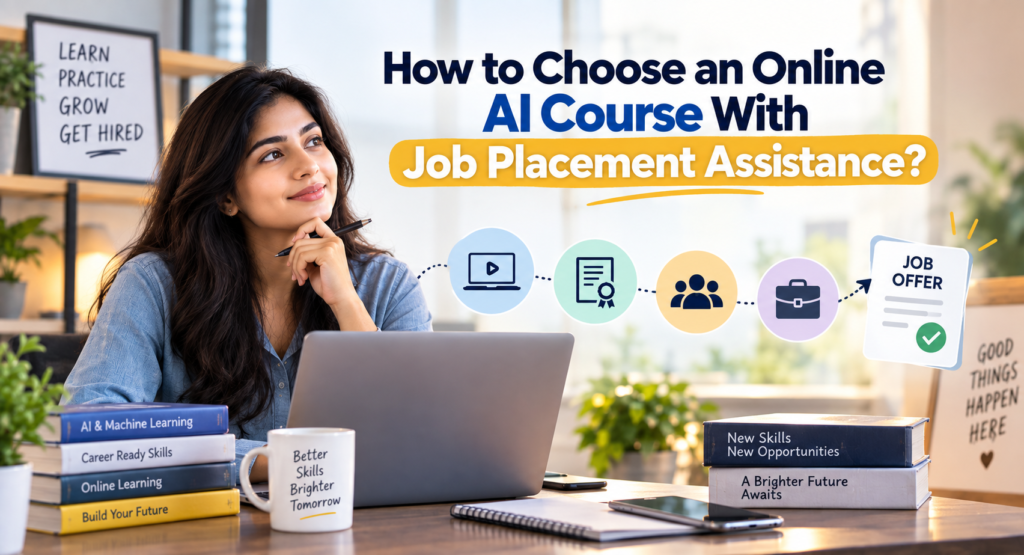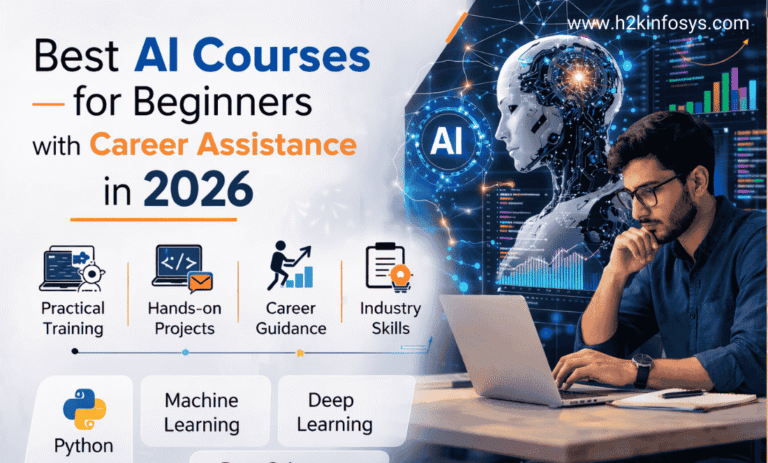
H2K Infosys Artificial Intelligence Online Training programs help beginners learn how machines analyze data, identify patterns, and automate decision making tasks using for algorithms and models. In 2026, many professionals start with AI Training Online to understand machine learning, data processing, and AI powered systems used in enterprise applications. Beginner-friendly AI courses typically combine foundational theory, practical tools, and guided projects to prepare learners for roles such as AI analyst, machine learning engineer, or data specialist.
For working professionals entering the field, structured training programs with practical labs, industry tools, and career support can help bridge the gap between theory and real-world application.
What is Artificial Intelligence?
Artificial Intelligence (AI) refers to computer systems designed to perform tasks that normally require human intelligence. These tasks may include recognizing images, understanding natural language, predicting outcomes from data, or automating repetitive processes.
AI systems rely on several core components:
- Data – large datasets used to train models
- Algorithms – mathematical procedures used to learn patterns
- Computing power – infrastructure required for model training
- Models – trained systems capable of making predictions or decisions
AI is often implemented using machine learning and deep learning techniques, which enable systems to improve performance over time based on new data.
Key Branches of Artificial Intelligence
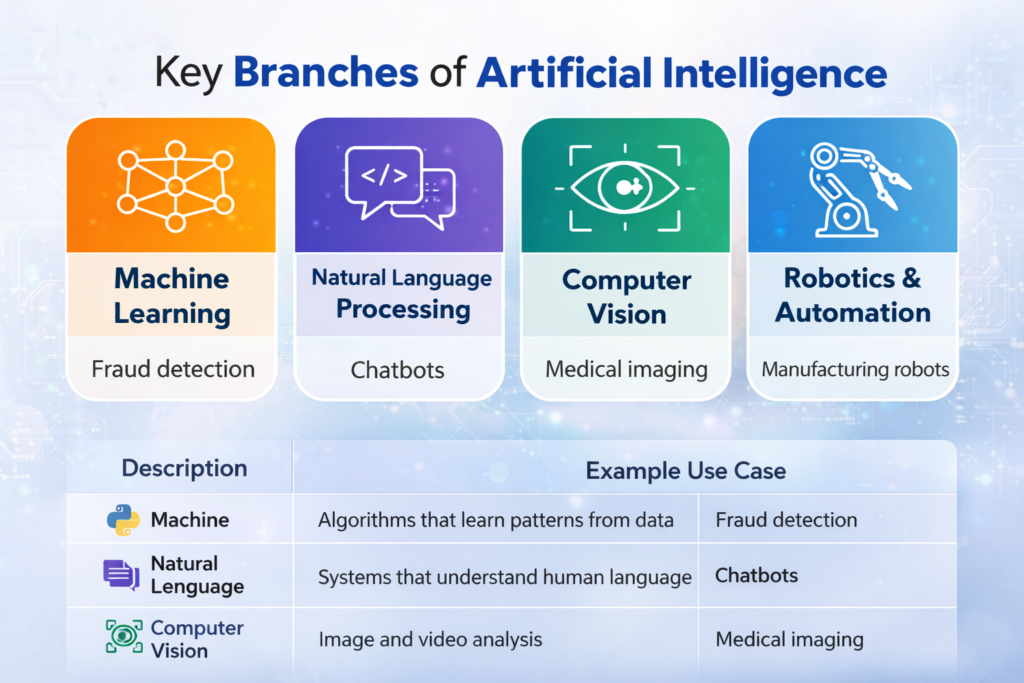
| AI Domain | Description | Example Use Case |
|---|---|---|
| Machine Learning | Algorithms that learn patterns from data | Fraud detection |
| Natural Language Processing | Systems that understand human language | Chatbots |
| Computer Vision | Image and video analysis | Medical imaging |
| Robotics & Automation | Physical systems controlled by AI | Manufacturing robots |
Many AI training online programs introduce these domains gradually, allowing beginners to build foundational knowledge before moving into advanced topics.
Why Are AI Courses Important for Working Professionals in 2026?
Artificial Intelligence is increasingly integrated into enterprise systems across industries such as healthcare, finance, logistics, retail, and cybersecurity.
Working professionals often pursue Artificial Intelligence Online Training for several reasons:
1. Increasing AI Adoption in Enterprise Software
Organizations are integrating AI into business platforms to automate analysis, forecasting, and operational decision-making.
Examples include:
- Predictive analytics in financial services
- Customer sentiment analysis in marketing platforms
- Supply chain optimization in logistics systems
- AI-assisted cybersecurity threat detection
2. Demand for Cross-Functional AI Skills
AI is no longer limited to research scientists. Many roles now require familiarity with AI tools and workflows.
Examples include:
- Data analysts working with predictive models
- DevOps teams deploying machine learning pipelines
- Business analysts interpreting AI-generated insights
3. Integration with Existing IT Infrastructure
AI systems frequently integrate with:
- cloud platforms
- data warehouses
- business intelligence tools
- enterprise APIs
Professionals with both IT knowledge and AI skills are increasingly valuable in organizations managing data-driven systems.
How Does Artificial Intelligence Work in Real-World IT Projects?
In production environments, AI systems typically follow a structured workflow involving data processing, model training, evaluation, and deployment.
Typical AI Development Workflow
| Stage | Description |
|---|---|
| Data Collection | Gathering structured or unstructured datasets |
| Data Preparation | Cleaning, transforming, and labeling data |
| Model Training | Using algorithms to learn patterns |
| Model Evaluation | Testing accuracy and performance |
| Deployment | Integrating models into applications |
| Monitoring | Tracking model performance over time |
Example Enterprise AI Workflow
Consider a retail company building a demand forecasting system.
- Data engineers collect historical sales data.
- Data analysts prepare and clean datasets.
- Machine learning engineers train prediction models.
- DevOps teams deploy models in cloud infrastructure.
- Business teams use predictions for inventory planning.
Most Artificial Intelligence Online Training courses introduce similar workflows through project-based exercises.
What Skills Are Required to Learn Artificial Intelligence?
Beginners do not need advanced research-level mathematics to start AI training. However, several foundational skills help learners progress more efficiently.
Technical Foundations
| Skill Area | Importance |
|---|---|
| Python programming | Common language for AI development |
| Statistics and probability | Understanding model evaluation |
| Linear algebra basics | Core to many machine learning algorithms |
| Data manipulation | Handling datasets with tools like Pandas |
| Visualization | Interpreting model results |
Supporting Skills
Professionals also benefit from:
- problem-solving ability
- analytical thinking
- understanding of data pipelines
- familiarity with software development workflows
Most AI training online programs introduce these concepts gradually using practical examples.
Which Tools Are Commonly Used in Artificial Intelligence Projects?
AI projects rely on a combination of programming frameworks, data processing tools, and infrastructure platforms.
Popular AI Tools and Frameworks
| Tool | Purpose |
|---|---|
| Python | Primary programming language for AI |
| TensorFlow | Deep learning framework |
| PyTorch | Machine learning research and production |
| Scikit-learn | Classical machine learning algorithms |
| Pandas | Data analysis and manipulation |
| NumPy | Mathematical operations for arrays |
Infrastructure Platforms
AI systems are frequently deployed using cloud infrastructure such as:
- AWS Machine Learning Services
- Microsoft Azure AI
- Google Cloud AI Platform
These environments provide scalable computing resources for training models and running AI applications.
What Should Beginners Look for in an AI Course?
When evaluating Artificial Intelligence Online Training, beginners should consider several factors that influence learning outcomes.
Essential Course Components
| Component | Why It Matters |
|---|---|
| Structured curriculum | Ensures progressive learning |
| Hands-on projects | Reinforces theoretical concepts |
| Real-world case studies | Demonstrates enterprise usage |
| Tool-based learning | Builds practical technical skills |
| Mentorship or guidance | Helps learners solve problems |
Courses that combine theory with practical labs often help professionals apply concepts more effectively.
What Does a Typical Beginner AI Learning Path Look Like?
Learning AI usually follows a gradual progression from basic concepts to applied machine learning.
Beginner-to-Intermediate Learning Path
| Stage | Topics Covered |
|---|---|
| Foundations | Python, statistics, data handling |
| Core Machine Learning | Regression, classification, clustering |
| Data Processing | Feature engineering and data pipelines |
| Model Evaluation | Accuracy metrics and validation |
| Advanced AI | Deep learning, NLP, computer vision |
Many AI training online programs structure their curriculum around similar stages.
How Is Artificial Intelligence Used in Enterprise Environments?
AI systems support a wide range of enterprise operations across different industries.
Finance
Common AI applications include:
- fraud detection
- credit risk modeling
- algorithmic trading analysis
Healthcare
AI assists with:
- medical imaging analysis
- disease prediction models
- patient data analysis
Retail and E-commerce
AI is commonly used for:
- recommendation systems
- demand forecasting
- customer behavior analysis
Cybersecurity
Security teams deploy AI for:
- anomaly detection
- threat pattern identification
- automated response systems
These applications demonstrate how AI models integrate with enterprise data platforms and analytics systems.
What Job Roles Use Artificial Intelligence Daily?
Several technical and analytical roles work directly with AI technologies.
AI-Related Job Roles
| Role | Primary Responsibilities |
|---|---|
| Machine Learning Engineer | Develops and deploys AI models |
| Data Scientist | Analyzes data and builds predictive models |
| AI Engineer | Integrates AI capabilities into applications |
| Data Analyst | Uses AI tools for advanced analytics |
| NLP Engineer | Works on language-based AI systems |
Professionals in these roles often collaborate across engineering, analytics, and business teams.
What Careers Are Possible After Learning Artificial Intelligence?
Professionals who complete Artificial Intelligence Online Training may pursue several technical or analytical career paths.
Common AI Career Paths
| Career Path | Typical Focus |
|---|---|
| AI Engineer | Building AI-powered applications |
| Machine Learning Engineer | Designing and training models |
| Data Scientist | Advanced analytics and prediction |
| AI Research Assistant | Supporting research projects |
| AI Product Analyst | Evaluating AI-based solutions |
Career progression often depends on project experience, domain specialization, and familiarity with production environments.
What Challenges Do Beginners Face When Learning AI?
Learning artificial intelligence can present several practical challenges.
Common Learning Challenges
- Mathematics complexity Some algorithms rely on linear algebra and statistics, which beginners may need time to understand.
- Large datasets AI models require extensive datasets for training, which can be difficult to obtain or manage.
- Computing resources Training deep learning models often requires GPUs or cloud infrastructure.
- Model interpretation Understanding why models make certain predictions can be difficult.
Beginner-friendly AI training online courses typically address these challenges with guided exercises and simplified datasets.
What Does Career Assistance in AI Training Usually Include?
Some AI training programs provide career support designed to help learners transition into AI-related roles.
Typical Career Assistance Services
| Service | Description |
|---|---|
| Resume guidance | Tailoring resumes for AI roles |
| Portfolio development | Creating project-based portfolios |
| Mock interviews | Practicing technical interviews |
| Industry mentorship | Guidance from experienced professionals |
These services help learners demonstrate practical skills to employers.
Frequently Asked Questions (FAQ)
Is Artificial Intelligence difficult for beginners?
AI can appear complex initially, but structured courses that start with basic programming and statistics help beginners build understanding gradually.
Do I need programming experience to learn AI?
Most AI courses require basic programming knowledge, typically in Python. However, many beginner programs include introductory programming modules.
How long does it take to learn AI fundamentals?
Many learners can build foundational AI skills within 4–6 months of consistent study, depending on prior technical experience.
Is AI training useful for non-developers?
Yes. Roles such as data analysts, business analysts, and product managers often use AI tools without developing complex models themselves.
What industries hire AI professionals?
AI professionals work in finance, healthcare, cybersecurity, retail, logistics, and many other sectors that rely on data-driven decision-making.
Key Takeaways
- Artificial Intelligence Online Training introduces beginners to machine learning, data analysis, and AI model development.
- AI systems typically follow workflows involving data preparation, model training, deployment, and monitoring.
- Professionals learning AI benefit from practical experience with tools like Python, TensorFlow, and Scikit-learn.
- AI is widely used in enterprise environments including finance, healthcare, retail, and cybersecurity.
- Career paths after AI training online may include machine learning engineering, data science, and AI system development.