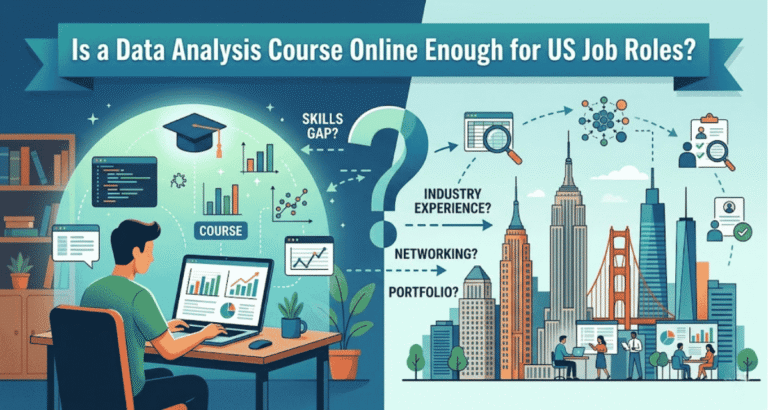
Introduction
Honestly? Yeah, it can be.
A good Data Analysis Course Online is enough for a lot of US entry-level analyst roles now, but only if the course teaches practical work instead of just throwing definitions and certificates at people.
That’s the part that many learners discover a little too late.
I’ve seen people spend months collecting certifications and still struggle in interviews because they never really worked on projects outside guided lessons. Then somebody else with a smaller resume but better SQL practice walks in and gets shortlisted.
That’s pretty much how hiring works now.
Companies want people who can actually work with data.
Not people who just watched 40 hours of videos.
And to be fair, the hiring market changed fast after remote learning became normal. Back in the day, online certifications used to feel like a side thing. Employers sometimes looked at them differently. These days? A lot of recruiters barely care where you learned from if your portfolio looks strong and you can explain your work clearly.
That’s why searches for things like “Data Analysis Course Online” and “data analyst certification online programs” have exploded recently.
People are trying to move into Data Analysis Course Online without spending four years going back to school.
Makes sense, honestly.
What US Companies Actually Expect From Data Analysts Now
A lot of beginners think Data Analysis Course Online is mostly Excel.
It’s… not.
Excel still matters, obviously. But most analyst roles in 2026 expect candidates to know at least some combination of:
- SQL
- Power BI
- Tableau
- reporting dashboards
- data cleaning
- Excel
- basic Python
- business reporting
SQL especially.
You can almost feel how important it is when you sit through interviews.
Recruiters may start casually, then suddenly:
“Can you write a JOIN query?”
Or:
“How would you calculate monthly active users?”
That catches a lot of people off guard.
A proper Data Analysis Course Online should prepare learners for those real interview situations, not just theory quizzes.
That difference matters more than people think.
The Weird Truth About Online Certifications
The Data Analysis Course Online itself usually isn’t the thing getting people hired.
That surprises some learners.
What helps more is everything around it:
- project work,
- dashboards,
- SQL practice,
- portfolio links,
- case studies,
- confidence during interviews.
I remember talking to someone who had three different certifications but couldn’t explain one dashboard project without reading notes. Meanwhile, another candidate with one solid portfolio project explained business impact clearly and got the callback.
That happens a lot now.
Hiring managers want proof.
Can you work with messy data?
Can you explain trends?
Can you build reports people actually understand?
That’s what they care about.
Which is why the better Data Analysis Course Online programs focus heavily on hands-on training.
AI Didn’t Kill Data Analyst Jobs Like People Thought
There was a phase where everybody online kept saying AI would replace Data Analysis Course Online.
Didn’t really happen.
What actually happened is companies started expecting analysts to work with AI tools.
That’s different.
Now teams use AI-assisted dashboards, automated reports, and smart forecasting tools. But businesses still need humans to figure out why something is happening.
For example:
If sales suddenly dip after a pricing change, AI can show the trend.
But somebody still needs to understand customer behavior, business decisions, seasonality, marketing impact… all the messy real-world stuff.
That human side still matters a lot.
Probably more than before, honestly.
What Makes the Best Data Analysis Course Online Different?
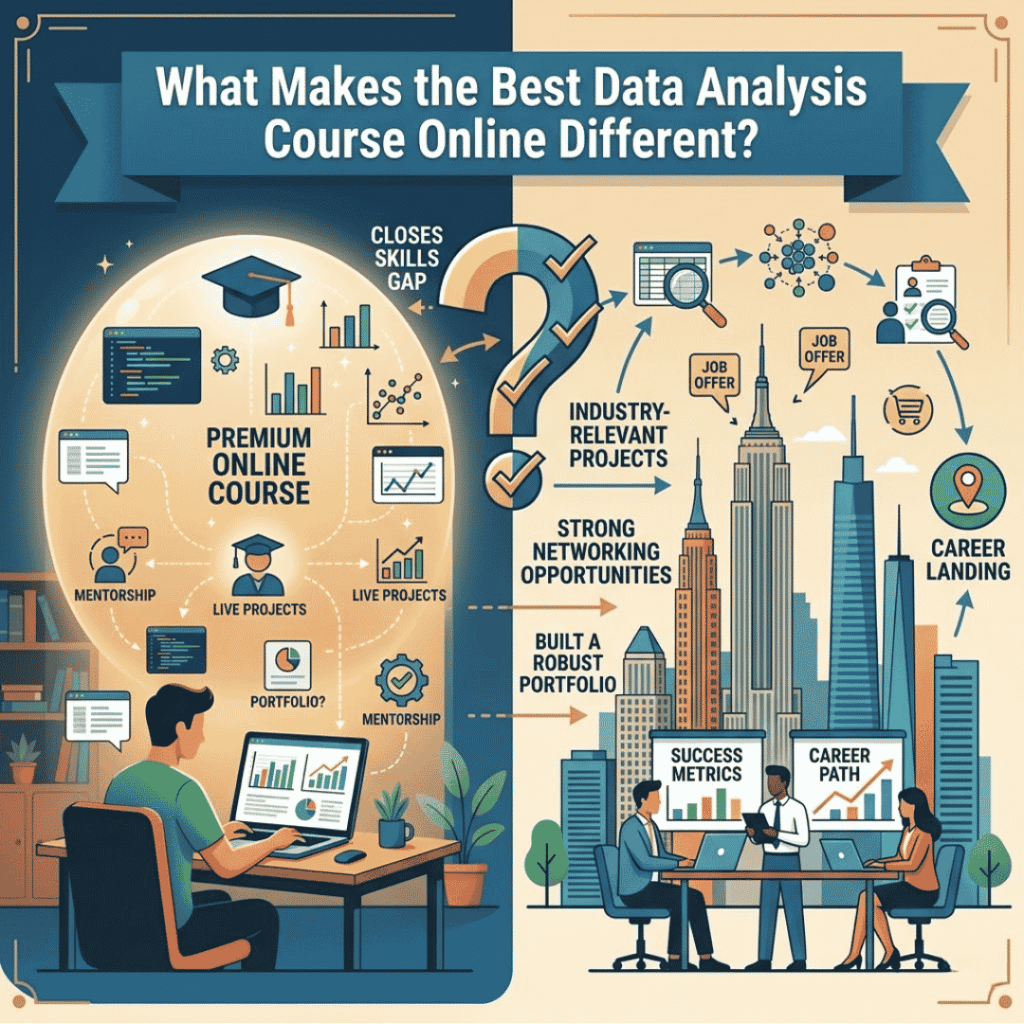
Some Data Analysis Course Online are basically slide presentations with assignments.
Others feel much closer to real work.
That second type is usually the one that helps people get hired.
A strong course normally includes the following:
Real SQL Practice
Not just
“Here’s what SELECT means.”
Actual practice.
Things like:
- joins,
- filtering,
- grouping,
- reporting queries,
- and working with larger datasets.
A lot of interviews revolve around SQL now.
Skipping it is a mistake.
Dashboard Projects
This matters because employers love visual reporting.
Power BI and Tableau still dominate a lot of analytics hiring.
And honestly, portfolios help more than resumes sometimes.
If someone can open a dashboard and explain:
- what problem they solved,
- what KPIs they tracked,
- and what conclusions they found,
that creates a stronger impression than simply listing software names.
Business-Focused Scenarios
This is where weaker programs fall apart.
Real analytics work is tied to business decisions.
Good training should expose learners to things like:
- customer trends,
- operational reporting,
- healthcare analytics,
- revenue tracking,
- or marketing performance.
Otherwise learners end up knowing tools without understanding how companies actually use them.
Interview Preparation
People underestimate this part constantly.
Knowing the material and explaining the material are completely different skills.
Mock interviews help a lot.
Especially for career changers.
One Mistake Almost Every Beginner Makes
Trying to finish too fast.
Seriously.
A lot of learners rush through lessons thinking the goal is completing the course.
It’s not.
The goal is becoming comfortable enough with the tools that you can solve problems independently.
That takes repetition.
You’ll probably write terrible SQL queries at first.
Everybody does.
You’ll build dashboards that look messy.
That’s normal too.
The people who improve are usually the ones who keep practicing instead of chasing certificates.
Can Non-IT Professionals Really Transition Into Analytics?
Yeah. More often than people realize.
Some of the strongest analysts actually come from non-technical backgrounds because they already understand business operations.
I’ve seen people move into analytics from:
- finance,
- customer support,
- teaching,
- logistics,
- healthcare,
- even retail operations.
The technical side can be learned.
What matters more is whether someone likes solving problems and working with information.
That’s part of why online analytics training became so popular.
People can upskill without quitting jobs or going back to university full time.
Why Structured Programs Help Many Beginners
Self-learning is great in theory.
But a lot of learners eventually get stuck.
Usually because of:
- random YouTube tutorials,
- outdated content,
- weak project ideas,
- lack of feedback,
- or confusion about what employers actually expect.
Structured programs help simplify that path.
That’s one reason training providers like
have gained attention among beginners trying to enter analytics.
Their programs tend to include:
- live instruction,
- project-based learning,
- interview prep,
- resume support,
- and business-oriented case studies.
That kind of structure helps people feel less lost during the learning process.
Especially beginners.
Skills Learners Usually Build
An online Data Analysis Course most often guides students to build:
- SQL querying
- dashboard creation
- Excel reporting
- Power BI skills
- Tableau visualization
- data cleaning
- KPI analysis
- business reporting
- analytical thinking
- presentation skills
And in truth, those are precisely the skills that employers test when you interview.
Job Demand and Salary Outlook in the US
Analytics hiring is still pretty strong.
Healthcare companies, banks, insurance firms, e-commerce brands, and SaaS businesses continue investing heavily in reporting and analytics teams.
Entry-level salaries commonly fall somewhere between $65,000 and $95,000 depending on:
- location,
- technical skills,
- portfolio quality,
- and prior experience.
Candidates who understand SQL and dashboard tools usually stand out faster.
Especially if they can explain projects clearly.
That communication part matters way more than most people expect.
How to Choose the Right Course
Not every course marketed as one of the best Data Analysis Course Online is actually job-focused.
Some are mostly theory.
A stronger program should include:
Good Signs
- practical projects
- SQL assignments
- dashboard portfolios
- mock interviews
- mentor interaction
- business case studies
- internship exposure
- updated AI reporting concepts
Red Flags
- outdated tools
- only prerecorded content
- no projects
- no resume guidance
- no instructor support
One thing that genuinely helps: look at student project examples before enrolling.
That usually tells you more than advertisements.
Related Topics Worth Exploring
You can also explore topics like:
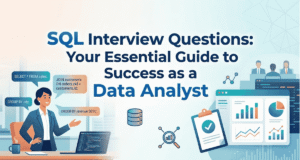
- SQL Interview Questions for Data Analysts
- Power BI vs Tableau for Beginners
- How to Build a Strong Data Analytics Portfolio
These connect naturally with analytics career preparation and help learners build stronger real-world skills.
FAQs
Is a Data Analysis Course Online enough for a US job?
Yes, if the course includes practical projects, SQL training, dashboards, and interview preparation.
Do companies accept Data Analysis Course Online?
Most employers care more about practical ability and portfolios than whether learning happened online.
Which skills matter most for beginners?
SQL, Excel, Power BI, dashboard reporting, and communication skills are usually the most important starting points.
Can someone from a non-technical background become a data analyst?
Absolutely. Many professionals transition from finance, operations, healthcare, and customer support roles.
How long does it take to become job-ready?
For many learners, somewhere around 4–8 months with consistent practice is realistic.
Final Thoughts
A Data Analysis Course Online can absolutely help someone break into the US analytics market.
The certificate is not the only thing that works this magic, however.
The actual value comes from the skill or project you build and practice as part of the training (together with tasks and confidence).
Hence therefore, this emphasise how quite important to choose the right Data Analysis Course Online.
Programs focused on hands-on learning, business scenarios, mentorship, and interview preparation usually produce much stronger results than passive theory-heavy courses.
If someone is serious about building a career in Data Analysis Course Online, structured training combined with regular project practice can genuinely make the process faster, clearer, and a lot less overwhelming.