If you’re thinking about moving into a tech career, H2K Infosys offers a practical learning path through structured business analysis training designed to prepare you for real Business Analyst roles. Instead of just studying theory, learners gain hands-on experience through guided business analyst classes, an industry-focused business analyst course, and flexible business analysis online training. Many professionals also pursue a business analyst certification online as part of their learning journey, which helps strengthen their profile while benefiting from BA training and placement support.
Breaking into the Business Analyst field can feel confusing at first. I remember talking with a colleague back in 2024 who worked in operations and wanted to shift into tech. He kept hearing about the growing demand for analysts but had no idea where to begin. Should he start with SQL? Learn Agile first? Maybe data visualization? That uncertainty is actually pretty common. Many beginners try to piece together skills from random tutorials and end up overwhelmed.
That’s exactly where a Business Analyst Course becomes valuable. Instead of guessing what skills companies want, a structured program walks you through the actual workflow analysts use every day in real projects.
Why the Demand for Business Analysts Is Still Growing
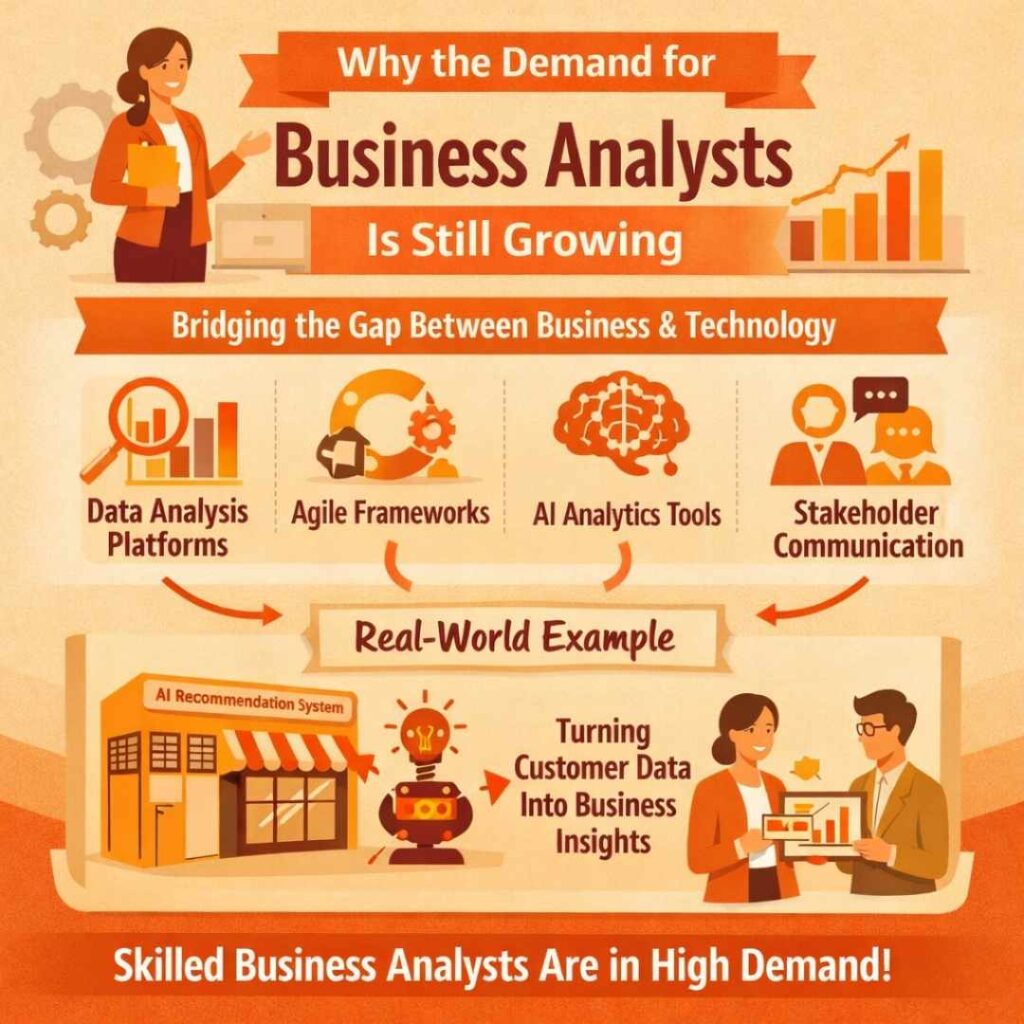
If you’ve looked at job boards recently, LinkedIn, Indeed, even smaller tech communities, you’ve probably noticed something interesting. Companies aren’t just hiring developers anymore. They’re actively searching for professionals who can bridge the gap between business needs and technical teams.
That role is the Business Analyst.
With the rise of AI-driven decision-making, companies need analysts who understand both data and business processes. A good Business Analyst Course now teaches far more than documentation or requirement gathering it includes tools like:
- Data analysis platforms
- Agile frameworks
- AI-supported analytics tools
- Stakeholder communication strategies
For example, a retail company launching an AI recommendation system doesn’t just need engineers. They need analysts who can translate customer behavior data into business requirements. That’s the type of real-world scenario modern Business Analyst Course programs try to simulate.
What Makes an AI-Driven Business Analyst Course Different?
A lot of people still imagine business analysis as writing documents and attending meetings. That’s part of it but today’s analysts work much deeper with data and technology.
An updated Business Analyst Course usually includes training in:
- Agile and Scrum methodologies
- SQL and data analysis basics
- Business process modeling
- Requirement gathering techniques
- AI and data-driven decision frameworks
The interesting part? AI tools are starting to assist analysts in areas like predictive modeling and automated reporting. A solid Business Analyst Course helps you understand how to work alongside these technologies rather than feel intimidated by them.
I’ve seen professionals from non-technical backgrounds, such as finance, healthcare administration, and even retail management, successfully transition after completing a hands-on Business Analyst Course focused on real projects.
What You Actually Learn in a Practical Business Analyst Course
I always tell people: the certificate value of a Business Analyst Course relies greatly on whether or not it teaches real-life examples and not just meanings.
Great programs usually consist of the entire analyst workflow:
Understanding Business Issues
Learn to hear stakeholders and figure out the real problem behind a question. Looks easy, but it’s deceptively complex.
Composing Requirements
A competent Business Analyst Course teaches you how to do:
- Business Requirement Document (BRD)
- Functional Requirement Document (FRD)
- Agile team User Stories
- Beginnings of Data Analysis
Even if you are not going to be a data analyst, analysts today are still expected to have a grasp of data sets, dashboards, and trends. A modern Business Analyst Course teaches some SQL and reporting.
Agile Working
Most tech companies function in Agile environments today. A solid Business Analyst Course prepares you for sprinting, managing backlogs, and working with developers and product owners.
The Importance of Job Placement Support
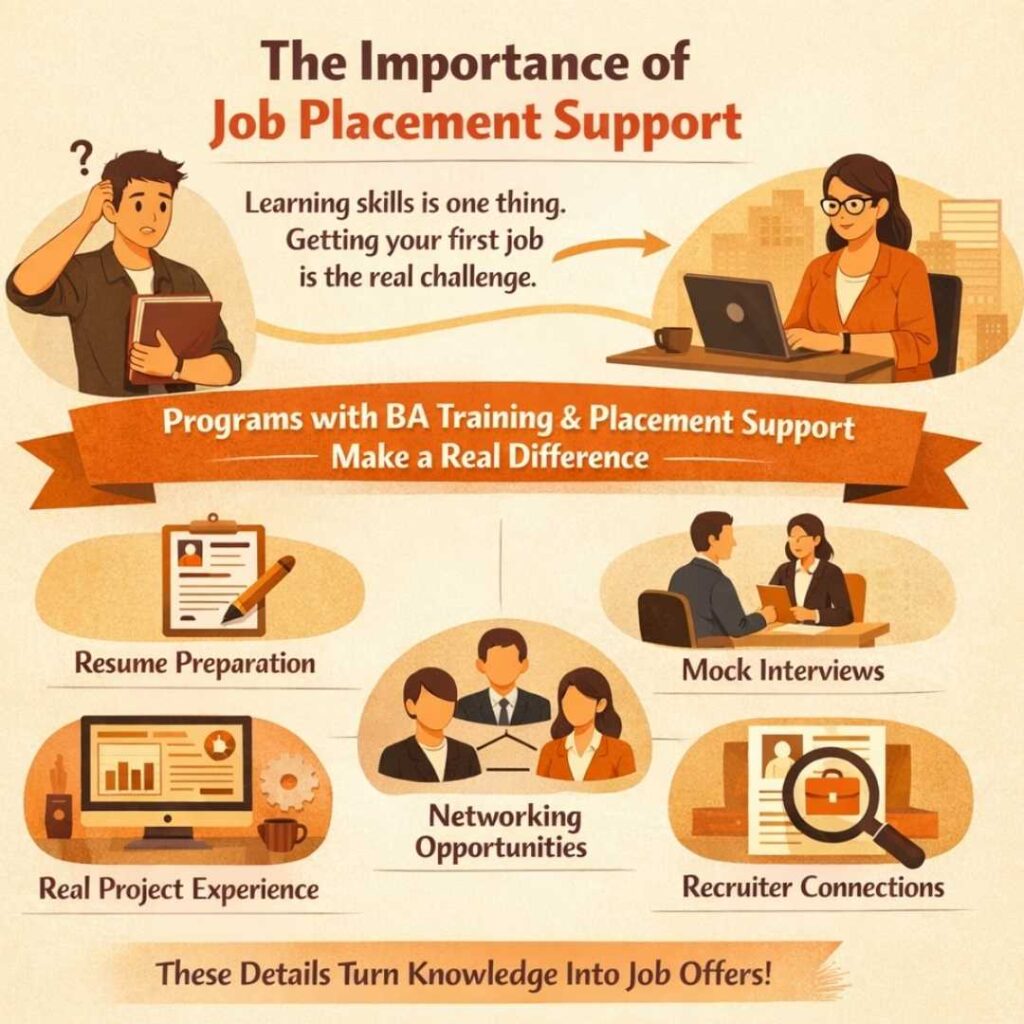
Let’s be honest for a moment.
Learning skills is one thing. Getting your first job is the real challenge.
Many learners complete a Business Analyst Course, build a few projects, and then get stuck wondering how to translate that into interviews.
This is where programs with BA training and placement support become extremely useful.
Good training providers help with:
- Resume preparation
- Mock interviews
- Real project experience
- Networking opportunities
- Recruiter connections
These small details often make the difference between knowing the material and actually getting hired.
Why Many Students Decide to Go with H2K Infosys
Halfway through their career transition journey, most professionals H2K Infosys because their program offers a good mix of training and exposure.
Business Analyst Course focuses on practical training, which allows students to undertake several simulated projects and make use of all the tools and techniques provided to them, just like actual analysts in a company.
Some features include:
- Instructor-led business analyst classes
- Real-life case study
- Agile and Scrum
- Interview preparation
- Job placement
After speaking with students, it is easy to see that a majority of them are happy that the Business Analyst Course doesn’t take for granted a technology-based educational approach.
This is true for the majority of analysts, most of them come from a non-tech background.
A Real Example of a Career Transition
A good example I recently came across involved a healthcare administrator who wanted to move into tech but didn’t want to become a developer.
She enrolled in a Business Analyst Course focused on healthcare data workflows. Through project simulations, she learned how patient management systems translate business needs into software requirements.
Within months of completing the Business Analyst Course, she was interviewing for junior analyst roles with healthcare technology companies.
Stories like this aren’t rare anymore. The demand for analysts who understand specific industries is growing fast.
Skills Employers Look for After Business Analysis Training
Companies hiring analysts today typically expect candidates to demonstrate a combination of skills learned in a Business Analyst Course:
- Clear communication with technical and non-technical teams
- Data interpretation and reporting
- Requirement documentation
- Agile collaboration
- Problem-solving mindset
Interestingly, hiring managers often say the same thing: they care less about memorized theory and more about whether candidates can think through business problems logically.
That’s why a project-based Business Analyst Course tends to produce stronger job candidates.
Is Becoming a Business Analyst Still Good In 2026?
Yes, and perhaps even more than before.
With AI, automation, and advanced analytics, more companies are looking for an understanding of both technology and business strategy.
A good Business Analyst Course gets you ready for that.
Rather than competing with automation, analysts assist businesses in determining the best applications for technology.
That is a role that is not easily replaced by machines.
Conclusion
Launching a career in technology doesn’t necessarily involve learning programming languages. For a significant number of professionals, a more strategic approach is focusing on the intersection of technology and business in order to understand how value can be created or problems can be solved.
A Business Analyst Course does exactly that.
With the potential of business analysis training, coupled with career-ready projects, and BA training and placement assistance, the potential for career transition becomes much more tangible, even with no technical background.
H2K Infosys has positioned the synergy between structured business analysis training, practical guidance, and real-world problems to help transform interest in business analysis into a professional opportunity.