Yes, a good Business Analyst course usually has applied project scenarios and real-time case studies. This is because modern companies want analysts to know how to interact with real business processes, communicate with stakeholders, and make decisions based on data. At H2kinfosys, industry-aligned learning models focus on practical simulations, documentation exercises, and enterprise-style problem-solving so learners can translate theoretical knowledge into real business environments and production-level responsibilities.
Strong Business Analyst Training programs emphasize real-time case studies, live projects, and hands-on scenarios to close the gap between classroom learning and industry expectations. Learners usually gain experience creating Business Requirement Documents (BRDs), writing user stories, and working with tools such as SQL, JIRA, Tableau, Excel, and Visio. Real-world case studies often include scenarios like digital transformation projects, e-commerce optimization, financial reporting improvements, and data-driven business strategy planning, helping.
What is a Business Analyst Course?
A Business Analyst course is a structured learning program designed to teach professionals how to analyze business problems, gather requirements, document processes, and support technology-driven business solutions.
Typical learning areas include:
- Requirements gathering techniques
- Stakeholder communication frameworks
- Process modeling and workflow mapping
- Data interpretation and reporting basics
- Agile and Scrum collaboration models
Professionals often enter BA learning through ba training or structured business analyst training, depending on their prior experience. Many learners also pursue ba certification or a business analyst certification online to validate their knowledge.
Modern programs often blend theory with real-time case studies to simulate enterprise problem solving.
How Does Business Analyst Training Work in Real-World IT Projects?
A practical Business Analyst course mirrors real enterprise project lifecycles.
Enterprise BA Workflow Example
| Phase | BA Responsibilities | Tools Commonly Used |
|---|---|---|
| Discovery | Stakeholder interviews, requirement gathering | Jira, Confluence |
| Analysis | Gap analysis, root cause identification | Excel, SQL |
| Documentation | BRD, FRD, User Stories | Confluence, Word |
| Validation | UAT support, defect clarification | Jira, TestRail |
| Deployment Support | Change impact tracking | ServiceNow |
During business analyst classes, learners typically practice:
- Writing user stories
- Creating process flow diagrams
- Performing stakeholder analysis
- Reviewing change requests
This is why business analysis online training programs emphasize scenario-based assignments rather than only theoretical lessons.
Why Is This Important for Working Professionals?
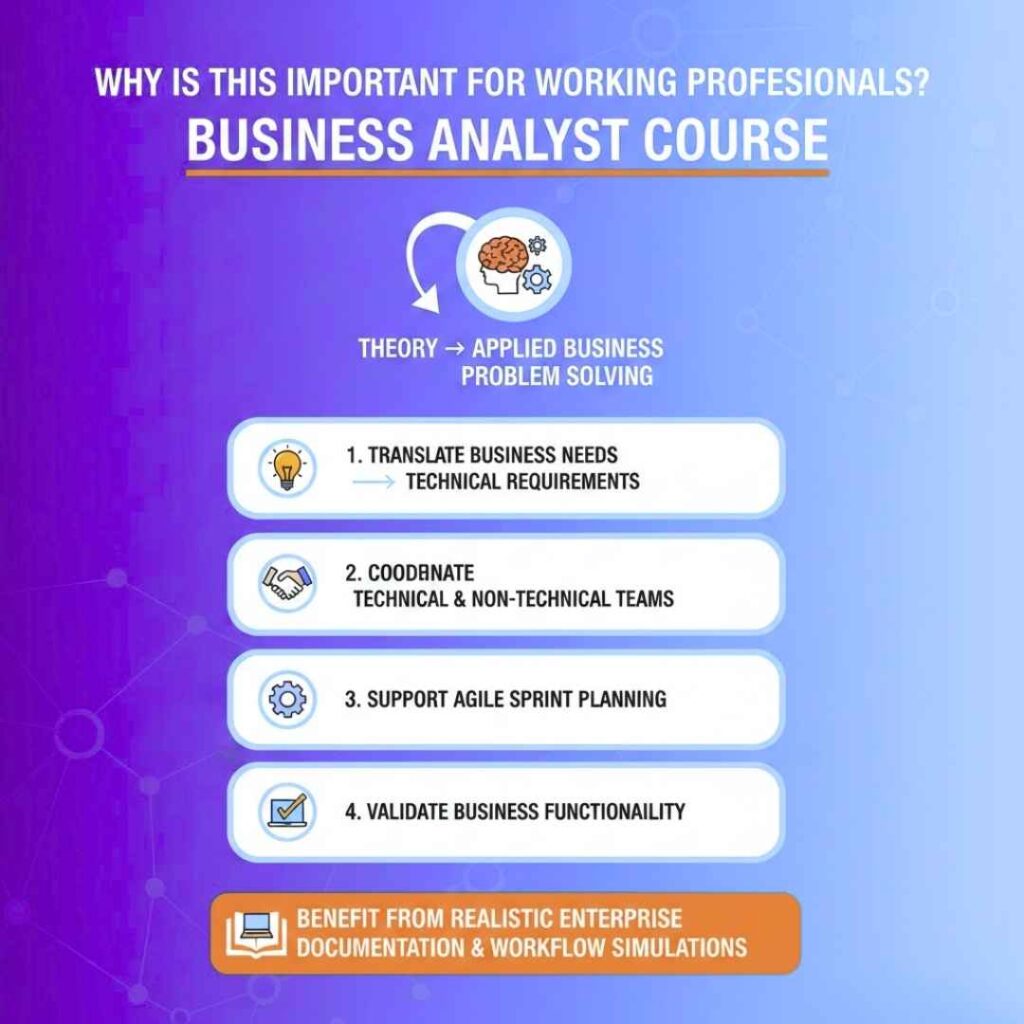
A Business Analyst course helps professionals transition from theoretical knowledge to applied business problem solving.
In enterprise environments, BAs are expected to:
- Translate business needs into technical requirements
- Coordinate between technical and non-technical teams
- Support Agile sprint planning
- Validate business functionality before release
Professionals taking business analyst training and placement programs often benefit from exposure to realistic enterprise documentation and workflow simulations.
How do real-time case studies help people learn BA?
Real-time case studies allow learners to practice:
- Requirements elicitation from simulated stakeholders
- Process mapping for live business scenarios
- Change request analysis
- Risk and impact analysis
In many Business Analyst course structures, real-time case studies are integrated into capstone projects, sprint simulations, or documentation exercises.
Example scenario:
A retail company wants to implement a new CRM system. Learners must:
Conduct stakeholder interviews
- Create AS-IS vs TO-BE process flows
- Write functional requirements
- Support UAT testing
These exercises help bridge the gap between learning and job execution.
What Skills Do You Need to Learn Business Analysis?
Most of the time, students in a Business Analyst course study both technical and business abilities.
Core Skill Categories
| Skill Type | Examples |
|---|---|
| Analytical Thinking | Root cause analysis, data interpretation |
| Communication | Stakeholder interviews, presentations |
| Documentation | BRD, FRD, User Stories |
| Technical Awareness | Databases, APIs, SDLC concepts |
| Process Understanding | BPMN, workflow mapping |
People who take online business analysis courses frequently start with basic ideas like the SDLC and Agile.
How Is Business Analysis Used in Enterprise Environments?
A Business Analyst course prepares learners for real production constraints.
Enterprise Constraints BAs Handle
- Security compliance requirements
- Data privacy regulations
- Performance optimization
- Cross-team coordination
- Release management timelines
In enterprise IT environments, BAs frequently collaborate with:
- Product Owners
- QA Engineers
- Developers
- DevOps Teams
- Business Stakeholders
This is why advanced business analyst classes often simulate cross-functional team meetings.
What Job Roles Use Business Analysis Daily?
After completing a Business Analyst course, professionals may work in roles such as:
| Role | Responsibilities |
|---|---|
| Business Analyst | Requirements, stakeholder coordination |
| Product Analyst | Feature analysis, backlog support |
| Data Analyst (Entry Level) | Reporting, business insights |
| Systems Analyst | Technical requirement translation |
| Functional Consultant | Solution configuration guidance |
Many learners combine business analyst training with business analyst certification online for better role credibility.
How do training programs make real work situations seem real?
A modern Business Analyst course usually includes practical simulations such as:
- Sprint planning mock sessions
- Requirement gathering workshops
- Documentation peer reviews
- UAT scenario walkthroughs
In many programs, real-time case studies are integrated across modules, not just final projects.
- These simulations help learners understand:
- Requirement ambiguity handling
- Stakeholder expectation conflicts
- Change management workflows
A Path for Business Analysts to Learn
Learning Path for Business Analyst Professionals
| Stage | Learning Focus |
|---|---|
| Beginner | Basic SDLC and BA concepts |
| Intermediate | Writing documentation and using Agile methods |
| Advanced | stakeholder strategy and enterprise architecture |
Many students begin with basic Business Analyst training and then move on to more advanced programs.
How do you use business analysis in your daily work?
A normal day for someone who has taken a Business Analyst course would look like this:
- Holding talks with stakeholders
- Looking over the things in the sprint backlog
- Writing or improving user stories
- Helping QA teams while they test
- Making business logic clear for developers
During training labs, professionals who are completing business analyst training and placement programs commonly perform these workflows.
What Jobs Can You Get After Learning Business Analysis?
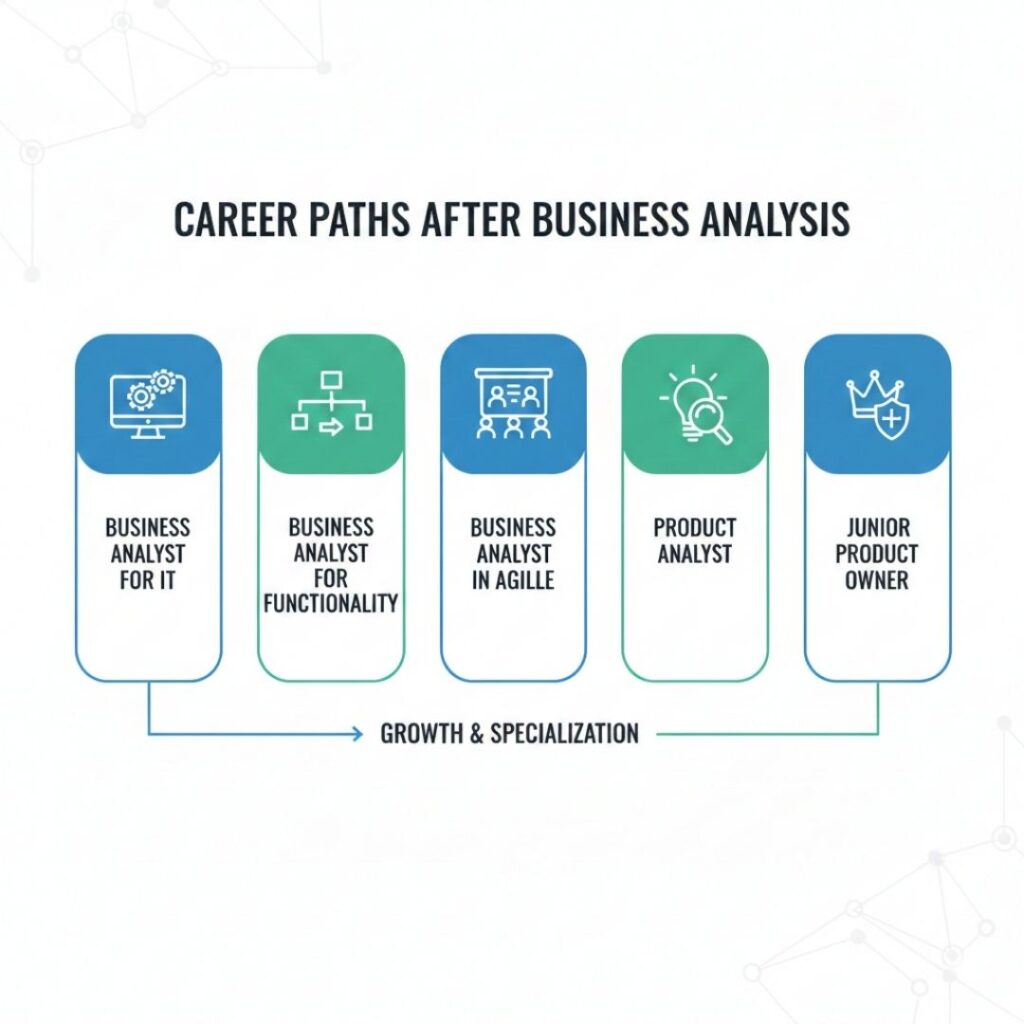
After finishing a Business Analyst education, you might be able to work in one of the following fields:
- Business Analyst for IT
- Business Analyst for Functionality
- Business Analyst in Agile
- Analyst of Products
- Junior Product Owner
Many professionals take business analyst certification courses online in addition to their classroom work to make their resumes more credible.
Common Tools Covered in Business Analyst Learning
| Category | Tools |
|---|---|
| Documentation | Confluence, MS Word |
| Tracking | Jira, Azure DevOps |
| Data Analysis | Excel, SQL |
| Visualization | Power BI, Tableau |
| Process Modeling | Visio, Lucidchart |
Business analysis online training labs typically use these technologies in practice.
Frequently Asked Questions
Do all BA programs have hands-on projects?
Most organized Business Analyst courses have hands-on activities and case studies that are based on real business processes.
Do you need to get certified after training?
Not mandatory, but ba certification or business analyst certification online helps validate skills.
Can non-IT professionals learn BA?
Yes. Many learners enter through beginner-level business analyst classes.
Does training include Agile methods?
Yes. Agile frameworks like Scrum are commonly included in business analyst training.
The Key Highlights
- Applied project simulations are usually part of a Business Analyst education.
- Training frequently includes real business procedures.
- Documentation, communication, and analysis abilities are some of the most important things to learn.
- People often learn how to use tools like Jira, SQL, and Confluence.
- Real-time case studies help students get ready for the real world.
- Certification pathways help you build credibility in your career.
- Practical labs mimic the workflows of stakeholders and Agile teams.
H2K Infosys Business Analyst programs are based on enterprise procedures and offer organized, hands-on learning.
Get real-world experience by working on guided projects that are in line with what the industry expects.