Online AI training in the USA can genuinely move the needle on salary growth but not in a vague, “looks good on a resume” kind of way. It’s more practical than that. What really makes the difference is how these programs help you build skills companies are actively trying to hire for right now.
That’s where providers like H2K Infosys come into the picture. Their online AI training approach leans more toward real-world, job-focused learning things like hands-on projects, working with actual tools, and understanding how AI fits into day-to-day business problems. It’s not just about knowing concepts, but being able to apply them when it counts.
When you combine that kind of practical exposure with consistent practice, it becomes much easier to move into higher-paying roles or grow within your current one.
And it’s rarely just theory. Most solid programs lean heavily into hands-on work things like machine learning, data analysis, automation. The stuff that actually shows up in real job descriptions. Once you’ve worked on projects, handled real tools, and seen how things come together, it becomes a lot easier to step into higher-paying roles… or even stretch your current role into something more valuable.
What is Online AI Training in the USA?
At a basic level, Online AI Training is a structured way to learn how intelligent systems are built and used without needing to be in a physical classroom. That flexibility is a big reason working professionals tend to go this route.
But “flexible” doesn’t mean easy. Most programs are still pretty demanding if they’re done right.
You’ll usually get into areas like:
- Machine learning fundamentals
- Data cleaning and analysis (honestly, this part takes longer than most people expect)
- Building and testing models
- Deploying solutions on cloud platforms
- Working through real-world use cases
A lot of it is project-driven. Less memorizing, more figuring things out as you build. You hit roadblocks, debug things, try again that’s kind of the point.
How does AI work in real-world IT projects?
In actual projects, online AI training isn’t some abstract concept floating around it follows a process. A fairly structured one, even if it gets messy in between.
It usually goes something like this:
- Data comes in from databases, APIs, or logs
- It gets cleaned (this part can feel endless, but it’s critical)
- Models are trained using tools like TensorFlow or Scikit-learn
- Results are tested and validated
- Then everything is deployed into a real system
- After deployment, it’s monitored and adjusted over time
Take a retail example. A company might use past sales data to predict future demand. That model then feeds into inventory decisions what to stock, when, how much. It’s not just “analysis” it directly affects business outcomes.
Good AI training programs try to mirror this entire flow, not just isolated pieces.
Why does this matter for working professionals?
AI isn’t limited to big tech anymore. It’s quietly woven into finance, healthcare, logistics, retail pretty much everywhere.
And there’s a gap. A noticeable one.
- Companies can’t find enough people with practical AI skills
- Existing roles are evolving (even analysts are expected to understand AI basics now)
- Automation is becoming a default expectation
- Decisions are more data-driven than ever
So learning AI isn’t really optional if you want to stay competitive. It’s becoming part of the baseline.
How can online AI training boost your salary quickly?
Salary growth tends to follow demand. And right now, AI skills are in demand.
Here’s how that plays out:
1. Moving into higher-paying roles
Once you’ve got the right foundation, roles like Machine Learning Engineer or Data Scientist become realistic not just aspirational. And yes, they typically pay more.
2. Growing within your current role
If you’re already in tech, online AI training skills can shift the kind of work you do. More ownership, more strategic tasks those things often come with better compensation.
3. Real project experience matters
This part gets overlooked. Being able to say “I built this” carries more weight than “I learned this.” It changes how interviews go.
4. Aligning with actual business needs
Companies don’t need theory-heavy profiles they need people who can work with messy data, deploy models, and maintain them. Training that reflects that reality stands out.
What skills do you need to get started?
You don’t need to know everything before starting, but a few basics help smooth the path:
- Programming: Python is the standard
- Math: Some statistics and probability (not extreme, but you’ll use it)
- Data handling: Working with real datasets—clean or not
- Machine learning basics: Supervised and unsupervised learning
- Tools: TensorFlow, PyTorch, or similar frameworks
Extras like SQL, visualization tools, or APIs are useful—but you can pick those up along the way.
How is AI actually used in companies?
In practice, AI is less about flashy innovation and more about solving everyday problems efficiently.
Some common examples:
- Predictive analytics (finance, retail forecasting)
- NLP applications like chatbots or sentiment analysis
- Computer vision for quality checks or medical imaging
- Automation in workflows like fraud detection or customer support
Of course, real environments come with constraints data privacy, system compatibility, scaling issues. These things don’t always show up in beginner lessons, but they matter a lot later.
Which roles actually use AI day-to-day?
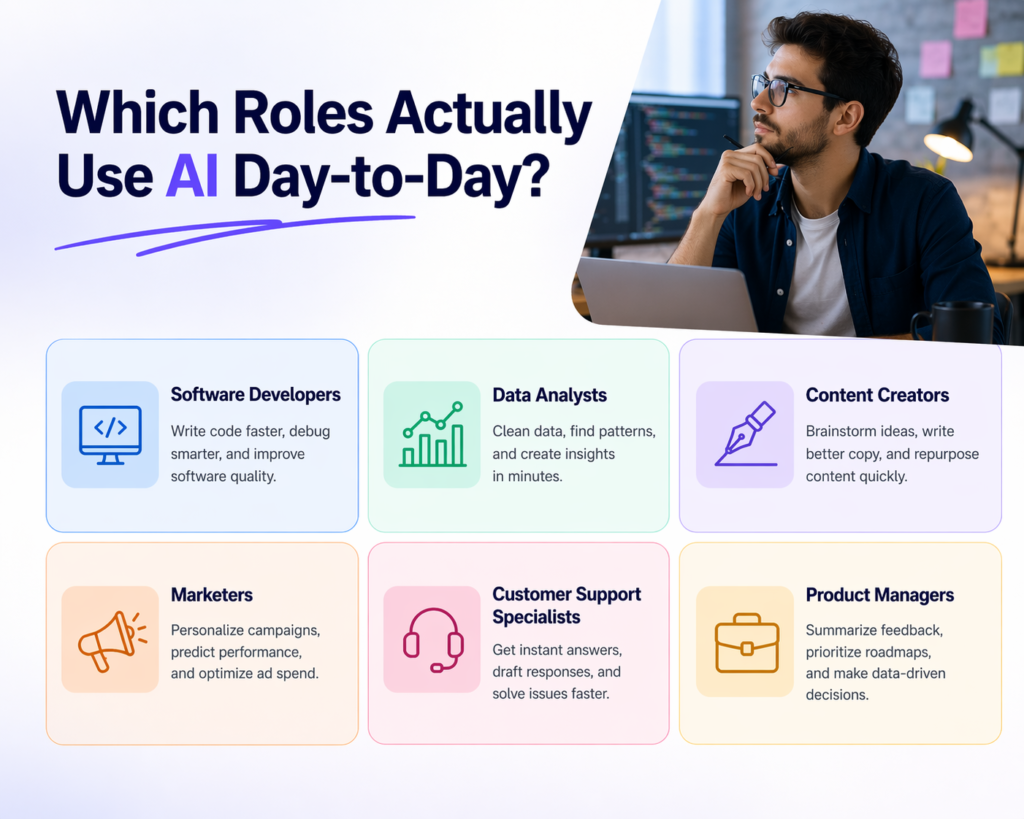
It’s not just AI specialists anymore. A lot of roles interact with AI in some way:
- Data Scientists
- Machine Learning Engineers
- Data Analysts
- Software Engineers
- DevOps Engineers
- Business Analysts
Even if you’re not aiming for a hardcore AI role, these skills still show up more often than you’d expect.
Career paths after learning AI
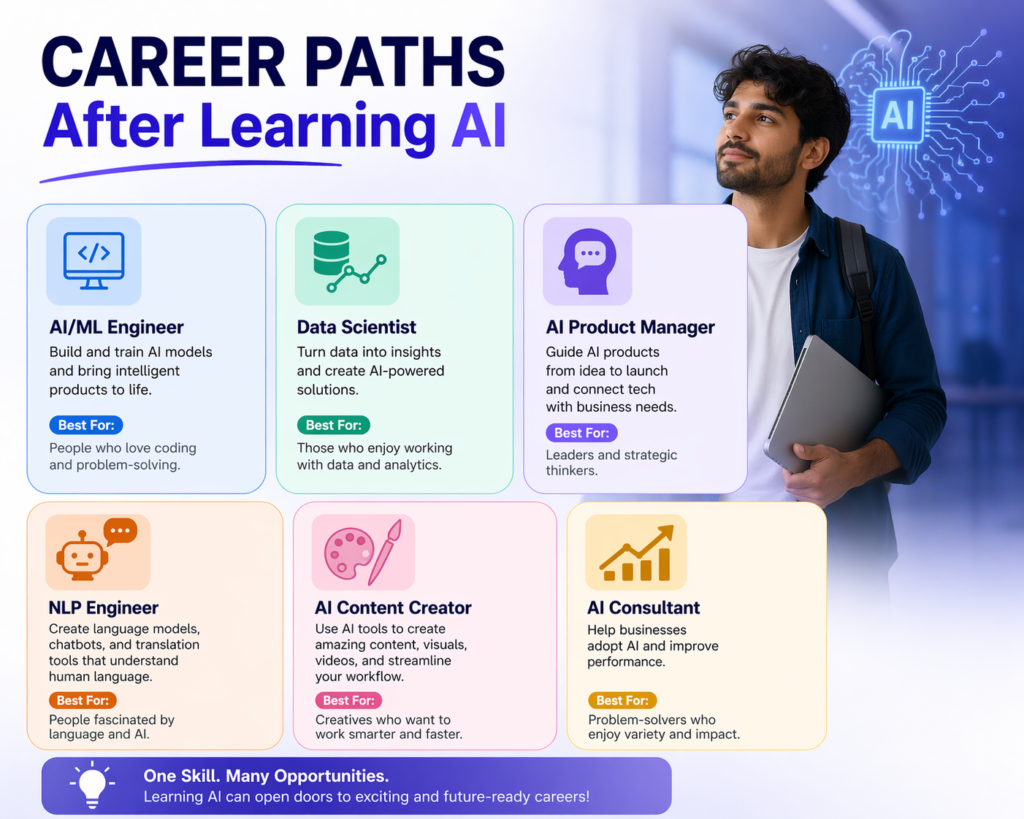
Where you go depends on what you enjoy working on:
Technical paths:
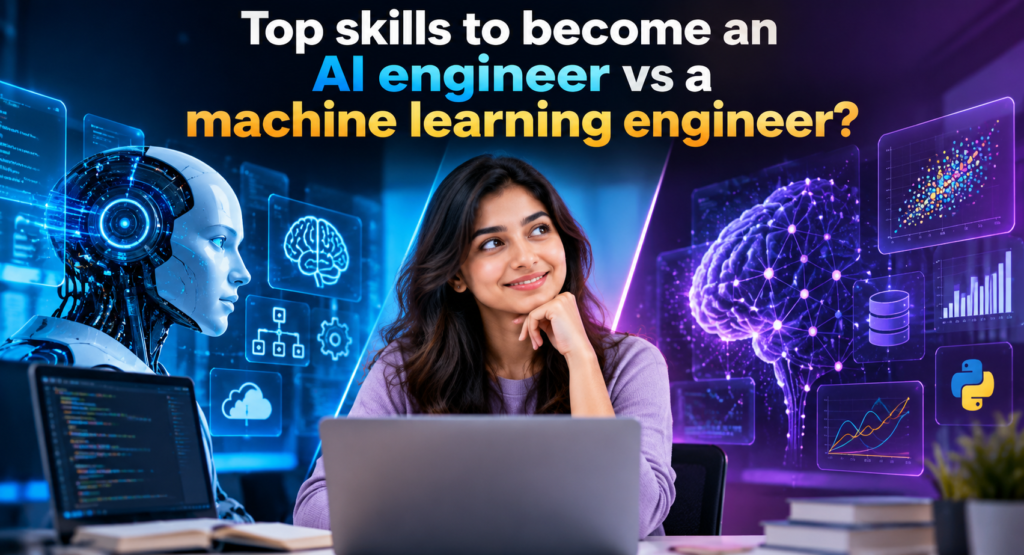
- Machine Learning Engineer
- AI Engineer
- Data Scientist
Analytical paths:
- Data Analyst
- Business Intelligence Analyst
Hybrid roles:
- AI Product Manager
- AI Solutions Architect
Salaries vary, obviously experience, domain, and location all play a role. But broadly speaking, AI-related roles tend to sit on the higher end.
How do these training programs usually work?
Most follow a gradual progression:
- Start with Python and basic statistics
- Move into machine learning concepts
- Explore advanced topics like deep learning or NLP
- Work on real-world projects
- Learn deployment, often on cloud platforms
You’ll likely come across tools like Python, Pandas, TensorFlow, PyTorch, Docker, and cloud services like AWS or Azure.
Common challenges learners run into
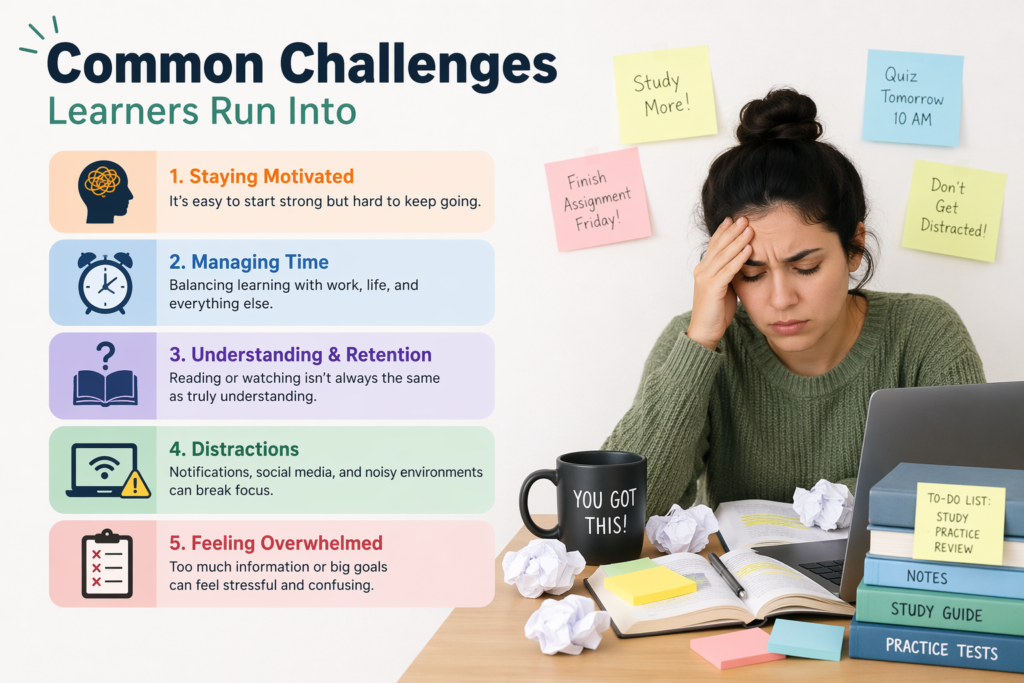
It’s not always smooth and that’s completely normal.
- Some concepts (especially math-related) can feel abstract at first
- Real-world data is messy… much messier than practice datasets
- It’s easy to get stuck in theory without building enough
- Deployment can feel like a whole different skill set
Good Artificial Intelligence Training Program try to address this with guided projects and realistic scenarios but you still have to push through some of it yourself.
FAQ
Can online AI training really increase salary quickly?
It can but it depends on how you apply what you learn. Skills plus execution matter.
How long before you see results?
Usually a few months to around nine months, depending on your pace and starting point.
Do employers care about certifications?
They help, but projects and practical skills matter more.
Do you need programming experience?
It helps, but many programs start from the basics.
Which industries benefit most?
Finance, healthcare, retail, manufacturing, and tech are leading adopters.
What makes a program effective?
Hands-on work, real tools, and a clear learning path.
Final thoughts
online AI training isn’t just another box to tick it changes how you approach problems and work with data. That shift is what creates long-term value.
Programs that focus on real-world application tend to make that transition easier. For example, platforms like H2K Infosys emphasize project-based online AI training learning and job-ready skills, which feels closer to what you’ll actually deal with on the job. And that practical exposure… that’s usually what makes the difference over time.