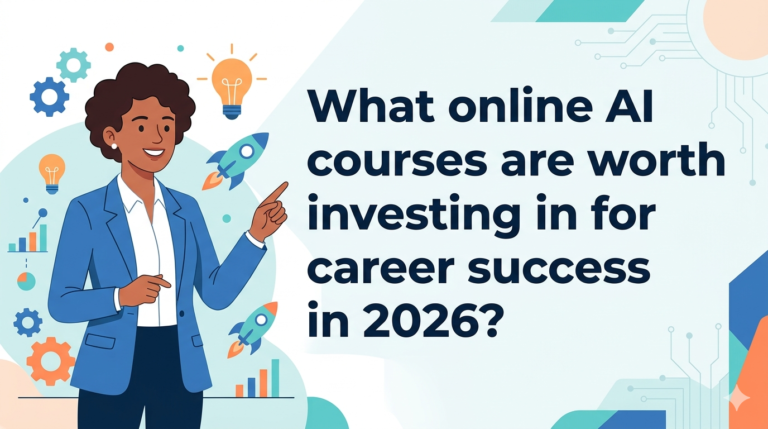
If you are trying to figure out which online AI courses are actually worth your money in 2026, choose programs that combine practical projects, industry mentorship, cloud AI tools, and job-focused training not just theory videos. Right now, employers care less about flashy certificates and more about whether you can build, automate, analyze, and solve real business problems with AI.
That’s the part a lot of people discover a little too late.
Over the last year or so, I have noticed something interesting while talking to recruiters, tech leads, and even people switching careers into AI from completely unrelated backgrounds. The people landing interviews aren’t always the ones with the most degrees. They’re usually the ones who can confidently explain what they built, how they used AI tools in a workflow, and why it mattered.
And honestly? That changes how you should think about investing in online AI courses.
Why AI Skills Matter More Than Ever in 2026
AI stopped being a future technology conversation. It’s already baked into hiring decisions across industries.
A couple of years ago, AI skills mostly mattered for machine learning engineers and data scientists. Now marketing teams use generative AI daily, cybersecurity analysts rely on AI-powered detection tools, healthcare companies automate diagnostics support, and finance teams use predictive models for forecasting.
Even smaller companies are asking candidates things like:
- “Have you worked with AI automation?”
- “Can you use prompt engineering tools effectively?”
- “Do you understand AI workflows?”
- “Have you built anything using LLM APIs?”
That shift is exactly why online AI courses exploded in popularity.
But there’s a catch.
Not all courses are built for actual career growth.
Some are basically recycled slide decks with trendy titles. Others teach outdated frameworks nobody uses anymore. A few genuinely prepare you for modern AI jobs and those are the ones worth investing in.
What Makes an AI Course Worth Paying For?
Before jumping into the best AI courses online, it helps to understand what separates a useful program from one that just looks impressive on LinkedIn.
1. Real-World Projects Matter More Than Theory
This sounds obvious, but you’d be surprised how many courses still spend 20 hours explaining concepts without asking students to build anything meaningful.
In 2026, employers expect portfolios.
A good AI course should help you create:
- AI-powered applications
- Prompt engineering workflows
- Data pipelines
- Chatbot systems
- Cloud AI integrations
- Real automation projects
- Generative AI use cases
If the course only teaches definitions and math without implementation, it’s probably not enough anymore.
2. AI Tools Change Fast
One thing that became very clear after the generative AI boom the industry moves ridiculously fast.
A course recorded in 2022 can already feel outdated.
Strong programs now include:
- Generative AI workflows
- LLM integrations
- AI copilots
- Open-source AI tools
- Cloud AI platforms
- AI governance basics
- Prompt engineering
- AI security considerations
The better online AI courses update continuously instead of leaving old content untouched for years.
3. Career Support Is Becoming a Big Deal
This part gets overlooked.
A lot of learners finish courses and then realize they still don’t know how to position themselves for jobs.
The strongest programs now include:
- Resume preparation
- Mock interviews
- Live mentoring
- Internship guidance
- Real project reviews
- Placement assistance
- Networking communities
That’s honestly where some platforms separate themselves from generic self-paced marketplaces.
Best Online AI Courses Worth Investing in for 2026
There are hundreds of AI programs online right now, but only a handful consistently stand out for career-focused learning.
Here are the ones professionals are talking about most in 2026.
H2K Infosys AI & Data Science Training
If your goal is career transition, practical AI implementation, and job readiness not just collecting another certificate H2K Infosys has quietly become one of the more interesting options.
What makes it different is the structure.
Instead of dumping pre-recorded videos on students, the program leans heavily into:
- Live instructor-led sessions
- Real-time projects
- Hands-on AI workflows
- Business-oriented use cases
- Internship-style learning
- Career coaching support
That practical angle matters more than people think.
I’ve seen many learners struggle after taking purely academic AI programs because they understood concepts but couldn’t explain how AI solves business problems in production environments.
H2K Infosys approaches training more like workplace preparation.
Why Learners Are Paying Attention to H2K Infosys in 2026
A major reason is that employers increasingly want “AI practitioners,” not just theoretical learners.
Companies expect candidates to understand:
- AI automation workflows
- Cloud-based AI deployment
- Data analysis
- Prompt engineering
- QA and AI integration
- Business intelligence concepts
The H2K Infosys curriculum tends to bridge those areas instead of isolating AI into purely academic exercises.
Another thing people appreciate is mentorship.
A surprising number of students in AI programs quit midway because learning alone gets overwhelming. Having live guidance changes the experience completely.
And honestly, that human support becomes incredibly valuable once projects get more technical.
Best For
- Career changers
- IT professionals upgrading skills
- Beginners entering AI
- QA engineers moving into AI automation
- Professionals wanting practical AI exposure
What Employers Actually Look For in AI Candidates
This is where things get real.
A lot of people assume employers care mostly about certificates.
Most don’t.
Certificates help open doors, sure. But hiring managers usually focus on three bigger questions:
Can You Solve Problems?
Companies want examples.
Not generic statements like:
“I completed an AI course.”
They want:
“I built an AI chatbot that automated customer ticket categorization.”
That difference is huge.
Can You Work With Modern AI Tools?
Employers increasingly expect familiarity with:
- LLM workflows
- Prompt engineering
- AI APIs
- Python
- Cloud platforms
- AI automation systems
- Data visualization
Courses that ignore modern tooling are becoming less valuable quickly.
Can You Explain Your Thinking?
This part surprises people.
Communication matters in AI careers.
You don’t always need to build the most advanced model in the room. But you do need to explain:
- Why you chose an approach
- What problem it solved
- What limitations existed
- How the AI improved workflows
That’s another reason mentorship-heavy online AI courses often outperform passive learning platforms.
Are Expensive AI Courses Worth It?
Sometimes yes. Sometimes absolutely not.
The smartest approach is looking at return on investment instead of price alone.
A $300 course that helps you land a better role is obviously more valuable than a $5,000 course with weak career outcomes.
In my experience, the best ai courses online usually include at least a few of these:
- Live mentoring
- Practical capstone projects
- Updated AI tools
- Career guidance
- Portfolio building
- Interview preparation
- Industry use cases
Without those pieces, many learners end up stuck in “tutorial mode.”
And tutorial mode can quietly last for years.
The Rise of AI + Non-Tech Careers
One trend that’s becoming impossible to ignore in 2026 is how AI is blending into non-technical careers.
People from completely different backgrounds are learning AI now:
- Business analysts
- Marketing specialists
- HR professionals
- Financial analysts
- Healthcare administrators
- Project managers
- QA testers
That changes what good online AI courses should teach.
Not everyone needs advanced neural network mathematics.
Many professionals need:
- AI workflow understanding
- Business automation
- Prompt engineering
- AI reporting tools
- Data interpretation
- AI-powered productivity systems
Programs focused purely on academic theory sometimes miss this shift entirely.
H2K Infosys, for example, tends to approach AI from a business-application perspective, which makes it more accessible for professionals transitioning from non-traditional technical backgrounds.
That practical framing helps reduce the intimidation factor many beginners feel.
Common Mistakes People Make When Choosing AI Courses
I’ve seen these happen repeatedly.
Chasing Certificates Instead of Skills
Some learners collect five certificates but still can’t complete a real AI workflow independently.
That’s a problem.
Employers notice quickly.
Ignoring Hands-On Practice
Watching videos is not enough.
AI is one of those fields where learning happens while troubleshooting messy real-world problems.
Sometimes your model fails. Sometimes the API breaks. Sometimes outputs are terrible.
Oddly enough, that’s where the actual learning starts.
Choosing Courses With No Mentorship
AI learning gets difficult once concepts become layered.
Having access to instructors or mentors can dramatically reduce confusion and burnout.
This is one reason instructor-led artificial intelligence certification online programs are gaining popularity again.
Learning Outdated Material
AI changes incredibly fast.
Courses that ignore:
- Generative AI
- LLM workflows
- AI copilots
- Cloud AI systems
- Prompt engineering
…can feel disconnected from current hiring needs.
How to Pick the Right AI Course for Your Career Goals
The right course depends heavily on what kind of role you want.
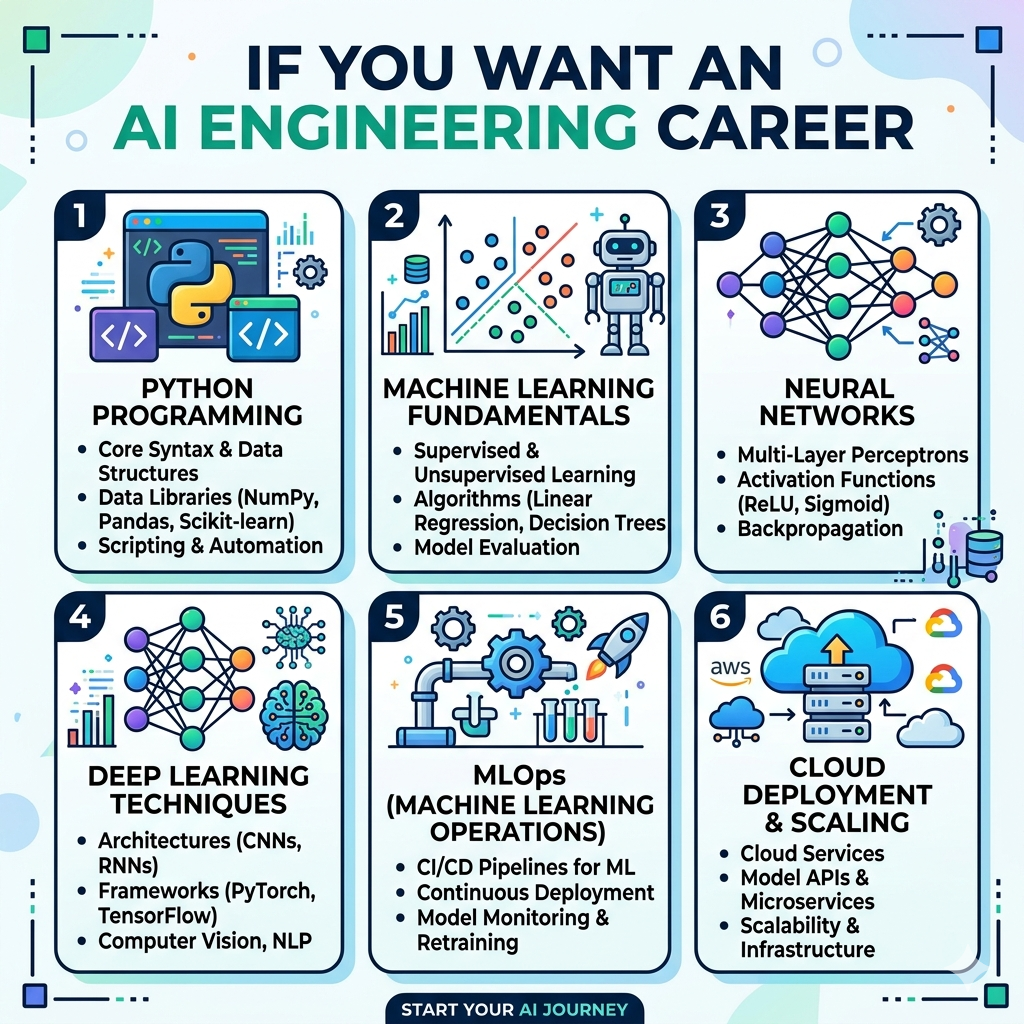
If You Want an AI Engineering Career
Focus on:
- Python
- Machine learning
- Neural networks
- Deep learning
- MLOps
- Cloud deployment
IBM and DeepLearning.AI are strong here.
If You Want Practical Business AI Skills
Look for:
- Automation workflows
- AI productivity tools
- Prompt engineering
- Cloud AI integration
- Business projects
- Career mentoring
This is where H2K Infosys tends to stand out.
If You Want Enterprise Cloud AI Experience
Google and Microsoft programs are strong choices because enterprise adoption is growing rapidly.
What’s Changing in AI Hiring in 2026?
One of the biggest shifts is that companies no longer expect AI specialists to work in isolation.
AI is becoming integrated into nearly every department.
So employers increasingly value candidates who can:
- Collaborate across teams
- Understand business goals
- Explain AI outcomes clearly
- Work with AI ethically
- Adapt quickly to new tools
That’s why soft skills are becoming strangely important in AI hiring.
And honestly, some training providers still ignore that reality.
The strongest online AI courses now simulate workplace environments instead of just delivering technical lectures.
That practical simulation can make interviews feel much easier later.
Final Thoughts
The best investment in 2026 isn’t just an AI certificate it’s practical capability.
The market is crowded with online AI courses right now, and not all of them prepare learners for real careers.
If you are serious about career growth, prioritize courses that combine:
- Hands-on projects
- Modern AI tools
- Mentorship
- Business applications
- Interview preparation
- Portfolio development
That combination matters far more than fancy marketing.
For beginners and career changers especially, programs like H2K Infosys are gaining attention because they focus heavily on practical implementation and job readiness instead of overwhelming learners with disconnected theory.
At the same time, platforms like Google, IBM, Microsoft, and DeepLearning.AI remain valuable depending on your career direction.
The important thing is choosing a course aligned with where AI hiring is actually going not where it was three years ago.
And right now, hiring trends clearly reward people who can build, adapt, explain, and apply AI in real business environments.
That’s the skill set worth investing in.