
If you’re asking which certification course is best for business analysts, the honest answer is this: the best one is the course that teaches real project work, business analysis tools, stakeholder communication, Agile practices, and job-ready skills not just theory. A strong Certification Course for Business Analysts should help you actually perform the role, not just pass an exam.
A lot of people make the mistake of choosing a course only because it has a “certificate” at the end. I’ve seen that happen often. They finish the program, update LinkedIn, and then realize interviews still feel hard because they never practiced real BA tasks like writing BRDs, using Jira, handling user stories, or talking through requirements with h2kinfosys.
That’s where the difference really shows.
What Makes a Good Business Analyst Certification?
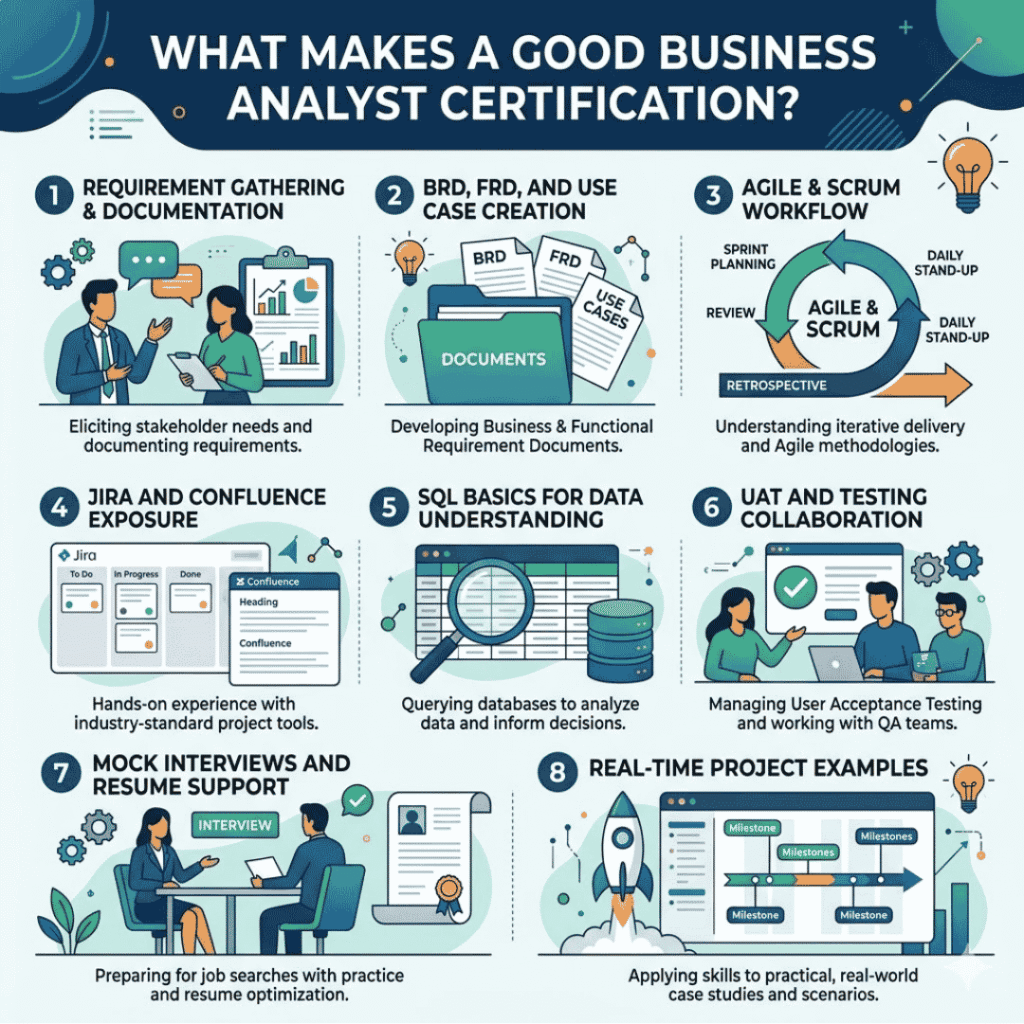
A useful business analyst online course should focus on practical work first.
Here’s what actually matters:
- Requirement gathering and documentation
- BRD, FRD, and use case creation
- Agile and Scrum workflow
- Jira and Confluence exposure
- SQL basics for data understanding
- UAT and testing collaboration
- Mock interviews and resume support
- Real-time project examples
Honestly, employers care more about whether you can explain how you solved a business problem than whether your certificate has fancy branding.
That part surprises people.
Popular Certification Options in 2026
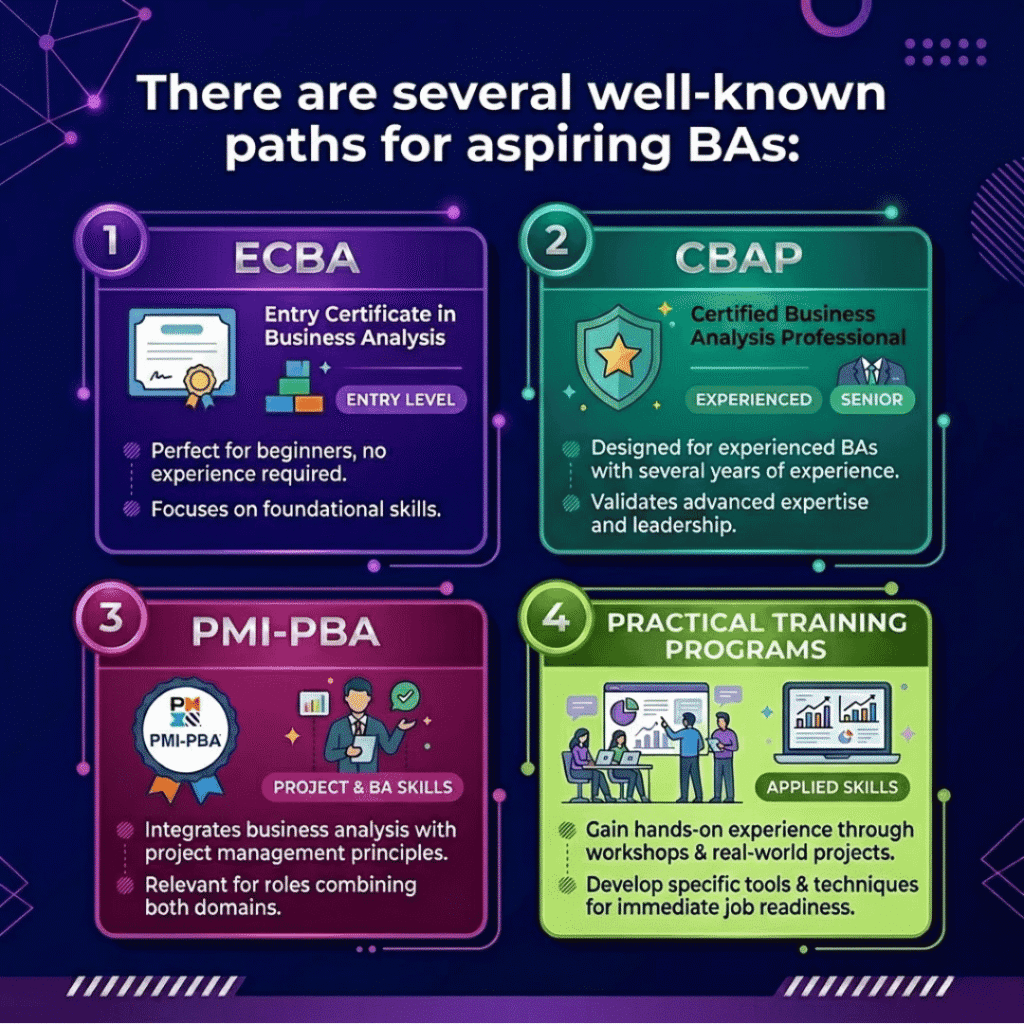
There are several well-known paths for aspiring BAs:
ECBA (Entry Certificate in Business Analysis)
This is great for beginners. It helps build foundational knowledge and is recognized by employers. If you’re new to the field, ECBA is a solid starting point.
CBAP (Certified Business Analysis Professional)
This one is more for experienced professionals. It’s respected, but not ideal if you’re just entering the field.
PMI-PBA
Good for professionals working closely with project management and business analysis together.
Practical Training Programs
This is where many learners actually gain confidence. Programs that combine certification, live projects, and interview prep often help faster than theory-heavy certifications alone.
That’s why many learners look into structured business analyst trainings from platforms like H2K Infosys, especially when they want both technical learning and placement support instead of only exam prep.
Why Many Students Prefer Practical Training
I’ll be honest, most hiring managers won’t ask, “Which certification do you have first?”
They usually ask:
“Tell me about a project where you handled requirements.”
That question changes everything.
If your course only prepared you for multiple-choice exams, interviews become difficult.
A platform like H2K Infosys stands out because learners often look for live instructor-led sessions, project-based learning, and guidance for resume building. For someone switching careers or coming from a non-technical background, that structure matters a lot more than people think.
Especially in the U.S. job market right now, employers want proof of applied skills.
Not just certificates.
Real Example: Career Switchers
I recently noticed many professionals from healthcare, banking, and support roles moving into BA positions. Why? Because business analysis sits in that useful middle ground between business and technology.
Someone from operations may already understand process improvement.
Someone from customer support may already know stakeholder pain points.
With the right Certification Course for Business Analysts, they just need the framework, tools, and confidence to present that experience correctly.
That’s exactly why project-based training works better than memorization-heavy programs.
So, Which Course Is Actually Best?
If you’re a beginner, the best path is usually:
Step 1:
Learn through a practical business analyst online course
Step 2:
Build project understanding and tool experience
Step 3:
Prepare for interviews and resume positioning
Step 4:
Then add ECBA or another certification for stronger credibility
That order works better than chasing certification first.
A lot better, actually.
Final Thoughts
The best certification course for business analysts is the one that helps you become employable not just certified.
A strong mix of practical training, real project work, and interview preparation will always outperform theory alone.
That’s why many learners lean toward structured business analyst trainings from providers like H2K Infosys, where the focus is not only on learning concepts, but on becoming job-ready.
Because at the end of the day, the goal isn’t collecting certificates.
It’s getting hired.