
Introduction
Many professionals feel stuck in roles that offer limited growth. They often work in domains like sales, operations, finance, or customer support. These roles build strong business knowledge, but they may not provide a clear path to higher paying or strategic positions. This is where business analysis becomes a powerful career option.
The shift from Non-technical roles to business analysis is not only possible, but also highly practical. Companies value professionals who understand business needs and can translate them into actionable solutions. Business analysts play a key role in bridging this gap.
Recent industry reports show that demand for business analysts is growing steadily across IT, healthcare, banking, and retail sectors. According to market insights, organizations increasingly rely on data driven decisions, which creates more opportunities for skilled analysts.
In this guide, you will learn how to move from Non-technical roles to business analysis step by step. You will also understand the skills, tools, and strategies required to succeed.
What is Business Analysis
Business analysis focuses on identifying business needs and finding solutions to problems. A business analyst works with stakeholders to gather requirements, analyze data, and improve processes.
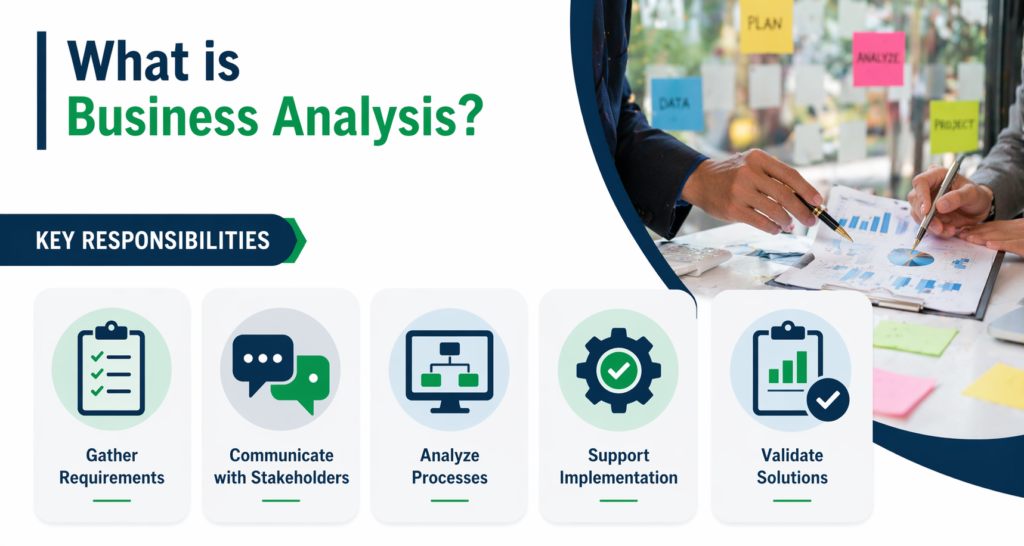
Key Responsibilities
- Gather and document business requirements
- Communicate with stakeholders
- Analyze business processes
- Support project implementation
- Validate solutions
Professionals moving from Non-technical roles to business analysis often find these tasks familiar because they already interact with business processes and teams.
Why Transition to Business Analysis
1. High Demand Across Industries
Companies need analysts to improve efficiency and reduce costs. This demand makes the transition from Non-technical roles to business analysis a stable career move.
2. Better Salary Growth
Business analysts earn higher salaries compared to many non technical roles. Entry level salaries increase quickly with experience.
3. Opportunity to Work on Strategic Projects
Business analysts influence decision making. They work on projects that impact business growth.
4. No Heavy Coding Requirement
You do not need deep programming skills. This makes the shift from Non-technical roles to business analysis easier.
Skills Required for Business Analysis
1. Communication Skills
You must explain ideas clearly. You must also understand stakeholder needs.
2. Analytical Thinking
You must break down problems and find solutions.
3. Domain Knowledge
Your current industry knowledge becomes an advantage when moving from Non-technical roles to business analysis.
4. Documentation Skills
You must write clear and structured documents.
5. Basic Technical Awareness
You should understand tools like Excel, SQL, and reporting dashboards.
Step by Step Guide to Transition
Step 1: Understand the Role Clearly
Start by learning what a business analyst does daily. Read job descriptions and analyze responsibilities. This helps you plan your transition from Non-technical roles to business analysis with clarity.
Step 2: Identify Your Transferable Skills
Many skills from non technical roles are already useful.
Example
- A sales professional understands customer needs
- A finance executive understands data and reporting
- A support executive understands user issues
These skills support your move from Non-technical roles to business analysis.
Step 3: Learn Core Concepts
Focus on the basics of business analysis.
Key Topics
- Requirement gathering
- Stakeholder management
- Process modeling
- Use case creation
Learning these concepts builds a strong base for transitioning from Non-technical roles to business analysis.
Step 4: Learn Tools Used by Business Analysts
Common Tools
- Microsoft Excel
- SQL
- Power BI or Tableau
- JIRA
- Visio
Sample SQL Query
SELECT customer_name, order_total
FROM orders
WHERE order_total > 1000;
This simple query helps analyze high value customers.
Tools make your transition from Non-technical roles to business analysis more effective.
Step 5: Work on Real Projects
Practice is essential. Create small projects based on real scenarios.
Example Project
- Analyze sales data
- Identify trends
- Suggest improvements
Hands on practice strengthens your move from Non-technical roles to business analysis.
Step 6: Build a Strong Resume
Highlight your transferable skills and projects.
Include
- Business problem solving examples
- Data analysis experience
- Communication achievements
Your resume should reflect your journey from Non-technical roles to business analysis clearly.
Step 7: Prepare for Interviews
Focus on both technical and scenario based questions.
Common Questions
- How do you gather requirements
- How do you handle stakeholders
- How do you prioritize tasks
Preparation ensures a smooth shift from Non-technical roles to business analysis.
Real World Example
Case Study: Transition from Customer Support
A customer support executive handled user complaints daily. They noticed patterns in customer issues. They documented common problems and suggested solutions.
This experience helped them transition from Non-technical roles to business analysis. They used their domain knowledge to improve product features.
Importance of Structured Learning
A structured learning path helps you gain skills faster. Many learners choose a business analyst training institute to build strong fundamentals.
Benefits of Structured Learning
- Guided curriculum
- Hands on projects
- Real world scenarios
- Interview preparation
These benefits support your transition from Non-technical roles to business analysis.
Choosing the Right Learning Path
When selecting a program, consider the following:
Key Factors
- Practical training
- Industry relevant tools
- Project based learning
- Career support
Many learners look for a business analyst course with placement to improve job opportunities. Some also prefer a business analyst course with placement guarantee for added confidence.
Common Challenges and Solutions
Challenge 1: Lack of Technical Knowledge
Solution: Start with basics like Excel and SQL.
Challenge 2: No Experience
Solution: Build projects and case studies.
Challenge 3: Confidence Gap
Solution: Practice communication and mock interviews.
Overcoming these challenges makes your transition from Non-technical roles to business analysis smoother.
Day in the Life of a Business Analyst
Typical Tasks
- Attend stakeholder meetings
- Gather requirements
- Analyze data
- Create reports
- Support project teams
These tasks show how practical and engaging the role is for those moving from Non-technical roles to business analysis.
Career Path After Transition
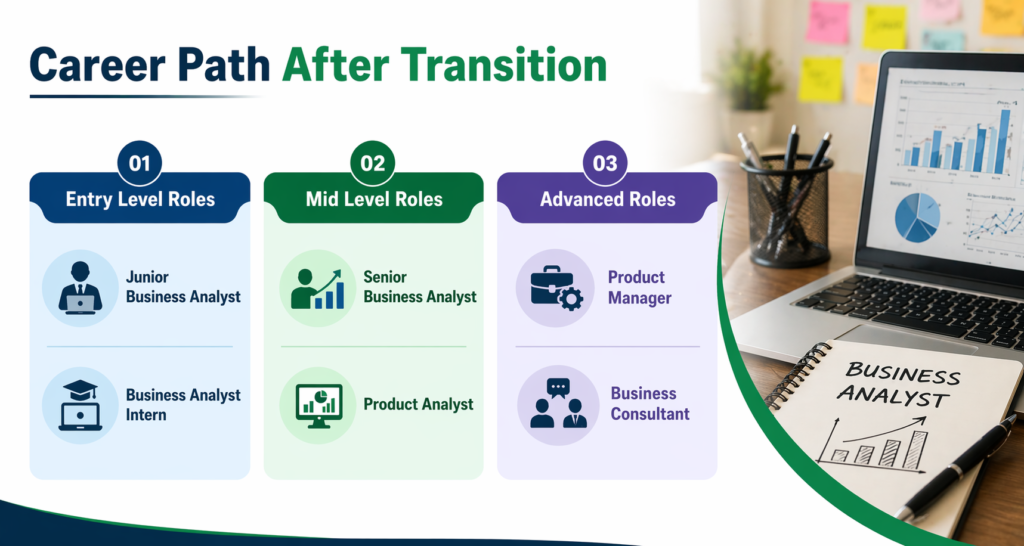
Entry Level Roles
- Junior Business Analyst
- Business Analyst Intern
Mid Level Roles
- Senior Business Analyst
- Product Analyst
Advanced Roles
- Product Manager
- Business Consultant
This growth path makes the shift from Non-technical roles to business analysis highly rewarding.
Tips for Success
1. Stay Consistent
Daily learning builds strong skills.
2. Practice Real Scenarios
Apply knowledge to real problems.
3. Network with Professionals
Connect with industry experts.
4. Keep Learning
Stay updated with tools and trends.
These tips help you succeed after transitioning from Non-technical roles to business analysis.
Key Takeaways
- Business analysis is a high demand career
- Non technical professionals can transition successfully
- Skills like communication and analysis are essential
- Practical learning and projects are important
- Structured programs like a business analyst course with placement can help
- Some learners prefer a business analyst course with placement guarantee for job support
- Choosing the right business analyst training institute improves outcomes
Conclusion
The journey from Non-technical roles to business analysis is achievable with the right skills and strategy. Focus on learning, practice, and consistency to build a successful career.
Start your transition today and take the first step toward a rewarding future.