Introduction
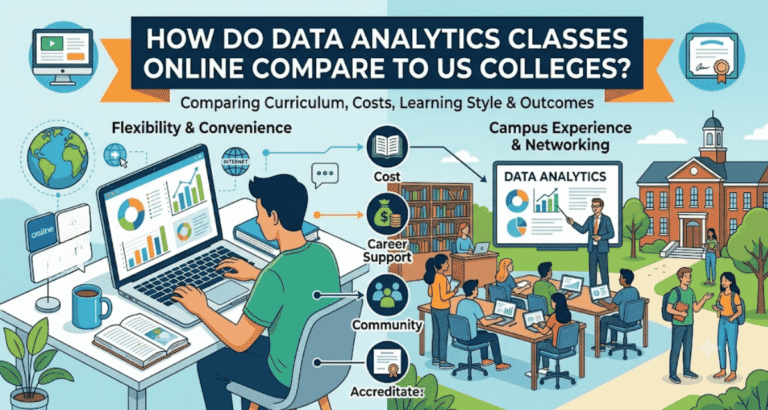
Let’s get right to the heart of it: In 2026, data analytics classes online can absolutely rival, and in some cases outshine, traditional US college programs for data analytics if you know what to look for and choose wisely. I say that as someone who’s tried both routes, talked to colleagues who’ve done the same, and kept a close pulse on hiring trends and industry shifts.
My Honest Take: The Changing Landscape of Data Analytics Education
A few years back, telling someone you learned Data Analytics Classes Online might have gotten you an eyebrow raise. Today? I’ve seen hiring managers get genuinely excited about applicants who can show off completed Data Analytics Classes Online projects, especially when those projects solve real-world business problems.
Why? Because companies want people who can hit the ground running, not just folks who’ve memorized theory. And, honestly, if you look at the data analytics program curriculum at top platforms (including H2K Infosys), you’ll see they’re laser-focused on tools and techniques that are in-demand right now. It’s not about ticking off boxes it’s about what you can actually do with data.
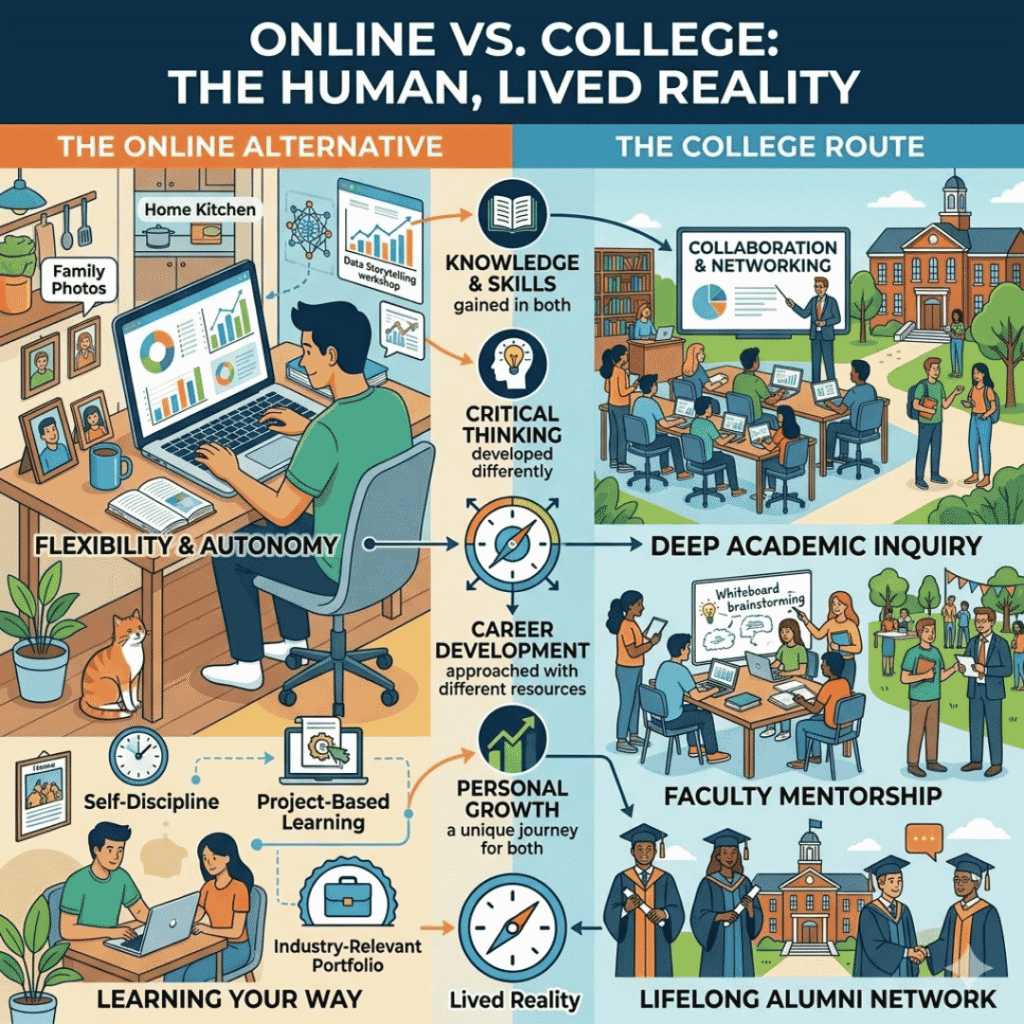
Online vs. College: The Human, Lived Reality
Let me break down what it felt like, personally, to compare a traditional US college path with data analytics classes online:
The College Route
When I started my analytics journey, I figured the university route was the “safe” bet. Campus life, face-to-face networking, a degree to hang on the wall. And those are real advantages! But I also found myself slogging through general education classes, and it sometimes took months for new advancements in analytics (like LLMs or cloud-based ETL tools) to make it into the syllabus.
The Online Alternative
Curiosity (and maybe a little impatience) led me to try a Data Analytics Classes Online Suddenly, I was working through case studies on retail sales forecasting, building dashboards with real-world datasets, and getting feedback from mentors who actually work in the analytics industry today not just academics.
One big “aha” moment: In my online cohort, one guy was a marketing manager from Brazil, another was a nurse from Texas, and another was transitioning from logistics in Mumbai. That diversity of experience made our group projects so much richer than what I’d experienced in a classroom of mostly recent high school grads.
What Employers Really Care About in 2026
I’ve talked to plenty of recruiters, and here’s what stands out:
- Portfolio Over Paper: If you can show a GitHub with solid projects or a Tableau Public portfolio, you’re ahead of applicants who just list a degree.
- Up-to-Date Skills: Knowing how to use Python, SQL, or Power BI in practical scenarios beats textbook knowledge every time.
- Adaptability: The analytics field moves fast. Employers want people who are learning continuously a trait often seen in those who choose online learning.
A friend of mine recently landed a job at a fintech startup. The hiring manager told her, “We hired you not because of your diploma, but because you could answer our business scenario questions with real, practical examples from your Data Analytics Classes Online.”
The Real Value of Data Analytics Classes Online
Here’s why I and a growing number of career switchers prefer online options:
1. Flexibility for Real Life
I finished my first Data Analytics Classes Online in the evenings after work. One of my classmates was a parent juggling school drop-offs and late-night study sessions. Online learning actually fits into busy, messy, real life.
2. Lower Cost, Lower Risk
This was huge for me. US colleges can cost tens of thousands of dollars a year, plus lost income if you study full-time. My online course was affordable, and I didn’t feel like I was gambling my future on a risky investment.
3. Fast Updates
Remember when ChatGPT and Gemini started shaking up analytics workflows? My online course had modules on prompt engineering and AI data prep within weeks. My college’s curriculum took at least a semester to catch up.
4. Hands-On, Not Just Theory
I loved that I could build dashboards to analyze COVID-19 trends, or scrape real housing data for price prediction projects. Those kinds of practical projects are what hiring managers want to see.
What Do You Actually Learn in an Online Data Analytics Program?
Here’s what you can expect from a top-tier Data Analytics Classes Online experience (especially at providers like H2K Infosys):
- Data Cleaning and Preparation: Real-world data is always messy. You’ll learn to handle missing values, outliers, and inconsistencies.
- Programming (Python, SQL): These are the backbone tools for any analyst today. You’ll code, not just read about coding.
- Visualization: Building interactive dashboards in Power BI or Tableau that actually tell a story.
- Statistical Analysis: Not just formulas, but applying them to business decisions.
- Machine Learning Basics: Enough to automate simple Machine Learning predictions and spot trends.
- Soft Skills: Presenting findings, building a narrative, communicating with non-technical stakeholders.
Real Example: Upskilling for a Career Change
I met someone in my online cohort who was a former HR manager. She built a project analyzing employee churn and presented it to her company’s executive team. That led to a new internal role in analytics no extra degree required.
Career Outcomes: How Far Can You Go?
The market for data analysts in the US (and globally) is booming. Even outside the classic tech sector, organizations are scrambling to make sense of their growing piles of data.
Typical Roles After Completing a Data Analytics Program
- Data Analyst
- Business Intelligence Analyst
- Product Analyst
- Healthcare Data Analyst
- Junior Data Scientist
According to recent LinkedIn and Glassdoor data, salaries start around 70,000 for entry-level positions and can climb past 120,000 with experience and specialization.
The Power of Portfolios
The best part about online learning? You finish with a portfolio of real work projects you can show during interviews. I’ve seen people get hired purely based on their GitHub or Tableau portfolio, even if they don’t have a traditional degree.
Choosing the Right Data Analyst Course Online
Here’s my checklist, based on what worked (and what didn’t) for me:
- Is the curriculum up to date? Are you learning about AI data pipelines, or just Excel charts from 2015?
- Do you get instructor feedback? At H2K Infosys, mentors review your assignments, which is invaluable.
- Are there live sessions? Interacting with instructors and peers makes a world of difference.
- What’s the career support like? Resume reviews, interview prep, and job boards aren’t just nice-to-haves; they’re essential.
Mistakes I Made (So You Don’t Have To)
- Just watching videos without practice: You have to get your hands dirty with data.
- Not networking: Online doesn’t mean alone. Join the communities, ask questions.
- Ignoring soft skills: Technical know-how is important, but being able to present your findings is what sets you apart.
Practical Tips for Maximizing Your Online Learning
- Set a consistent schedule: Even if it’s just an hour a day.
- Seek feedback: Don’t be shy ask for it often!
- Build as you learn: Tackle side projects based on your own interests or work problems.
- Showcase your work: Update your LinkedIn, GitHub, or Tableau Public profile as you go.
Why I Recommend H2K Infosys
So, why do I keep coming back to H2K Infosys when friends ask for advice? Here are the real, experience-based reasons:
- Industry-Connected Instructors: You learn from people who actually work in data analytics, not just theory.
- Constantly Updated Curriculum: Modules on AI analytics, cloud-based tools, and even prompt engineering.
- Career-Focused Approach: Resume workshops, mock interviews, and job placement support.
- Project-Driven Learning: By the end, you’ll have a tangible portfolio something you can actually show to employers.
- Supportive Community: There’s always someone to help, whether you’re stuck on code or need career advice.
If you’re serious about building a career in data analytics, structured training like what H2K Infosys offers can help you go from zero to job-ready, even if you’re starting from scratch.
Related Topics to Explore
If you’re interested in this path, you can also explore:
- How to Build a Data Analytics Portfolio That Gets You Hired
- Breaking Into Data Science: Bootcamps vs. Online Programs
- Top Data Analytics Tools and Platforms for 2026
Each of these topics is a logical next step and will deepen your understanding of the data analytics field.
FAQ: Data Analytics Classes Online
1. Are online data analytics programs valued by employers?
Yes! Employers care about your actual skills and portfolio more than the piece of paper.
2. How long does a typical data analyst course online take?
Most comprehensive programs take 3–6 months, but it depends on your pace and commitment.
3. Is math a must-have to start?
Basic math is helpful, but most programs teach you what you need, step by step.
4. What if I’ve never coded before?
No worries many programs start from absolute basics, especially with Python and SQL.
5. Is data analytics still worth pursuing in 2026?
Absolutely demand is only increasing, across nearly every industry.
The Bottom Line: Should You Choose Online Data Analytics Classes Over College?
Here’s my honest, lived advice: If you want relevant, job-ready skills, flexibility, and a faster path into the workforce, a high-quality Data Analytics Classes Online like those from H2K Infosys is a fantastic option. You’ll learn what’s actually in demand, build a real-world portfolio, and get serious support to help you land that first (or next) analytics job.
So, if you’re ready to take control of your career, explore H2K Infosys’ programs and see how far data analytics classes online can take you. The field is growing, the opportunities are real, and with the right training, you can absolutely make your mark no four-year degree required.