
The easiest way to learn business analysis online is to follow a structured, beginner-friendly training path that combines real-world projects, mentorship, and industry-recognized certification prep. Random YouTube videos can help at first, sure, but most people hit a wall when they try to connect theory with actual business analyst work. That’s where a guided program like H2K Infosys starts making a noticeable difference.
A lot of aspiring analysts think business analysis is mostly about documentation or spreadsheets. Honestly, that’s usually the first misconception. Modern business analysts sit right in the middle of business goals, data, software systems, stakeholder communication, and decision-making. It’s part strategy, part communication, part technical thinking. And online learning works surprisingly well for this field if the training is practical.
Why So Many People Are Learning Business Analysis Online Right Now
A few years ago, business analysis felt like a niche corporate role. Not anymore.
Companies are investing heavily in automation, AI workflows, digital transformation, and customer analytics. Because of that, organizations need people who can translate business problems into technical solutions. That’s basically the core of business analysis.
You’ve probably noticed this trend already if you’ve browsed LinkedIn recently. Roles like:
- Business Analyst
- Data Analyst
- Product Analyst
- Agile Business Analyst
- Functional Analyst
…have exploded across industries.
Even non-tech companies now hire analysts because every business runs on software, data, reporting, and process optimization.
What’s interesting is that many successful analysts didn’t come from computer science backgrounds. Some moved from banking, healthcare, retail, HR, or customer support. One of the reasons people search for ways to learn business analysis online is that the barrier to career transition is lower than in hardcore software engineering roles.
Still, the learning path matters a lot.
So, What Actually Makes Online Business Analysis Learning “Easy”?
Not “easy” as in effortless. More like clear and manageable.
The fastest learners usually follow a system with these four things:
Structured Learning Instead of Random Tutorials
This is where many beginners waste months.
Watching disconnected videos about Agile, SQL, Jira, UML diagrams, and requirement gathering can feel productive but it often creates knowledge gaps.
A solid business analyst course should teach concepts in the order they’re used in real jobs:
- Business analysis fundamentals
- SDLC and Agile methodologies
- Requirement gathering
- User stories
- Documentation
- SQL basics
- Jira and reporting tools
- Mock projects
- Interview preparation
That progression matters more than people think.
Programs from H2K Infosys tend to focus heavily on this real-world sequencing, which is one reason career switchers often prefer structured bootcamp-style learning over self-study chaos.
The Biggest Mistake Beginners Make
A quick side note here because this happens constantly.
People spend too much time trying to “master everything” before applying for jobs.
You do not need to become a senior-level expert in:
- SQL
- Tableau
- Power BI
- Scrum
- APIs
- Cloud platforms
…all at once.
Entry-level business analysts succeed because they understand:
- communication,
- requirement analysis,
- business workflows,
- stakeholder interaction,
- and problem-solving.
Technical depth grows later.
That’s something experienced mentors usually explain early in good online training programs.
Real-World Learning Works Better Than Theory
This is probably the most important point in the whole article.
The easiest way to retain business analysis skills is by practicing scenarios that feel real.
For example:
- Writing user stories for an e-commerce checkout flow
- Writing requirement documents for a health care portal
- Conducting mock stakeholder meetings
- Construction process charts
- Agile Sprint Planning Practice
Business analysis is abstract without a project simulation. Projects, it suddenly clicks.
One former retail operations manager I spoke with described it perfectly:
“The moment I worked on a mock insurance project, I finally understood what business analysts actually do all day.”
That’s why hands-on training matters more in 2026 than ever before. Companies increasingly ask candidates scenario-based interview questions instead of textbook definitions.
Why Mentorship Changes Everything
This part often gets overlooked online.
Self-paced platforms are useful, but many learners quit because they don’t know:
- whether they’re progressing correctly
- How much depth is enough?
- Or how real companies use the concepts.
A mentor shortens that confusion dramatically.
Good instructors can explain things like:
- How requirement gathering really happens
- What stakeholders expect
- How Agile meetings work in practice
- and what hiring managers actually look for.
That practical layer is where online programs like H2K Infosys Business Analyst Training stand out compared to generic recorded courses. Their training approach leans heavily toward job-oriented scenarios rather than purely academic explanations.
And honestly, that’s what most learners need.
Is Certification Necessary?
This question comes up constantly.
Short answer: Certifications help, but practical skills matter more initially.
Online certifications can be for beginners looking to learn business analysis:
- increase credibility
- structure discovery
- and help get resumes past HR filters.
Popular certifications include:
- Entry Certificate in Business Analysis (ECBA)
- CBAP
- Agile Certifications
- Scrum certification
Recruiters still prioritize:
- knowledge of the project
- communications
- analytical thinking
- and practical experience.
A candidate who has done mock projects usually does better in the interview than someone who has just memorized terminology.
The Role of AI in Business Analysis Careers
This is a topic you can’t ignore in 2026.
AI tools are changing how analysts work, but they are not replacing business analysts. In fact, they are driving demand for analysts who can translate business requirements for AI adoption.
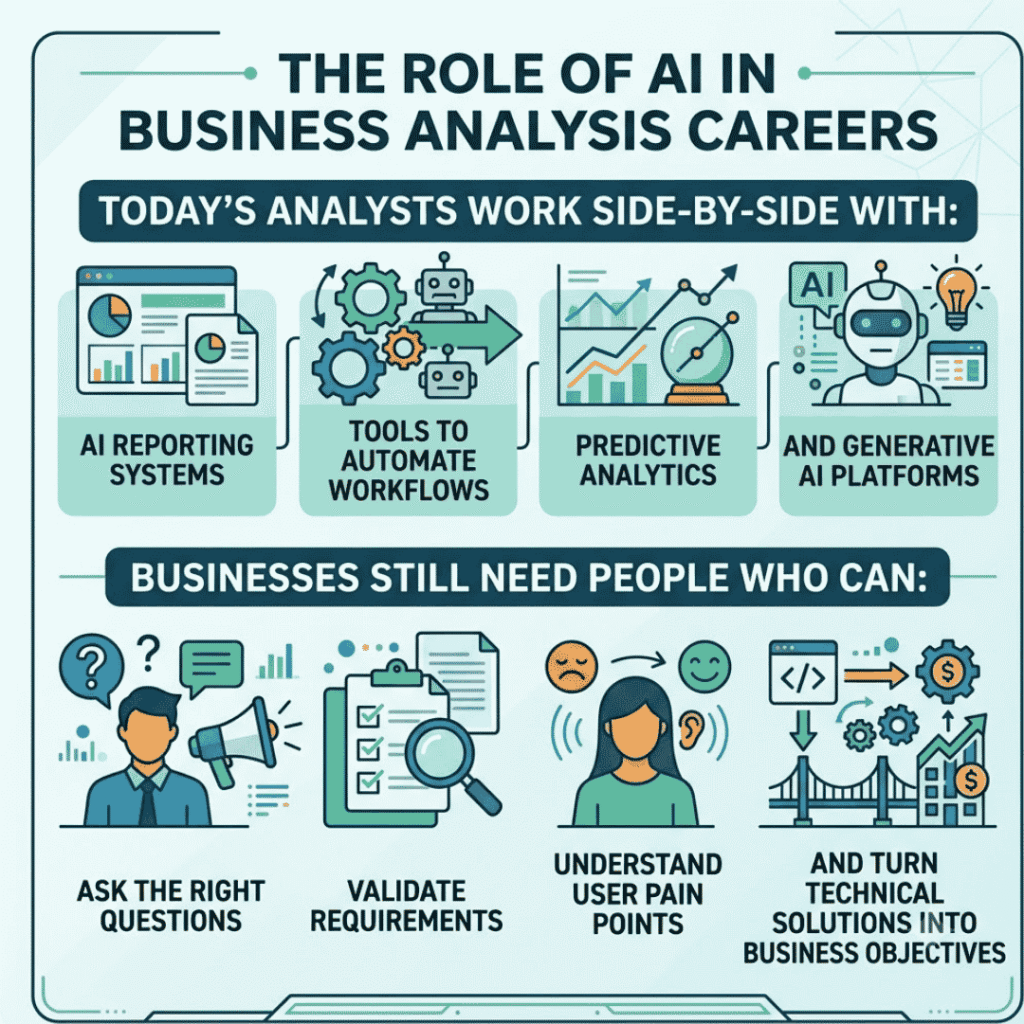
Today’s analysts work side-by-side with:
- AI reporting systems
- tools to automate workflows
- predictive analytics
- and generative AI platforms.
Businesses still need people who can:
- ask the right questions
- validate requirements
- understand user pain points
- and turn technical solutions into business objectives.
That human-business bridge remains critical.
Actually, many newer business analyst course programs now include AI-assisted documentation workflows and analytics exposure because the industry itself is evolving fast.
What Should a Beginner Learn First?
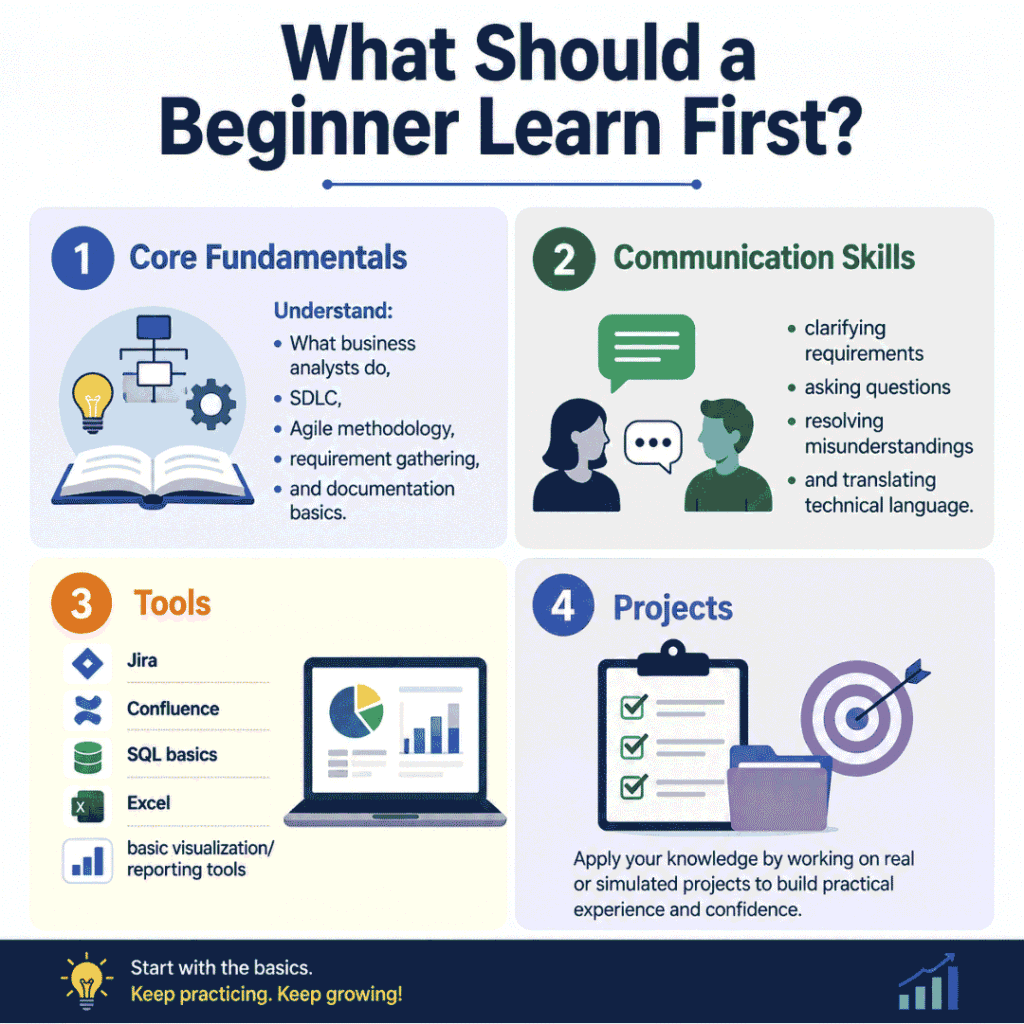
If you’re starting from zero, focus on this order:
Core Fundamentals
Understand:
- What business analysts do
- SDLC
- Agile methodology
- requirement gathering
- and documentation basics.
Communication Skills
This sounds simple, but it’s huge.
Analysts spend massive amounts of time:
- clarifying requirements
- asking questions
- resolving misunderstandings
- and translating technical language.
Tools
Start with:
- Jira
- Confluence
- SQL basics
- Excel
- basic visualization/reporting tools
No need to overwhelm yourself initially.
Projects
Projects are where confidence develops.
That’s why many learners searching for how to learn business analysis online eventually move toward instructor-led programs with capstone projects instead of endless free tutorials.
Can You Get a Job After Learning Online?
Yes, if the training includes practical preparation.
The online vs. offline debate matters much less now than it did years ago. Recruiters care more about:
- skills,
- project understanding,
- interview performance,
- and confidence.
Remote learning became mainstream long ago, especially in tech and analyst roles.
A well-designed online program that includes:
- live sessions,
- assignments,
- mock interviews,
- resume guidance,
- and internship-style projects
…can absolutely prepare someone for entry-level BA positions.
That’s one reason platforms like H2K Infosys continue attracting career changers, international students, and working professionals looking for structured transitions into business analysis.
Final Thoughts
The easiest way to learn business analysis online is not by trying to consume endless free content. It’s by following a structured path that mirrors how analysts actually work in modern companies.
A good learning experience should make you feel like you’re already participating in business conversations, not just memorizing definitions.
That usually means:
- guided instruction,
- practical projects,
- mentorship,
- interview prep,
- and exposure to real-world workflows.
And honestly? The people who succeed fastest are rarely the ones with the most technical background. They’re usually the ones who stay consistent, practice business scenarios regularly, and learn from instructors who’ve worked in the field themselves.
If you are serious about becoming a business analyst in today’s market, a structured online training program like H2K Infosys Business Analyst Course can make the learning curve feel much more manageable and a lot less confusing.