AI Course in the USA that actually help your career in 2026 like those offered by H2K Infosys tend to have a certain feel to them. You notice it pretty quickly. They’re not buried in theory or abstract math for the sake of it. Instead, they lean into doing real tools, real workflows, the kind of things you’d run into on an actual job. Python, ML libraries, cloud platforms… not just what they are, but how they’re used day to day.
And yeah, quick reality check Ai Training Programs can guarantee you a job. If someone says it does, that’s a red flag. But a solid program the kind that mirrors how things work in industry can absolutely move you closer. The difference usually comes down to how practical it gets.
So… what does an AI Course in the USA actually do for your career?
At the simplest level, it teaches you how machines work with data finding patterns, learning from them, making decisions. That includes things like:
- Machine Learning
- Deep Learning
- Natural Language Processing
- Data-driven decision-making
But honestly, just knowing those terms doesn’t get you very far. What matters is context. When a course shows how these ideas solve actual business problems, that’s when things start to click.
What good AI training looks like now
Most decent programs today try to balance theory with hands-on work. You’ll usually run into:
- Programming – mostly Python (R shows up here and there, but Python dominates)
- Machine Learning – supervised, unsupervised… sometimes reinforcement learning
- Deep Learning – neural networks, CNNs, transformers—the heavier stuff
- Data work – cleaning, preprocessing… and yeah, this part always takes longer than expected
- Frameworks – TensorFlow, PyTorch, Scikit-learn
- Deployment – APIs, cloud platforms, actually putting models into use
The key thing? The better courses don’t treat these as separate topics. They connect everything into a workflow. That’s what makes it feel relevant once you’re working.
Why more people are getting into AI Course in the USA
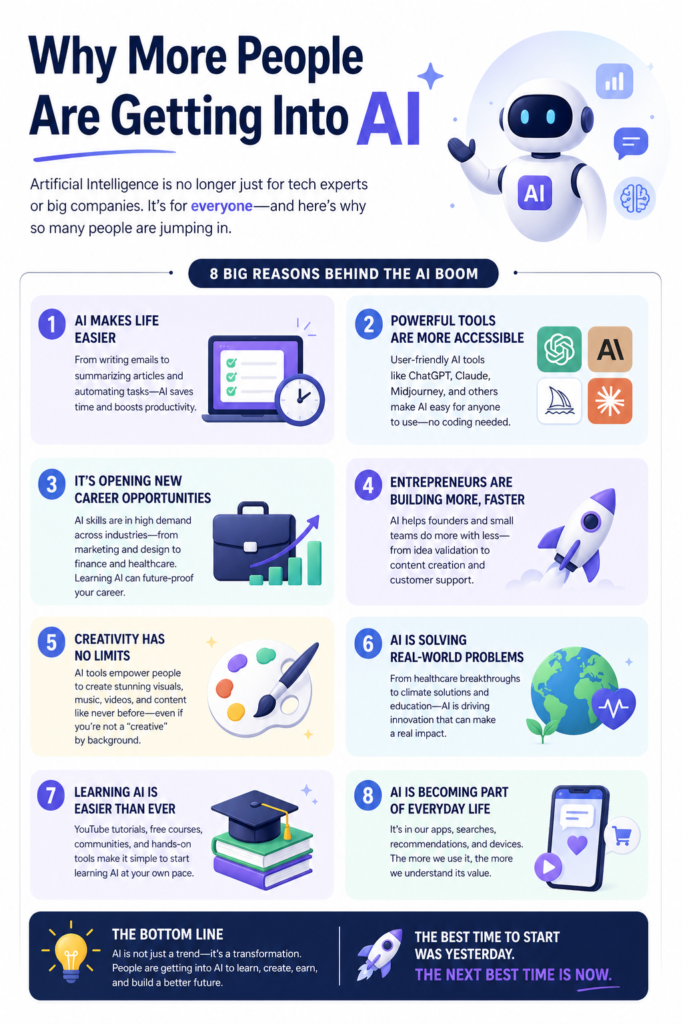
AI isn’t some niche anymore. It’s quietly built into a lot of systems already finance, healthcare, retail, telecom… pretty much everywhere.
Most people aren’t chasing hype. They’re doing it for practical reasons:
- Automating repetitive tasks (sorting documents, detecting fraud, etc.)
- Making decisions based on data instead of gut feeling
- Working with cloud tools like AWS or Azure
- Expanding into hybrid roles—DevOps + AI, analytics + AI
There’s a pattern here. It’s less about becoming an “AI expert” overnight and more about adding AI to what you already do.
How AI actually works in real projects
In real-world work, it’s rarely just “build a model and you’re done.” There’s a process and it’s usually a bit messy.
A typical flow looks like:
- Define the problem (say, reducing customer churn)
- Collect data (databases, APIs, logs… wherever it lives)
- Clean and prepare it
- Choose a model
- Train and evaluate
- Deploy it (APIs, cloud, containers)
- Monitor and improve over time
Take a telecom example predicting which users might leave. Sounds straightforward, but behind the scenes, there’s a lot going on. Data pipelines, model tuning, deployment issues… it adds up.
Skills you’ll actually use
AI isn’t just about writing code. It’s a mix of things.
Core skills:
- Python (NumPy, Pandas)
- Basic math (linear algebra, probability manageable, not terrifying)
- ML concepts
- Data visualization
- Git/version control
Other useful stuff:
- Problem-solving (seriously underrated)
- Interpreting data, not just processing it
- Understanding business context
You don’t need all of this on day one. Most people build it gradually, piece by piece.
AI inside real companies
This is where things get… real.
In enterprises, AI isn’t standalone. It sits inside a bigger system:
- Data storage (data lakes, warehouses)
- Processing tools (like Spark)
- Modeling layers (ML frameworks)
- Deployment (APIs, microservices)
- Monitoring (tracking performance over time)
And yeah, there are challenges messy data, scaling issues, compliance concerns. It’s not always smooth. That’s why hands-on experience matters more than polished tutorials.
Jobs where AI shows up
You don’t have to be called a “Data Scientist” to work with AI.
Common roles include:
- Data Scientist
- Machine Learning Engineer
- AI Engineer
- Data Analyst
- DevOps Engineer (handling AI pipelines)
- Business Analyst (using AI insights)
Day-to-day work? It’s usually a mix cleaning data, tweaking models, building APIs, interpreting results. Not just one thing.
Where this can lead
AI opens a few different paths:
- Data Science → Lead Data Scientist
- ML Engineering → AI Architect
- Analytics → Analytics Manager
- Software + AI → Solutions Architect
Salary growth tends to follow experience and real-world skills. Entry-level can vary a lot, but mid and senior roles are in strong demand.
What makes an AI course worth it in 2026?
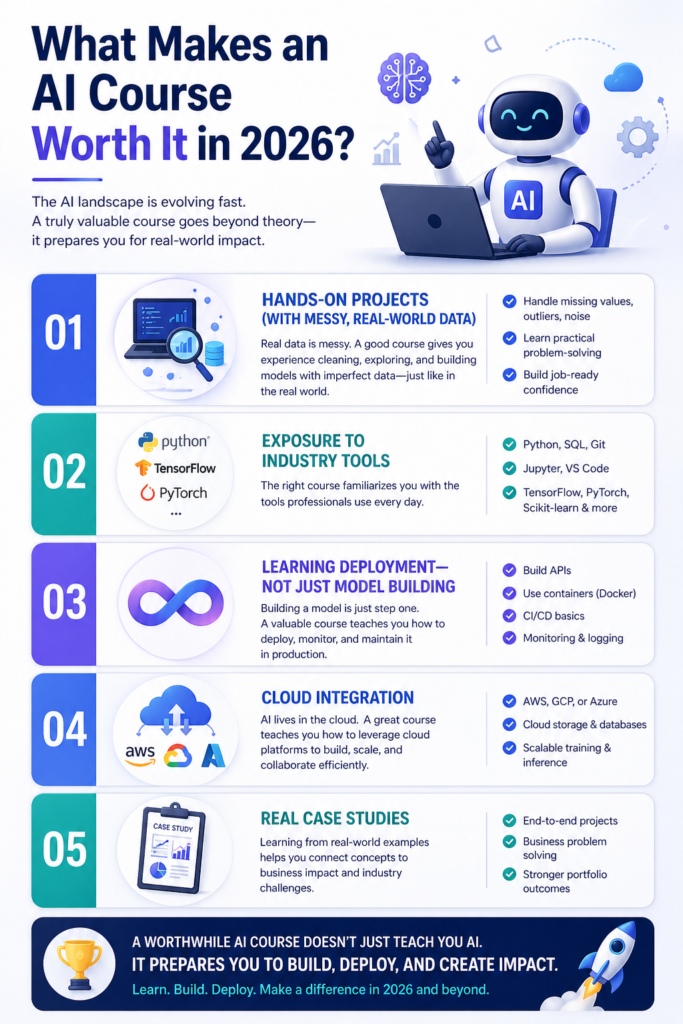
A few things stand out:
- Hands-on projects (with messy, real-world data—not perfect datasets)
- Exposure to industry tools
- Learning deployment—not just model building
- Cloud integration
- Real case studies
Different formats have their trade-offs:
- Academic programs → strong theory, sometimes less practical
- Bootcamps → fast, but depth varies
- Online courses → flexible, but require discipline
Picking the right course (this matters more than people think)
A few questions to ask:
- Does it cover the full pipeline—from ML to deployment?
- Are the projects realistic or just guided demos?
- Do instructors have real industry experience?
- Does it include tools like TensorFlow or AWS?
Also your goal matters:
- Career switch → go for a full, end-to-end program
- Skill upgrade → shorter, focused modules
- Management track → strategy + analytics-focused learning
A simple way to start learning AI
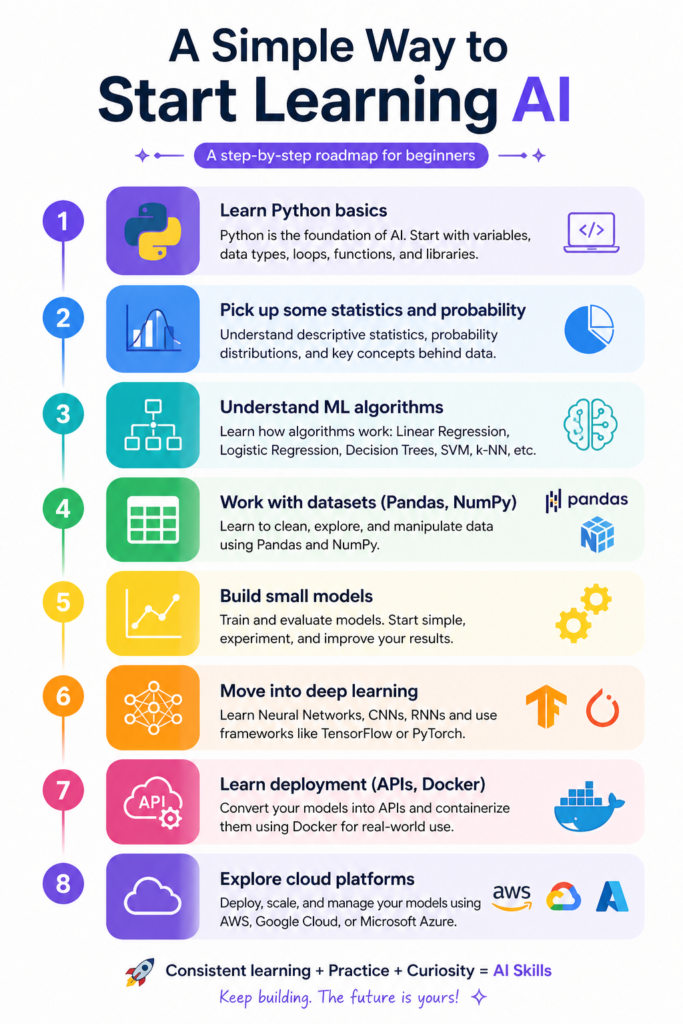
If you’re starting from scratch, something like this works:
- Learn Python basics
- Pick up some statistics and probability
- Understand ML algorithms
- Work with datasets (Pandas, NumPy)
- Build small models
- Move into deep learning
- Learn deployment (APIs, Docker)
- Explore cloud platforms
It doesn’t have to be perfect. Just consistent. That’s usually enough.
Quick FAQs
Can an AI Course in the USA guarantee a job?
No. But good training + solid projects definitely help.
Best programming language?
Python. Not even close.
How long does it take?
3–6 months for basics, maybe 6–12 months to feel comfortable.
Can non-programmers learn AI Course in the USA?
Yes—but you’ll need to learn coding along the way.
Which industries hire AI talent?
Finance, healthcare, retail, manufacturing, tech… pretty much all major sectors
Final thoughts
AI Course in the USA won’t magically change your career overnight. That’s just not how it works.
But the right Artificial Intelligence Online Training especially one grounded in real-world applications can make a real difference. If it teaches you how things actually run in production, not just inside notebooks, you’re on the right track.
And honestly… the learning never really stops in this field. But that’s part of what makes it interesting.